Post by : Mariam
Al-Faris
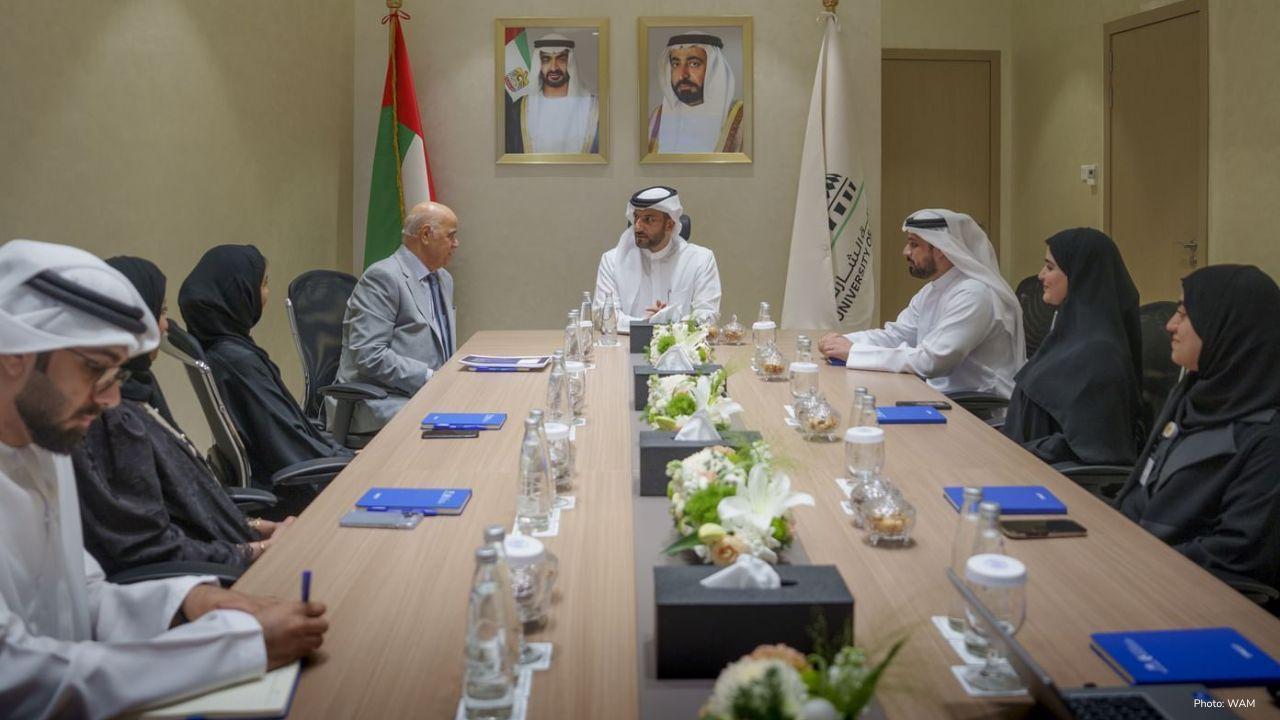
His Highness Sheikh Sultan bin Ahmed bin Sultan Al Qasimi, the Deputy Ruler of Sharjah and President of the University of Sharjah, recently visited the Sharjah Academy for Astronomy, Space Sciences and Technology (SAASST). The visit took place on a Tuesday afternoon at the Academy’s main campus.
During his tour, Sheikh Sultan bin Ahmed reviewed the latest updates and development plans at the Academy. He saw how the Academy is improving its buildings and using new technology to help people learn about astronomy and space in a modern and easy way. The goal is to make science more interesting and understandable for visitors and students.
Educational Technology and Facility Upgrades
The Academy has been working hard to upgrade its learning facilities. It is now using the most advanced educational tools to teach people about the universe, stars, planets, and space missions. These changes are designed to give visitors a better learning experience by using visuals, interactive displays, and other modern teaching methods.
His Highness was shown a visual presentation that explained all the projects that are currently being developed at the Academy.
CubeSat Programme and Meteorite Lab
One of the important projects Sheikh Sultan learned about is the CubeSat programme. CubeSats are small satellites that can be launched into space for different purposes such as observation, research, and data collection. These satellites are cost-effective and offer students and researchers a chance to learn how space missions work.
Another exciting project is the Meteorite Laboratory Exhibition. This lab is collecting, recording, and studying meteorites and fragments from space impacts. By understanding these space rocks, scientists and students can learn more about the history of the solar system and how planets were formed.
Space Debris Monitoring and Astronomical Observatories
The Academy is also working on building stations to monitor space debris. Space debris includes pieces of broken satellites and used rocket parts that float around in Earth’s orbit. Tracking this debris is important for the safety of other satellites and space missions.
In addition, the Academy is setting up both optical and radio observatories. These observatories will help scientists look at space using different tools and methods. Optical observatories use light, while radio observatories use radio waves to observe distant stars, galaxies, and other space objects. These observatories are being developed in partnership with other government and private organisations.
Solar and Lunar Observation Systems
Sheikh Sultan was also updated on the Academy’s solar and lunar observation project. This initiative will help scientists and religious authorities see the crescent moon, which is important for determining the Islamic calendar dates like the start of Ramadan and Eid.
The goal is to build better systems for observing the Sun and Moon. These systems will also help the UAE take part in global efforts to monitor and understand space activity. With advanced equipment, the Academy will be able to take high-quality images and measurements of solar and lunar events.
Sharjah Planetarium's Success
His Highness also reviewed some exciting numbers from the Sharjah Planetarium, which is part of the Academy. The Planetarium is a special dome theatre that shows space movies and educational presentations.
In the months of June and July alone, more than 4,500 people visited the planetarium. It currently shows around 20 space-related programs every week, offering an exciting and educational experience for families, students, and tourists.
The Planetarium also runs workshops and educational programs for the public. These workshops help people learn about astronomy and space in fun and engaging ways. The Planetarium is planning to expand its programs and form more partnerships with local and international organisations to spread awareness and interest in space sciences.
Supporting UAE’s Asteroid Mission
Another key highlight of the visit was the Academy’s involvement in the Emirates Mission to the Asteroid Belt, a major project launched by the UAE Space Agency.
This mission aims to explore seven asteroids in the asteroid belt, which lies between the planets Mars and Jupiter. By studying these asteroids, scientists hope to learn more about the early days of the solar system and the formation of planets.
The mission also supports the UAE’s growing space sector, especially private companies that are working on space technologies. The goal is to build a strong team of scientists, engineers, and researchers in the UAE who can work on space innovation and develop advanced technologies for the future.
Encouraging Space Research and Innovation
During the visit, Sheikh Sultan praised the Academy for its efforts to make space science more accessible and to involve more students and researchers in the field. He encouraged the Academy to continue developing educational programs, forming new partnerships, and supporting UAE’s national goals in space exploration.
The visit highlighted the Academy’s important role in scientific research, technology development, and space education. It also showed how Sharjah is becoming a centre for space learning and innovation in the region.
Building Scientific Knowledge for the Future
All these efforts by the Sharjah Academy for Astronomy, Space Sciences and Technology are part of a bigger plan to develop the UAE’s scientific infrastructure. By investing in space science, astronomy, and advanced technologies, the Academy is preparing future generations to be ready for space-related careers.
The projects also support national efforts in Islamic date verification, environmental awareness through space observation, and building the scientific curiosity of students and young learners.
Through workshops, exhibitions, observation stations, and its planetarium, the Academy aims to bring space closer to the people and make science a part of everyday learning.


 English