Post by : Saif
Al-Najjar
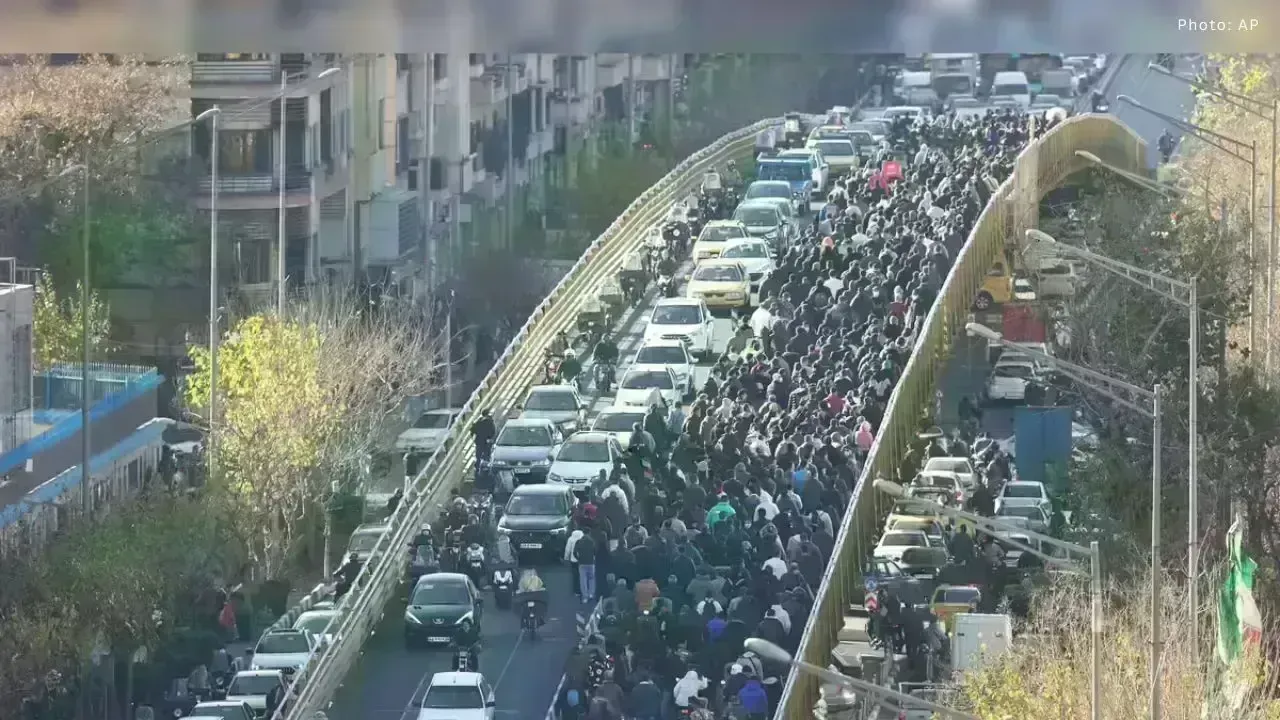
Iran has seen a half-century of protests that vividly illustrate the ongoing conflict between state actions and public sentiment. Each wave of dissent, though triggered by varying incidents, consistently reflects widespread dissatisfaction with economic conditions, political repression, and curtailed freedoms.
The movement began in the late 1970s, culminating in the downfall of Shah Mohammad Reza Pahlavi, fueled by mass protests from students, laborers, and religious factions advocating for liberation from autocratic constraints. This culminated in the 1979 Islamic Revolution, which ushered in Ayatollah Ruhollah Khomeini’s regime, transforming Iran into a strict theocracy. The aftermath saw a decline in protests due to executions, warfare with Iraq, and heightened governmental repression.
In 1999, discontent resurfaced with protests by university students, prompted by the slaying of writers and activists. A brutal police raid on a student dormitory ignited wider demonstrations that were met with severe force, resulting in fatalities and numerous arrests, specifically highlighting the youth's frustration with restrictions on freedom of expression.
The aftermath of the 2009 presidential election saw a major upheaval, where citizens disputed the electoral results, leading to the Green Movement. With mass gatherings throughout the nation, this unrest faced violent crackdowns, resulting in significant loss of life and eroded public trust.
Economic dissatisfaction became a focal point for protests in 2017 and 2018 as rising food costs and reduced financial support prompted public outrage. This discontent evolved into a political stance, especially evident in 2019, when skyrocketing fuel prices led to widespread unrest, resulting in extensive casualties and internet blackout.
The 2022 death of 22-year-old Mahsa Amini in police custody ignited fierce national protests, with women challenging restrictive dress codes. Despite severe government reprisals, including numerous casualties and arrests, many women persist in quietly challenging these norms.
More recently, protests have erupted in 2025 and 2026, responding to the collapse of Iran's currency amid tightened sanctions and regional conflicts. As the rial's value plummeted, citizens protested against escalating living costs, a reaction met once again with restrictions on communication.
These collective protests encapsulate a profound narrative: while the reasons for dissent may evolve, the underlying public frustration in Iran remains persistent. Each generation finds a new cause to raise its voice, highlighting the enduring disconnect between the government and the populace. The last fifty years signal that, absent substantial reform, the cycle of unrest is poised to continue.


 English