Post by : Saif
Al-Najjar
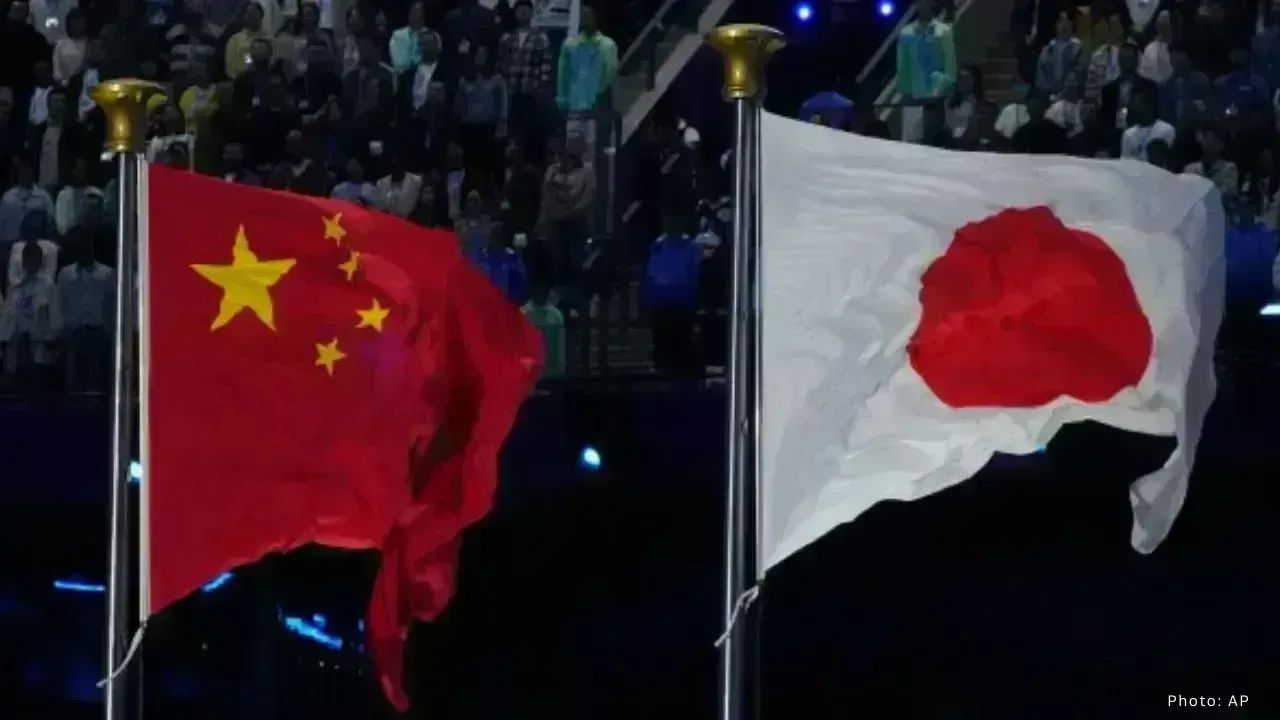
As 2026 commences, tensions are resurfacing between China and Japan, two significant East Asian nations. Their ties have historically been marred by issues of trade, security, and past conflicts. Recently, China criticized Japan's remarks regarding Taiwan and introduced new trade limitations, intensifying friction in the region.
The conflict escalated after Japan's Prime Minister, Sanae Takaichi, suggested military action if China threatened Taiwan. This statement provoked a stern response from China, which deemed it an interference in its internal matters and a danger to regional tranquility. Additionally, China has highlighted Japan's historical military actions and expansionism.
Trade tensions have also flared. China enacted restrictions on exports deemed dual-use—items that could have military applications, including advanced technology and rare earth elements. Furthermore, China has initiated an investigation concerning the price drop of dichlorosilane, crucial for semiconductor manufacturing, imported from Japan, citing adverse effects on its industries. Japan responded to these actions as “unacceptable and deeply regrettable.”
Reflecting on history, China reminds Japan of its wartime aggression in the early 20th century, which included an occupation of its territories. Reports from Chinese sources have raised alarms regarding Japan's rightist movements and potential nuclear objectives, heightening already fraught relations.
Amid these escalating tensions, China is reinforcing its relationship with South Korea. The South Korean President, Lee Jae Myung, recently completed a four-day visit to Beijing, where agreements promoting trade, technology, and environmental cooperation were concluded. This shift also involved China prioritizing South Korean tourism over Japanese visitors.
With neither side inclined to back down, the situation appears precarious. Japan is ramping up its defense strategies, and China remains vigilant about any threats to its sovereignty. Historical grievances paired with modern-day strategic considerations keep East Asia in a fragile state. Analysts warn that without robust diplomatic engagement, these tensions may continue to escalate, jeopardizing both regional security and economic collaborations.
In conclusion, the relationship between China and Japan remains under considerable strain. Long-standing rivalries, military apprehensions, and ongoing trade contentions are fueling conflict, while China’s growing connections with South Korea introduce new elements to diplomacy in the region. This scenario illustrates the intricate interplay of power and history in East Asia.


 English