Post by : Saif
Al-Najjar
The intelligence community of the United States has issued a concerning assessment of Cuba’s economic condition, indicating that the nation is grappling with one of the most severe crises it has faced in recent history. Yet, U.S. intelligence officials maintain that there are no definitive signs suggesting an impending collapse of the Cuban government.
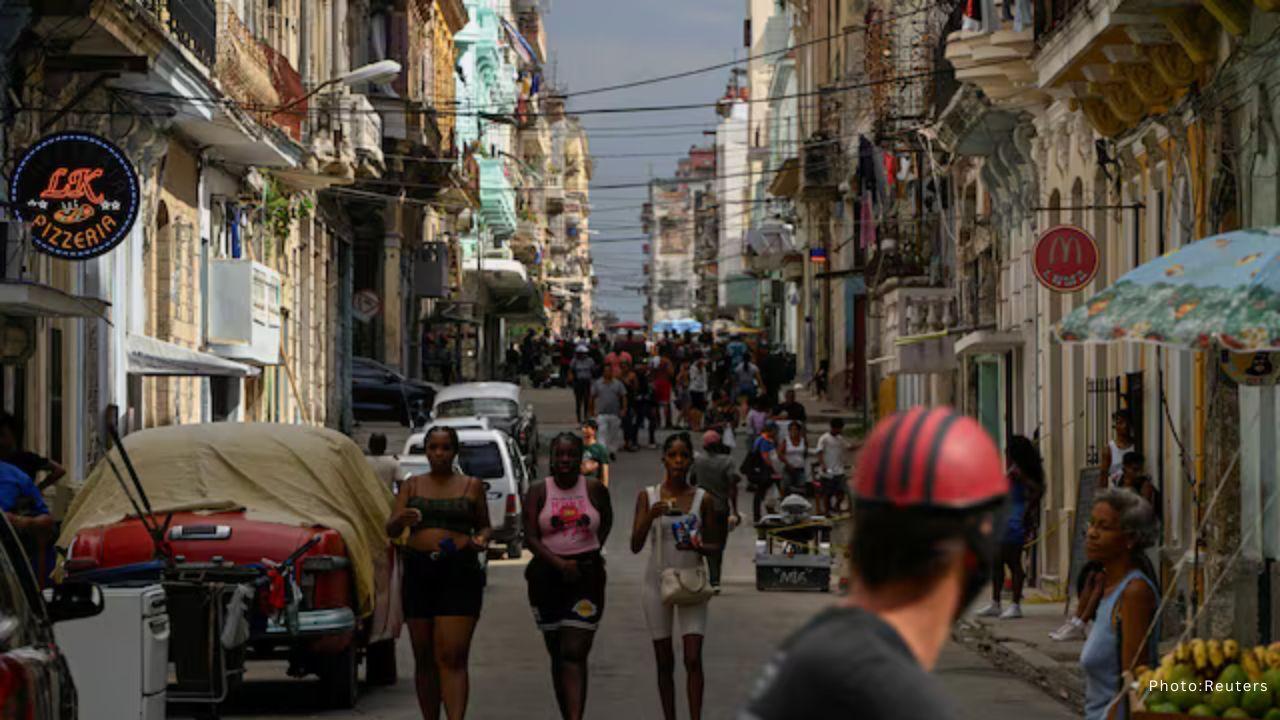
Confidential CIA reports reveal that critical sectors of the Cuban economy are enduring significant hardships. Farming, tourism, and notably the energy sector are hindered by prolonged power outages, trade limitations, and enduring economic mismanagement. Such challenges have rendered daily existence exceedingly tough for the average Cuban citizen.
The situation has been exacerbated following recent events in Venezuela, which has historically been Cuba’s principal oil supplier and ally. After the arrest of Venezuelan President Nicolas Maduro by U.S. forces, the United States urged Venezuela’s interim government to redirect the majority of its oil exports to America. This shift has drastically limited the oil supply available to Cuba.
President Donald Trump has publicly asserted that Cuba is “on the brink of collapse,” suggesting that the depletion of Venezuelan oil resources could topple the Cuban regime. However, such views are not fully supported by CIA findings. Intelligence experts indicate that while economic conditions are indeed deteriorating, it remains uncertain if this economic distress will precipitate any political transformation.
An informed official noted that while the current situation is dire, it has yet to reach the severity witness during Cuba’s “Special Period” of the 1990s, a time characterized by acute food shortages, energy crises, and extensive blackouts following the Soviet Union’s fall. Nonetheless, current conditions are troubling, with reports documenting power outages lasting up to 20 hours a day in regions outside of Havana.
Cuba has faced economic challenges for decades due to a strict state-controlled model and a persistent U.S. trade embargo. Recently, these issues have worsened due to a decline in tourism following the COVID-19 pandemic and Venezuela’s economic downturn. These factors have plunged Cuba deeper into crisis.
Another critical concern raised by U.S. officials is the mass exodus of young Cubans. Many individuals under 50 are leaving the country in pursuit of better prospects. This demographic decline may lessen the impetus for political reform, as movements for change often rely on the younger generation. While Cuba’s official population was reported as over 10 million in 2023, U.S. analysts estimate the real figure may be closer to 9 million.
Experts caution that extreme poverty does not always lead to political upheaval. When individuals are preoccupied with survival, they may lack the capacity to engage in protests. Nonetheless, history indicates that desperation can sometimes compel people to confront their fears and take action.
Currently, Cuba’s president, Miguel Díaz-Canel, does not enjoy the same level of loyalty previously commanded by revolutionary leader Fidel Castro. This erosion of public support could pose issues if conditions deteriorate further. However, intelligence officials warn that predicting political downfall is complex, particularly in a nation with stringent security measures and restricted freedom of speech.
In conclusion, the CIA has delivered a clear message: Cuba’s economy is in dire straits. Yet, whether these hardships will catalyze the government’s downfall remains uncertain.


 English