Post by : Mariam
Al-Faris
Photo: WAM
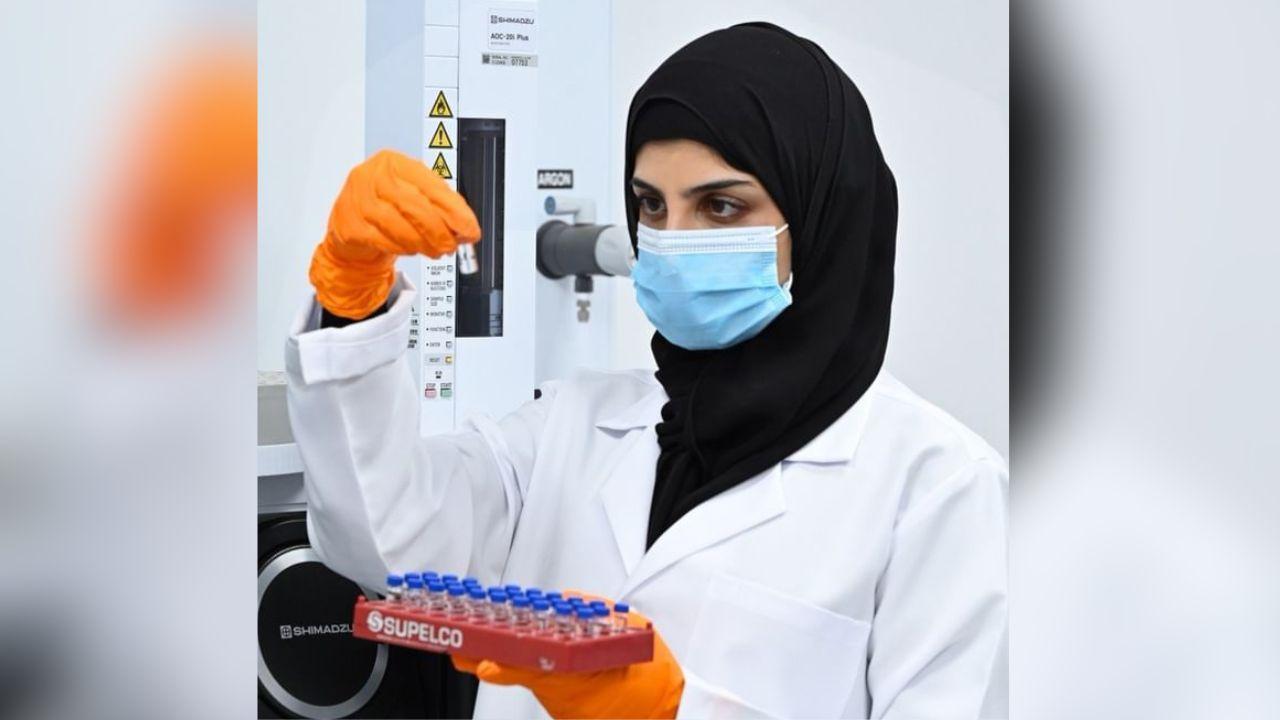
In a remarkable stride toward global scientific collaboration, the General Command of Sharjah Police has significantly enhanced its international reputation by contributing groundbreaking research at the International Conference on Forensic Science, held recently in Osaka, Japan.
The study, presented by Lieutenant Noura Abdul Jalil Hajouni, a distinguished expert from the Chemistry Section of the Forensic Evidence and Laboratories Department, tackled a rising concern that is troubling public health and law enforcement agencies worldwide — the misuse of pharmaceutical products for recreational purposes, with a particular focus on the tropicamide eye-drop.
What Is Tropicamide and Why Is It Being Misused?
Tropicamide is a medication commonly used by eye doctors to dilate pupils during eye exams. It works by blocking certain nerve signals, which temporarily disables the eye’s ability to focus, making it easier for doctors to examine the interior parts of the eye.
However, Lieutenant Hajouni’s study brings to light a worrying trend — tropicamide being abused for its psychoactive effects. When used in excessive quantities or in inappropriate ways (such as through injection or ingestion), the drug may cause hallucinogenic sensations, delirium, and dissociation. These unintended effects have made it appealing to individuals seeking mind-altering experiences, especially in underground circles.
According to the research, this kind of misuse is not just dangerous — it can also be life-threatening. The chemical properties of tropicamide, when altered or consumed without medical supervision, can disrupt the nervous system, leading to blurred vision, confusion, elevated heart rate, and even seizures. Overdoses can result in coma or death, especially when mixed with other substances.
Scientific Investigation and Chemical Analysis
The research presented by Lt. Hajouni provided a comprehensive chemical profile of tropicamide. It detailed the exact composition of the drug, how it interacts with the human nervous system, and how its abuse creates different patterns of physiological response compared to its legitimate use.
The study went a step further to identify trace chemical markers and residue patterns that are left behind when the drug is altered or consumed illicitly. These markers are crucial for forensic specialists and law enforcement officers when attempting to identify whether tropicamide was used recreationally in suspected drug cases.
Sharjah Police’s advanced laboratory methods, as described in the paper, include high-performance liquid chromatography (HPLC) and mass spectrometry techniques to isolate and study drug components at a molecular level. These tools allow forensic teams to accurately detect tropicamide abuse, even in complex mixtures or contaminated samples.
Tracking the Spread: How Common Is the Misuse?
The paper also focused on indicators that point to an increasing spread of tropicamide misuse, not just in Sharjah or the UAE, but internationally. Through data gathered from hospital records, forensic investigations, and community outreach, Sharjah Police was able to piece together a worrying picture: more young people, especially in certain urban settings, are experimenting with such pharmaceutical drugs due to their easy availability, lack of awareness about the risks, and the false belief that these substances are “safer” than street drugs.
The study also highlighted the role of social media and online platforms in spreading misinformation and even selling these substances under false pretenses. The report stressed that this growing phenomenon requires vigilance, education, and cross-border cooperation between governments and law enforcement bodies.
Modern Tools and Techniques for Detection
One of the key contributions of Sharjah Police in this field has been the modernisation of forensic drug detection systems. The department has invested heavily in state-of-the-art scientific tools and in training highly skilled forensic professionals.
The presentation explained how these tools are used not just to detect substances like tropicamide but also to trace their origin, track supply chains, and analyze usage patterns. This helps authorities take preventive measures, dismantle illegal networks, and develop new protocols for public safety.
Thanks to these efforts, Sharjah Police has been successful in identifying early warning signs of substance misuse and intervening before serious consequences occur. The force’s approach combines technological innovation, field intelligence, and medical expertise, making it one of the more forward-thinking departments in the region.
National Talent Representing the UAE on a Global Platform
Brigadier Naji Mohammed Al Hammadi, Deputy Director-General of the General Directorate of Criminal Security and Ports, took a moment to reflect on the significance of this international presentation. He emphasized that having local experts like Lt. Hajouni contribute to global scientific discussions is more than just a moment of pride — it’s a strategic investment in national growth and development.
He noted, “When our experts represent the UAE at such prestigious forums, it shows the world that we are not just consumers of scientific knowledge — we are contributors. This is vital for building a secure, informed, and progressive society.”
Brigadier Al Hammadi also highlighted that Sharjah Police values continuous learning, and actively encourages its staff to pursue advanced research, collaborate internationally, and bring back best practices to enhance local operations.
The Broader Mission: Knowledge Sharing and Security
This initiative is a reflection of Sharjah Police’s larger mission: to modernize its operations through science and research, and to stay ahead of emerging threats. In today's world, crime and drug abuse are not just local issues — they are global challenges that require global responses.
By presenting this research, Sharjah Police not only contributed valuable knowledge but also strengthened international relationships in the forensic science community. These connections are important for coordinating efforts, sharing intelligence, and jointly developing new strategies for public safety.
As Brigadier Al Hammadi affirmed, “We will continue to support scientific research and international cooperation, because knowledge is the foundation of a safe and bright future.”
Why This Matters to the Public
While this may seem like a highly technical subject, the real message is simple: Sharjah Police is working hard to protect the public from new and evolving drug threats. They are using science to stay ahead, and their efforts are being recognised around the world.
Understanding the dangers of misusing prescription drugs like tropicamide is crucial — not just for law enforcement, but for parents, teachers, students, and healthcare workers. It reminds us that not all harmful drugs are illegal street substances. Sometimes, danger comes in the form of everyday medications that are misused or misunderstood.


 English