Post by : Saif
Al-Najjar
Hong Kong has commenced an important national security trial against activists who coordinated annual candlelight vigils commemorating the 1989 Tiananmen Square incident. This high-profile case is attracting significant attention both locally and globally, delving into issues of free speech, historical memory, and the evolving legal framework of Hong Kong.
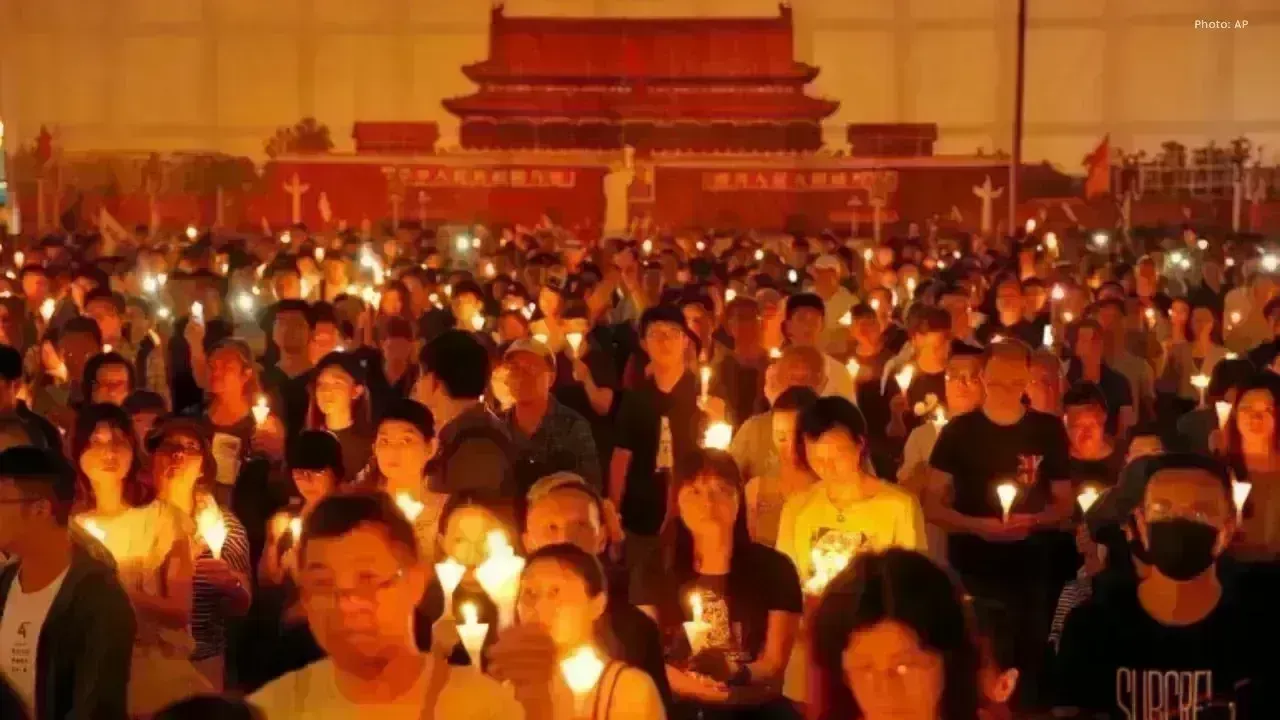
The defendants include former leaders of the Hong Kong Alliance, an organization that held peaceful June 4 vigils for over three decades to remember those who perished during the Tiananmen protests in Beijing. These vigils once represented a powerful symbol of Hong Kong’s liberties, in stark contrast to mainland China, where public remembrance of Tiananmen is prohibited.
In court, two defendants pleaded not guilty to inciting subversion of state power, while another admitted guilt. Prosecutors argue that the group's slogans and public statements transcended mere remembrance, constituting political actions aimed at challenging the Chinese regime. If convicted, the accused face potential lengthy prison sentences.
This trial is presided over by judges appointed under the national security law and does not involve a jury. Prosecutors are expected to present past speeches, writings, and public actions related to the group as part of their case. The trial is anticipated to last several weeks.
A small group of supporters gathered outside the courthouse to express solidarity. Numerous human rights organizations assert that this trial is part of a larger campaign to suppress dissent and eliminate public discourse surrounding sensitive historical topics. They maintain that advocating for democracy and remembering Tiananmen should not be criminalized.
Authorities in Hong Kong, however, contend that the national security law is vital for ensuring stability and shielding the country from potential threats. They argue that the law is aimed at serious crimes and does not restrict everyday freedoms.
Since the law's implementation in 2020, Hong Kong has experienced profound shifts. Numerous pro-democracy organizations have disbanded, public demonstrations have diminished, and several activists have faced imprisonment or fled into exile. Critics assert that these developments have undermined the city’s distinctive identity and the freedoms it was promised under its original governance framework.
This trial is seen as a pivotal moment. Its outcome could shape future perceptions of history, freedom of speech, and activism in Hong Kong. For many residents, this trial symbolizes more than the fate of a handful of activists; it raises crucial questions about the remaining public space for discussing the past.


 English