Post by : Mariam
Al-Faris
On Tuesday morning, very dark clouds covered the sky over Hong Kong. Soon after, heavy rains began pouring down over the city and nearby areas. These areas are located in south China’s Pearl River Delta, one of the most advanced and populated regions in the country. The rain was so strong that it quickly caused flooding. Roads were covered with water, and schools, hospitals, and courts had to close. The entire city was affected, and people were asked to stay indoors for their safety.
Thousands of Lightning Flashes Hit the City
According to the local weather department, around 10,000 lightning flashes were recorded in just one hour between 6 a.m. and 7 a.m. in Hong Kong. This is an unusually high number and shows how powerful the storm was. The rainfall was also very heavy, reaching up to 90mm (or 3.5 inches) per hour. This intense rain did not just fall in Hong Kong—it also hit Guangdong province, which is right next to the city.
Floodwaters Rush Down City Hills and Streets
Hong Kong is built on many hills and slopes. So, when heavy rain falls, water flows down quickly. Videos taken by residents showed powerful streams of water rushing down the hills. In some areas, the water flowed down stairs like waterfalls. These staircases connect different levels of the city and are usually safe for walking. But during the storm, they turned dangerous and slippery because of the fast-moving water.
Highest Level Weather Warning Announced
Because of the heavy and nonstop rain, the Hong Kong weather office issued its strongest weather warning, known as the “black” rainstorm warning. This type of warning means very serious danger from flooding and landslides. The warning was extended and stayed in place until at least 3 p.m. to protect public safety.
Hospitals and Clinics Closed for Safety
At Hong Kong’s biggest hospital, water rose to ankle height outside the building. To avoid risk to patients and staff, medical officials decided to close health clinics across the city. They advised people not to come to hospitals for non-emergency reasons and to avoid flooded areas as much as possible.
Link Between Climate Change and Extreme Weather
Weather experts and scientists say that this type of strong and sudden rainfall is linked to climate change. As the planet becomes warmer, heavy rains and floods are happening more often. In China, these floods have already caused many problems. People have lost their lives, homes have been destroyed, and there have been major financial losses. The government is now under pressure to prepare better for these disasters in the future.
Flash Floods Killed Five People Over the Weekend
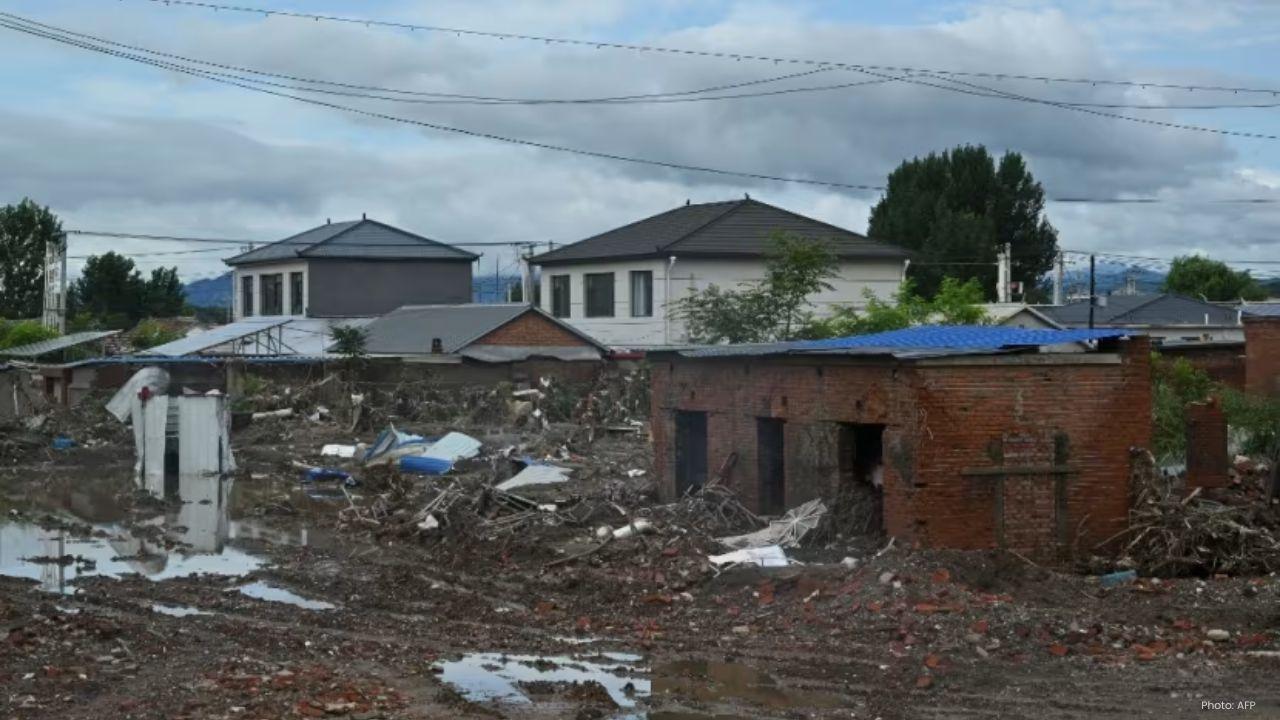
This was not the first time the region faced flooding this week. Just over the weekend, southern China saw deadly flash floods. Five people died in Guangdong province, which is one of the worst-hit areas. The floods forced emergency services to begin a large rescue operation. More than 1,300 rescuers took part in the mission to save people stuck in dangerous areas.
Rivers Close to Bursting Their Banks
By Tuesday morning, four rivers in Guangdong had water levels that were extremely high. China’s state broadcaster CCTV reported that these rivers were close to overflowing. If they did burst their banks, it could cause even more serious damage to nearby towns and cities. Authorities asked people living near the rivers to be alert and prepared to evacuate if needed.
Important Economic Zone Under Pressure
Hong Kong, Macau, and Guangdong are part of a large government project called the “Greater Bay Area” or GBA. This project is led by Chinese President Xi Jinping. The goal of the GBA is to connect Hong Kong’s finance sector with Guangdong’s tech and manufacturing industries. But the recent floods and storms have caused many problems in this important region, slowing down travel, business, and daily life.
Flight Cancellations Across the Region
Many flights were cancelled in airports across Hong Kong, Macau, and Guangdong. Data from Flightmaster showed that around 20% of flights were cancelled on Tuesday. Travel plans for many passengers were delayed or stopped. Visibility was poor because of heavy rain and fog. On the Hong Kong-Zhuhai-Macau Bridge—a key structure connecting the cities—speed limits were lowered to avoid accidents.
Hong Kong Airport Still Operating
Even though there was heavy rain, Hong Kong International Airport stayed open. Some flights were delayed, but the airport continued normal operations. Officials told passengers to only come to the airport after confirming their flight status to avoid crowding and long waits.
Stock Exchange Remains Open
The Hong Kong Stock Exchange did not close during the storm. Last year, the Exchange changed its policy so that it would stay open during bad weather. However, courts, tribunals, and registration offices in the city remained closed. These offices announced they would open only after two hours once the black rain warning is cancelled.
Public Asked to Stay Indoors
The Hong Kong Observatory, which is the city’s weather authority, issued strong advice to the public. It warned that the continuous rain would cause road flooding and traffic jams. People were told to stay inside safe buildings and not to go outside unless absolutely necessary. This advice was repeated on local news and government websites.
Rainy Season Brings More Rain
Hong Kong usually receives around 2,200mm of rainfall every year. More than half of this rain usually falls during the summer months of June, July, and August. While the city is used to rain, the recent downpour was stronger and faster than normal. This kind of extreme weather is becoming more common, according to scientists.
Theme Park Stays Open Despite Storm
In the middle of the chaos, there was a small piece of good news. Hong Kong Disneyland announced that it would stay open, even with the bad weather. The park confirmed that its regular daily show, called the “Friendtastic! Parade,” would still be held as planned. This brought a bit of joy to visitors, especially families and children who had come for a fun day out.
A City Facing Nature's Power
Hong Kong and the surrounding Pearl River Delta region are facing a serious challenge from nature. Heavy rains, lightning, floods, and traffic problems have affected millions of people. Services are delayed, transportation is slowed, and people are being asked to stay safe indoors. As climate change continues to create more extreme weather, the city and the country must find ways to prepare and protect people better. The events of this week are a strong reminder of how powerful nature can be—and how important it is to stay ready.


 English