Post by : Mariam
Al-Faris
Photo: SPA
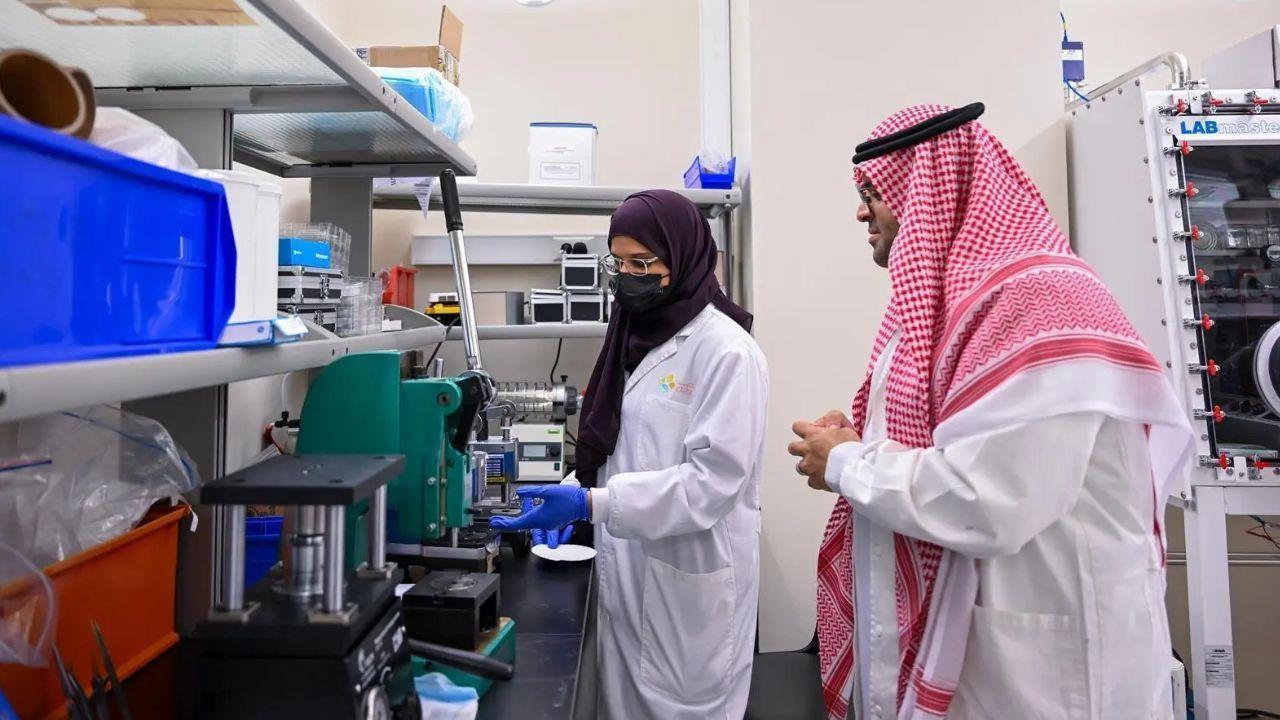
Researchers at King Abdullah University of Science and Technology (KAUST) have found out why water-based batteries often stop working too soon. Their research helps solve a big problem with these batteries. The study was done at KAUST's Center of Excellence for Renewable Energy and Storage Technologies (CREST). The results were published in the journal Science Advances. The scientists found that water inside the battery causes chemical damage. But by adding a simple and cheap salt called zinc sulfate, they managed to fix this problem and make the battery last much longer—more than 10 times longer in some cases.
The Role of the Anode in Battery Life
Every battery has two main parts called the anode and the cathode. The anode is very important because it helps store and release energy. However, in water-based batteries (also called aqueous batteries), the anode gets damaged over time. This damage is caused by unwanted chemical reactions called parasitic reactions. These reactions waste energy and slowly break the battery from inside. Finding a way to stop or reduce these reactions is key to making better batteries.
How Water Causes Battery Damage
In this study, KAUST researchers looked closely at how water affects the anode. They found that not all water in the battery is the same. Some water molecules float freely without bonding to other materials. This "free water" is more likely to cause damage because it reacts with the battery's anode. These reactions use up energy and weaken the battery. Over time, this makes the battery less powerful and shortens its lifespan.
Zinc Sulfate: A Simple and Cheap Fix
The KAUST team tried adding a salt called zinc sulfate to the battery. Zinc sulfate is inexpensive, easy to find, and safe to use. When added to the battery, it changed the way water molecules behave. The salt reduced the number of free water molecules by making them stick to other molecules. This helped stop the harmful chemical reactions. As a result, the battery worked better and lasted much longer.
Water Becomes “Sticky” with Salt
Professor Husam Alshareef, who led the research, explained that the structure of water is very important for how a battery works. When zinc sulfate is added, it acts like "water glue." This glue effect makes water molecules bond together instead of staying free. When water is no longer free, it can't react badly with the anode. This simple change in water behavior made a big difference in how long the battery could last.
Positive Results in Many Battery Types
Even though the main tests were done with zinc-based batteries, the researchers believe this salt solution can help other battery types too. They tested other metal-based anodes and saw similar results. This means the zinc sulfate solution might be a universal fix for many types of aqueous batteries. This makes the discovery even more useful for making better energy storage systems.
Affordable and Scalable Solution
Dr. Yunpei Zhu, a research scientist at KAUST who did most of the experiments, said the best part of this discovery is that it is both cheap and practical. Sulfate salts like zinc sulfate are already widely used and available. They are also stable and safe. So, adding them to battery designs will not make batteries expensive or unsafe. This makes it possible to improve battery performance without adding extra costs.
Better Option for Green Energy Storage
Water-based batteries are becoming more popular around the world because they are safer and more environmentally friendly than lithium batteries. These batteries can be used to store energy from renewable sources like solar and wind. Unlike lithium batteries, which can catch fire and are costly, aqueous batteries are safer to use in homes, schools, and even entire cities. Making them last longer with this salt solution helps make green energy more reliable and affordable.
A Growing Market for Aqueous Batteries
Experts believe the global market for water-based batteries will grow very fast. It could be worth more than $10 billion by the year 2030. This is because more countries are trying to use renewable energy. Batteries are needed to store this energy so it can be used at night or when the sun or wind is not strong. The KAUST discovery can help speed up the adoption of such batteries in large-scale power systems.
Helping Saudi Arabia’s Energy Goals
Saudi Arabia is working hard to move away from oil and use more clean energy. This is part of a bigger plan to fight climate change and build a modern economy. The KAUST study supports this goal. By making water-based batteries better and cheaper, Saudi Arabia can store solar energy more efficiently. This will help power homes and businesses with clean energy in the future.
A Team Effort at KAUST
Several KAUST professors worked together on this research. Along with Professor Husam Alshareef and Dr. Yunpei Zhu, professors Omar Mohammed, Osman Bakr, Xixiang Zhang, and Mani Sarathy also took part in the study. Their teamwork shows how scientists from different areas can come together to solve real-world problems. The study not only found a fix for battery damage but also opened new doors for more research in energy storage.
A Big Step Forward
The KAUST team’s discovery is a big step forward in making green energy storage better and more affordable. By simply changing the behavior of water in batteries, they solved a problem that has limited battery life for years. The use of zinc sulfate shows how even low-cost materials can have a big impact. With continued research and development, this solution could help build a cleaner, safer, and more energy-efficient future.


 English