Post by : Shweta
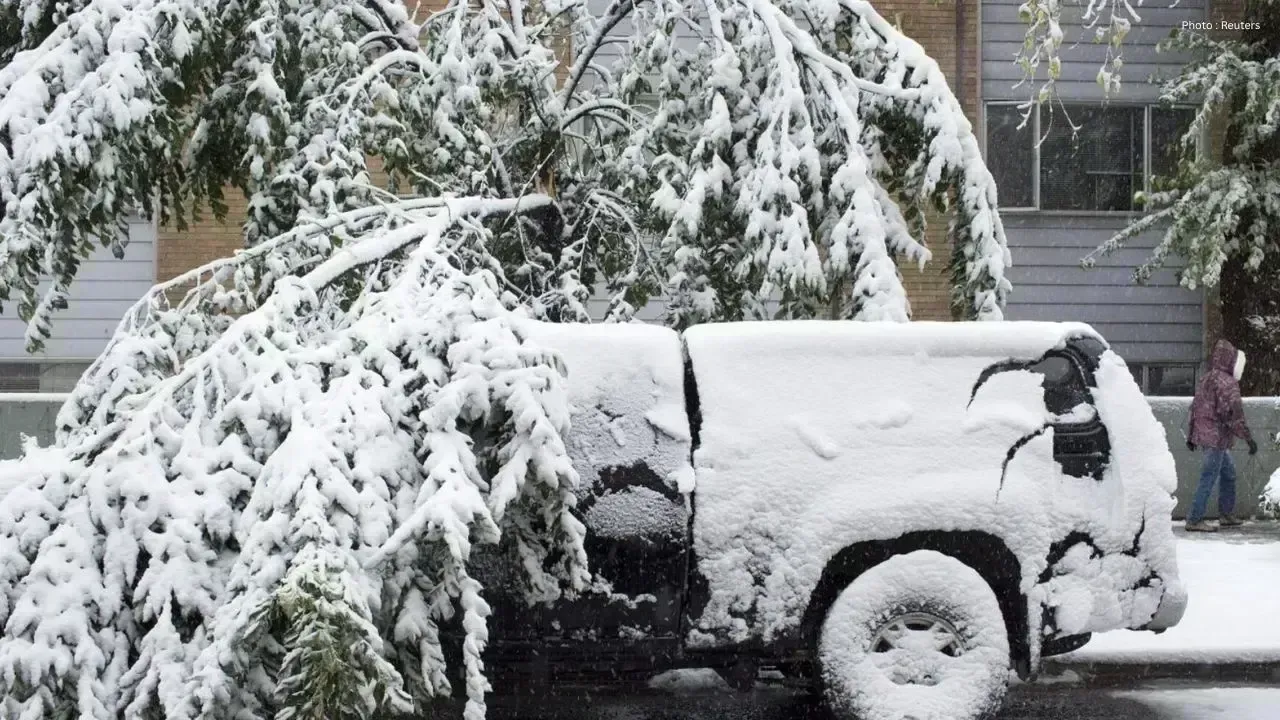
A late-season snowstorm is predicted to sweep through parts of Alberta this week, delivering fresh snowflakes while many locals yearn for more typical spring warmth. As reported by Environment and Climate Change Canada, the storm will commence late Monday and persist through Wednesday, with some areas anticipating considerable snow accumulation.
Meteorological experts indicate that regions north of Edmonton are expected to bear the brunt of the storm, prompting snowfall warnings for locations like Peace River, Slave Lake, Athabasca, Lac La Biche, St. Paul, and Cold Lake. These areas may receive close to 15 centimeters of snow, while those nearer to the British Columbia border could see totals reach around 20 centimeters. The heaviest snowfall is likely to occur overnight into Tuesday morning before gradually subsiding later in the day.
Temperatures throughout much of the province are predicted to hover around freezing, which could lead to some melting as snow falls, particularly in urban zones. Nevertheless, the storm is anticipated to generate slick roads and might affect travel in numerous areas.
For farmers in central Alberta, the arrival of snow brings mixed sentiments. While spring snow can postpone fieldwork and planting, many are viewing the extra moisture favorably after years of drought. Enhanced soil moisture is regarded as an encouraging indicator for the upcoming growing season.
Ken Farion, a local farmer near Vegreville with decades of experience, expressed optimism about this year’s conditions in comparison to last year. He mentioned that consistent light snowfalls over the winter have helped in preserving soil moisture and reducing soil erosion resulting from strong winds.
Farmers also highlighted the significance of this additional moisture for crops such as wheat, canola, and oats, as well as for livestock. Water bodies like dugouts and ponds that had previously dried up are projected to replenish with this recent precipitation, creating better grazing conditions for animals.
Despite potential short-term disruptions, many producers remain hopeful. Provided that the fields dry adequately before the planting season, typically around early May, they anticipate that the snowfall will ultimately foster healthier crop development.
This scenario underscores the fragile equilibrium farmers navigate with respect to moisture levels. While excessive snow and rain can hinder operations, a lack of precipitation threatens yields. Presently, numerous members within Alberta’s agricultural community are welcoming these improved conditions as a positive step towards a more stable and productive season.


 English