Post by : Abhinav
Rana
Photo : X / @OmanMHT
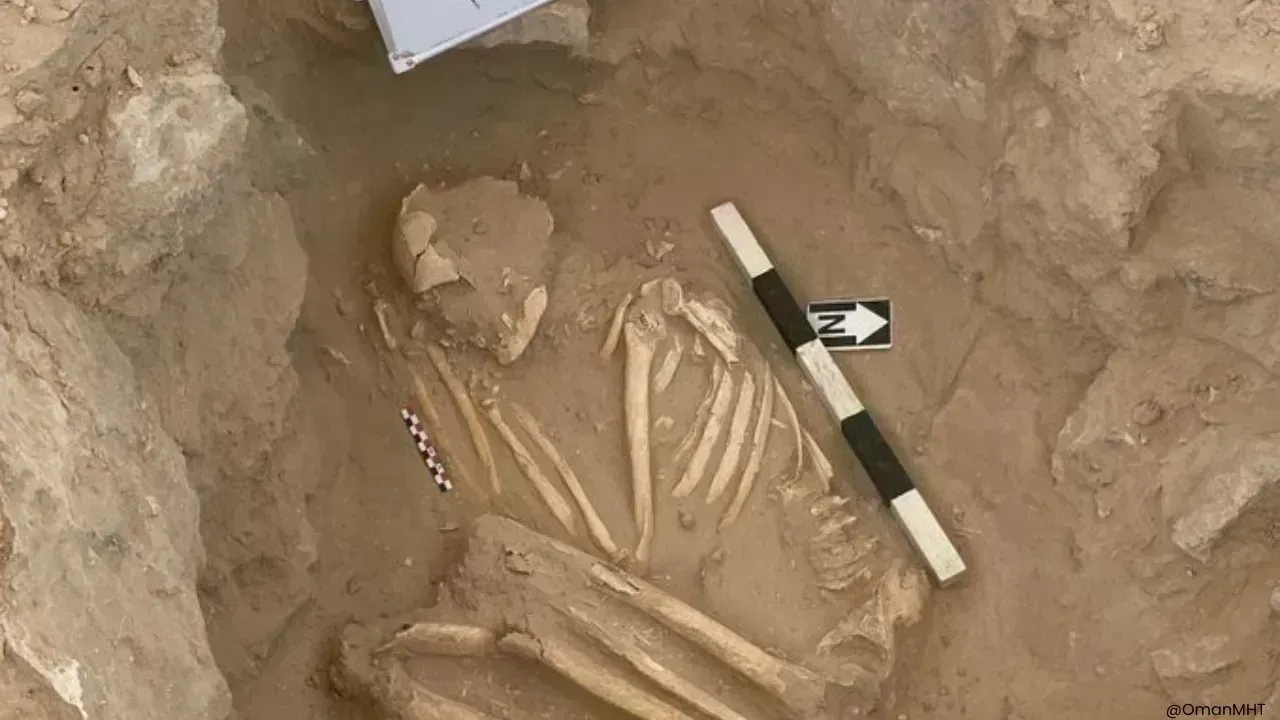
A routine infrastructure corridor in Oman has transformed into a gateway to ancient history, as archaeologists uncover 3,000-year-old graves along a coastal road, revealing a forgotten chapter of early human civilization in the region. What began as survey and excavation work has now evolved into a significant archaeological breakthrough, offering rare insight into burial rituals, cultural practices, and the social fabric of ancient Oman. This discovery is not just about the past. It highlights how modern development and historical preservation are increasingly intersecting, reshaping how nations approach infrastructure expansion and heritage conservation.
The excavation, carried out across three sites stretching over nearly 14 kilometers, revealed at least ten graves dating back to the late second millennium and early first millennium BCE. Among the most striking discoveries were human skeletons found in a crouched burial position, an ancient funerary practice that suggests deep-rooted cultural traditions linked to beliefs about life, death, and the afterlife.Alongside the skeletal remains, archaeologists uncovered a variety of artefacts, including shells, beads, and the bones of birds and fish. These items are believed to have been placed intentionally as part of burial rituals, indicating symbolic offerings or spiritual practices associated with the deceased. Such findings provide valuable clues about how early communities perceived death and honored their dead, offering a glimpse into a sophisticated cultural framework that existed thousands of years ago.
The crouched burial position, combined with the presence of ritual objects, points to a highly structured funerary tradition in ancient Oman. These practices suggest that burial was not merely a practical necessity but a ceremonial process deeply embedded in societal beliefs and identity. Archaeological evidence from across the Oman peninsula has long indicated that burial customs evolved over time, reflecting changes in social organization, trade, and cultural exchange. The newly discovered graves add another layer to this understanding, reinforcing the idea that ancient Omani societies were part of a broader network of civilizations connected through shared traditions and interactions. Such discoveries are critical in reconstructing the narrative of early human settlement in the region, highlighting Oman’s historical role as a cultural and trade hub linking the Arabian Peninsula with neighboring civilizations.
One of the most compelling aspects of this discovery is its location along a modern coastal road project. This highlights a growing global trend where infrastructure development inadvertently uncovers archaeological treasures, prompting a delicate balance between progress and preservation. In Oman, authorities have increasingly prioritized integrating archaeological assessments into development projects, ensuring that historical sites are documented, studied, and preserved before construction proceeds. This approach not only safeguards cultural heritage but also enriches national identity by connecting present-day development with ancient history. For the transportation and infrastructure sectors, this case underscores the importance of incorporating heritage management into planning processes, ensuring that economic growth does not come at the cost of historical loss.
The latest findings add to Oman’s already rich archaeological record, which includes some of the most significant Bronze Age sites in the Arabian Peninsula. From monumental tombs to ancient settlements, the country continues to reveal evidence of complex societies that thrived thousands of years ago.These discoveries are not only of academic interest but also hold potential for cultural tourism and international research collaboration. By showcasing its ancient heritage, Oman is strengthening its position as a key destination for archaeological exploration and historical study.
As researchers continue to analyze the newly uncovered graves and artefacts, further insights are expected to emerge, potentially reshaping our understanding of early human life in the region. Each discovery adds a piece to the puzzle, bringing historians closer to reconstructing the social, cultural, and economic dynamics of ancient Oman. For the modern world, this discovery serves as a powerful reminder that beneath today’s infrastructure lies a deep and complex history waiting to be uncovered. It challenges us to rethink how we build, explore, and preserve ensuring that progress and heritage move forward together.


 English