Post by : Saif
Al-Najjar
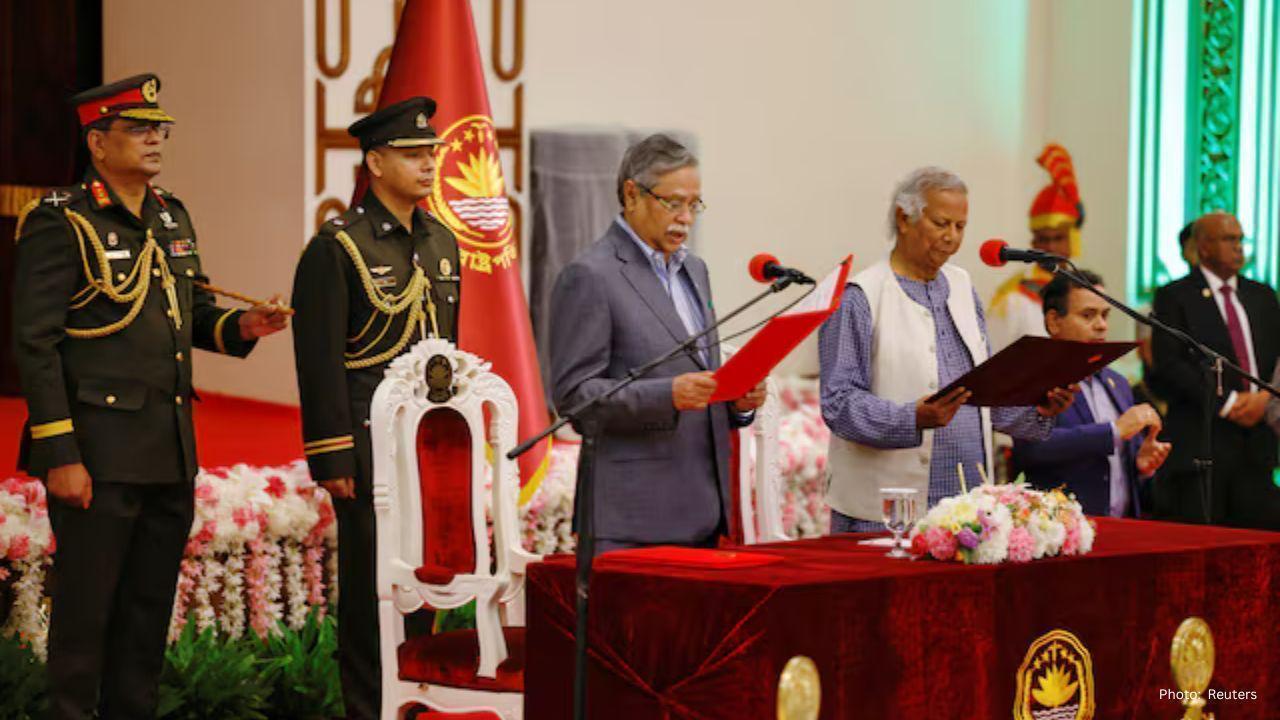
Bangladesh is entering another phase of political tension as President Mohammed Shahabuddin indicates his desire to resign ahead of his term's conclusion. His proclamation comes as a surprise, given that presidents in Bangladesh typically serve out their ceremonial roles without significant conflict. Addressing Reuters from his Dhaka residence, the 75-year-old leader articulated feelings of being diminished and disregarded by the interim government helmed by Muhammad Yunus. He cited recent actions by the temporary administration that have left him feeling undervalued and disrespected, despite being the constitutional head of state.
Shahabuddin, who assumed office in 2023 as an uncontested candidate backed by the Awami League, initially had a ceremonial role. However, his position gained critical importance during the significant student protests in 2024, when citizens rallied against allegations of corruption, escalating authoritarianism, and political misconduct. The unrest forced Sheikh Hasina to flee to New Delhi, resulting in the dissolution of parliament and the removal of ministers, which led to a complete governmental breakdown. In that chaotic environment, Shahabuddin unexpectedly became the last standing constitutional authority in the nation.
In his interview, Shahabuddin stated his intention to resign soon after the parliamentary elections scheduled for February. He is eager to return to private life but acknowledged his constitutional obligation to stay until a new government assumes power. While he conveyed a sense of calm, it was clear that he felt deeply wounded by the treatment he has endured from the interim administration over recent months.
A primary source of his humiliation stems from the abrupt removal of his official portraits from Bangladesh's diplomatic missions worldwide. Traditionally, the portraits of the sitting president are displayed in diplomatic posts and government offices; nevertheless, Shahabuddin disclosed that his likeness was taken down overnight without prior notice, sending a clear message that he was no longer regarded as significant or respected, despite his innocence. This act left him feeling as though he was being stripped of his identity within his own country.
Shahabuddin mentioned that his press department was abolished and noted that Yunus has not met with him for nearly seven months. These developments compounded what he described as a painful predicament. The interim administration's apparent intent to limit his influence and visibility became evident to him. His attempts to seek clarification from Yunus through a letter went unanswered, amplifying his feelings of neglect; for a president, the lack of communication from the head of the interim government felt like an endeavor to marginalize him.
The interim government emerged following the tumultuous events of 2024, when public discontent with the Awami League government escalated. Yunus, a Nobel laureate recognized for his microfinance contributions and esteemed internationally, was appointed to lead the temporary administration. Many had anticipated that Yunus would proactively engage with various government branches, including the presidency, to foster trust and stability. Shahabuddin's remarks, however, suggest considerable friction between him and the interim leadership. His insights illuminate a significant breakdown in communication and mutual respect within the current political framework.
Yunus' press team has not responded to Reuters' inquiries regarding the matter, further raising speculations about whether the interim administration has intentionally marginalized the president or if it stems from mere disorganization. Political analysts are divided; some believe the government is aiming for a new political landscape devoid of Awami League affiliations, whereas others see it as a consequence of unresolved miscommunications.
Shahabuddin's announcement of his intention to resign after the February elections adds more complexity to a politically precarious Bangladesh. In recent years, the nation has faced ongoing protests, charges of authoritarianism, and growing divisions among political factions. Although the interim government was set up to restore order, the president's remarks indicate that the internal political climate remains delicate and tumultuous. His declarations suggest that even top constitutional figures can be vulnerable amidst national upheavals.
If Shahabuddin steps down, Bangladesh will once again face a pivotal transition. A fresh parliament will need to be elected, a prime minister selected, and likely a new president appointed. These transitions may evoke varied sentiments among citizens, with some feeling optimistic about progress, while others may fear ongoing instability. Bangladesh's long-standing struggle to balance political rivalry with democratic stability is highlighted by the challenges unfolding over the past year.
Shahabuddin emphasized that he cannot remain in a position where he feels overlooked and powerless. He entered public service with the intent to uphold dignity, not to suffer indignation. His poignant reflections also mirror the struggles leaders face amid rapid political changes, illustrating though how power conflicts and distrust can permeate even the highest echelons of governance.
As Bangladesh gears up for the February elections, the nation's political prospects remain uncertain. The interim leadership must ensure order, political factions need to campaign peacefully, and citizens must contemplate whom they wish to steer the country. Shahabuddin's desire to vacate his position signals that Bangladesh's trials are far from resolved, underscoring the importance of respect, dialogue, and constitutional fidelity during politically transformative periods.


 English