Post by : Shweta
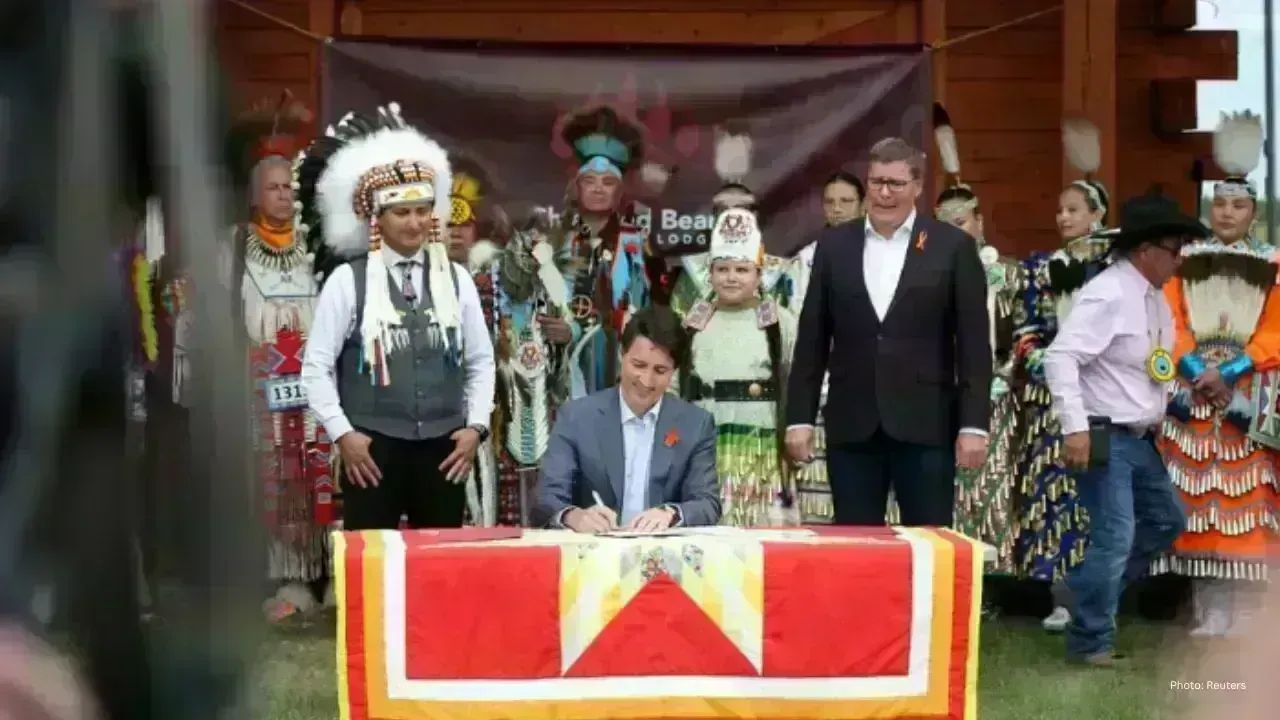
A collaborative of First Nations from British Columbia is urging the provincial government to delay advancements on two significant treaty bills, claiming inadequate consultation and infringement on their territorial rights. This call comes as Bills 20 and 21, which pertain to agreements with the K’omoks and Kitselas First Nations, approach further legislative discussions.
Among those voicing concerns are the Wei Wai Kum First Nation, Nine Allied Tribes, and the Lax Kw’alaams Band. Leaders from these communities argue that the treaties significantly overlap their traditional lands. They assert that the K’omoks treaty could encroach upon nearly 80 percent of Wei Wai Kum territory, while the Kitselas treaty threatens to affect over 90 percent of lands related to the other Nations involved.
Garry Reece, mayor of Lax Kw’alaams Band, expressed strong opposition to the Kitselas treaty in its existing form. While he underscored the importance of treaty agreements, he insisted that they must acknowledge existing territorial boundaries and involve adequate consultation. He cautioned that ignoring these issues could trigger protests or disruptions, including potential roadblocks that might hinder significant development initiatives.
Leaders also noted that numerous large-scale projects, such as port expansion and energy proposals in the area, could be affected if these tensions are not addressed. They argue that advancing without proper consent could lead to further conflicts and uncertainty for both communities and potential investors.
Chris Roberts from the Wei Wai Kum First Nation clarified that the opposition is not against treaties per se but concerns how they are being executed. He described the situation as having a “fatal flaw,” particularly due to the lack of acknowledgment of overlapping land claims between distinct Nations.
Responding to these concerns, Spencer Chandra Herbert, B.C.’s Minister of Indigenous Relations and Reconciliation, admitted the necessity of assessing the current situation. He mentioned that further dialogue between the province and First Nations is essential for resolving the issues and progressing towards a solution.
This scenario underscores the ongoing challenges within treaty negotiations, especially when multiple Indigenous groups assert conflicting claims. As discussions proceed, the resulting decisions will likely influence the relationship between First Nations and the provincial government, along with the future of developmental efforts in the region.


 English