Post by : Saif
Al-Najjar
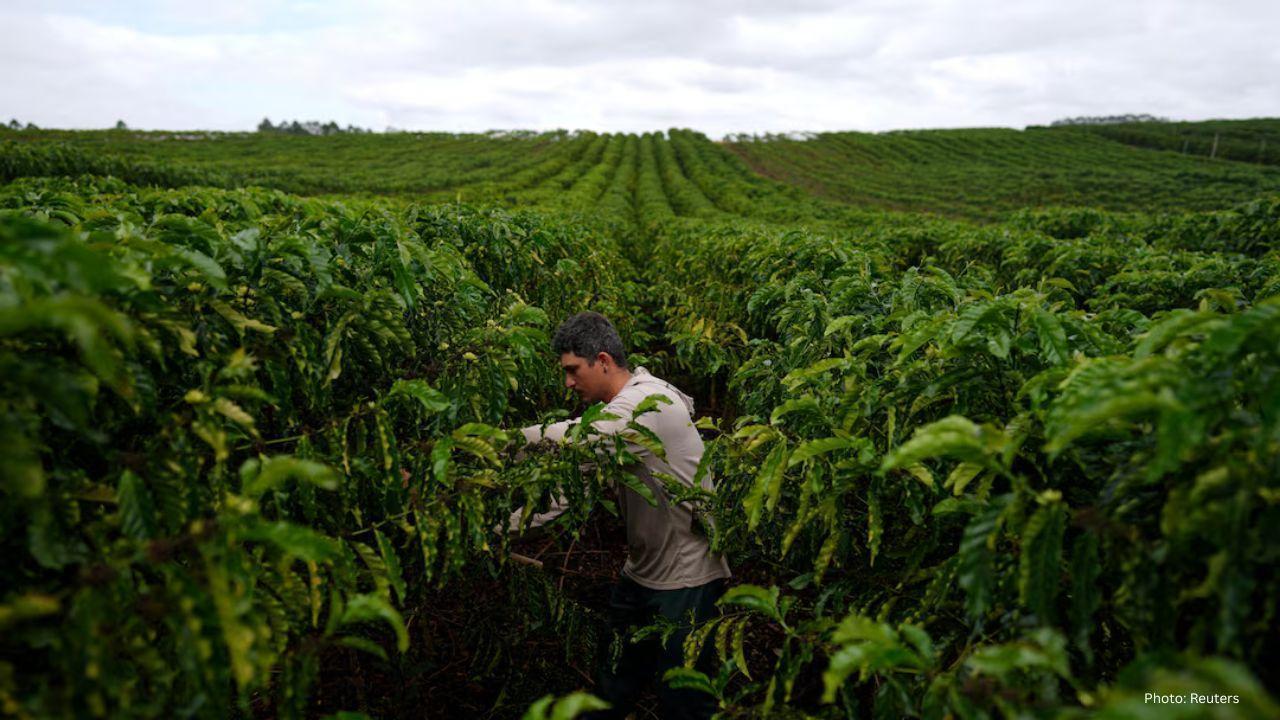
In Brazil, robusta coffee, formerly regarded as a lower-tier option, is now capturing the interest of both consumers and farmers. In light of escalating global coffee prices and the threats posed by climate change to the country’s well-known arabica beans, farmers are shifting their focus towards high-quality robusta production.
A pure robusta espresso in Sao Paulo today offers a smooth, chocolatey flavor paired with a rich crema, challenging the long-held belief that only arabica beans can produce premium coffee. Marco Kerkmeester, co-founder of Santo Grao coffee chain, noted that these robusta espressos attract aficionados in search of new flavor profiles.
Climate change is impacting traditional arabica-growing areas significantly. A study from 2022 predicted that by 2050, over 75% of Brazil’s prime arabica land could become unsuitable due to rising temperatures and drought conditions. This renders robusta—a hardier and more resilient variety—a compelling option for both farmers and roasters.
In Espirito Santo state, the heart of Brazil’s robusta production, farmers are implementing advanced harvesting and drying methods. Their goal is to produce 1.5 million bags of specialty robusta by 2032, a dramatic rise from the current 10,000 bags that are recognized as premium. Their approach now includes modern drying equipment and meticulous sorting, replacing older, smoke-dependent techniques that could diminish bean quality.
The Specialty Coffee Association (SCA) has updated its criteria to highlight the quality of robusta. This enables coffee graders to distinguish and celebrate the finest beans, irrespective of the species. The SCA is also revising its flavor descriptors to encompass the aromatic and spicy notes that exceptional robusta can present.
This commitment to quality is reaping rewards. The price of Brazilian specialty robusta has surged to over $295 for each 60-kilogram bag—more than doubling since 2021—while robusta futures have increased by over 80% in the same timeframe. Enhancements in quality also permit roasters to boost the proportion of robusta in espresso blends without sacrificing flavor.
Experts assert that specialty robusta is not intended to replace arabica; instead, it seeks to establish itself as a distinct, valuable coffee variety. Farmers traditionally devoted to arabica cultivation are now exploring robusta, using their expertise to enhance bean quality.
Across cafes from Sao Paulo to London and Berlin, baristas highlight the rich flavors of robusta, introducing customers to a varied and enriched coffee experience. With growing global consumption, climate challenges, and increasing prices, Brazil’s robusta coffee industry is evolving in ways that could redefine the international coffee scene.
Premium robusta is no longer merely a budget option. It is rising as a highly desirable alternative for coffee lovers who value its exceptional taste and aroma, while providing farmers with resilience and profitability amidst changing climatic conditions.


 English