Post by : Saif
Al-Najjar
Bulgaria has plunged into political instability as Prime Minister Rosen Zhelyazkov announced his resignation on Thursday. This move came in the wake of escalating nationwide protests against the government’s economic strategies and its inability to combat corruption. The resignation was timed just before a scheduled no-confidence vote that could have precipitated the government’s ousting.
This upheaval occurs at a critical juncture, with Bulgaria set to join the euro zone on January 1. The nation now faces mounting dissatisfaction among its citizens, a crisis of leadership, and intensifying calls for political parties to form a new government.
A Government Forced to Resign Amid Public Discontent
Zhelyazkov addressed the nation through a televised statement, asserting that the ruling coalition felt the need to take a responsible course of action for the country.
“We aspire to meet the expectations of society,” he stated. “Legitimacy derives from the voice of the populace.”
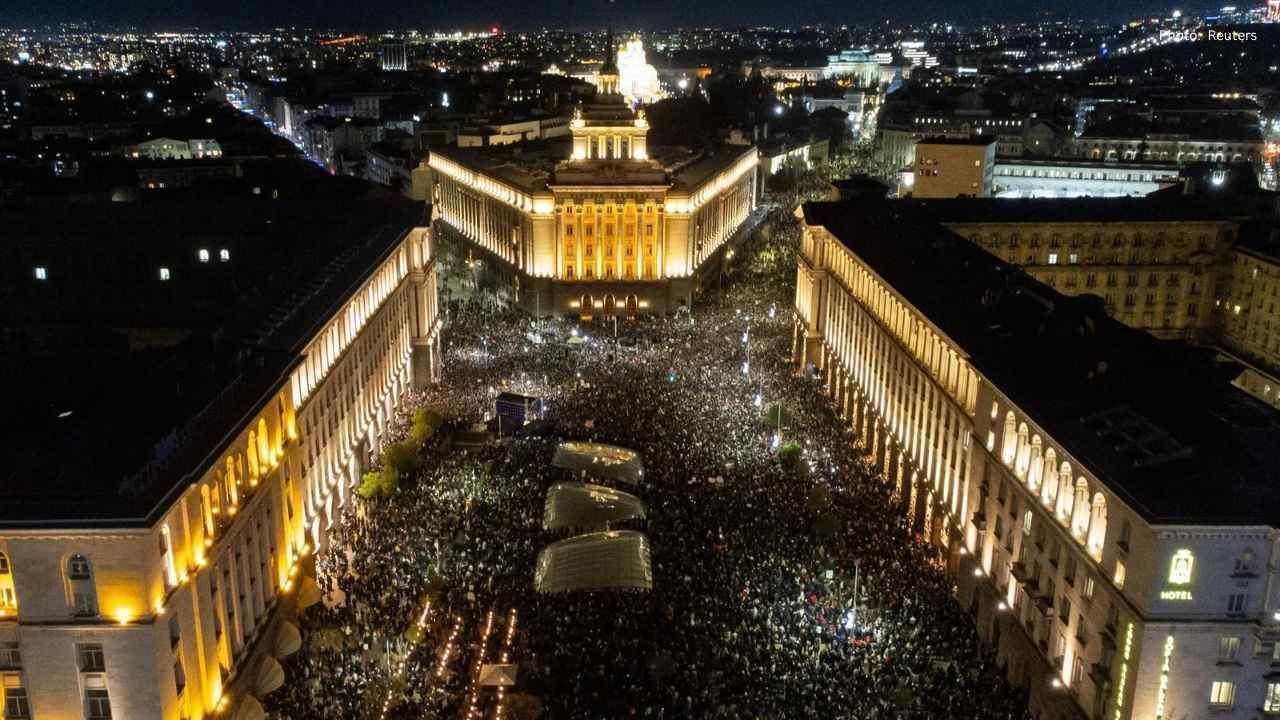
Many Bulgarians perceived this resignation as overdue. On Wednesday night, thousands took to the streets of Sofia and other cities, calling for better economic governance, more robust measures against corruption, and a transparent government. These protests form part of a larger wave of discontent that has swept through Bulgaria in recent weeks.
The Budget Proposal That Sparked Outrage
The political situation worsened following the government's introduction of its 2026 budget plan—the first to be drafted in euros, as part of the impending currency transition. This plan featured raised social security contributions and increased taxes on dividends, which officials defended as necessary for expanded state spending.
However, many citizens regarded the budget as unjust, arguing it would exacerbate the difficulties faced by those already grappling with rising living costs. Opposition parties and civil organizations also criticized the government for being insensitive to the challenges faced by everyday citizens.
Although the government attempted to quell dissent by retracting the budget proposal last week, protests continued to escalate, indicating deeper frustrations regarding corruption and ineffective governance.
A Legacy of Political Unrest
Bulgaria has conducted seven national elections over the last four years, but the latest one in October 2024 failed to yield political cohesion, leaving the country split and struggling to establish a stable government.
President Rumen Radev, who has criticized the current administration, echoed calls for Zhelyazkov's resignation earlier in the week, stating that leaders must choose “between the people's voice and the mafia's fear,” urging them to heed public sentiment.
In accordance with Bulgaria's constitution, the president will now encourage parliamentary parties to attempt forming a new government. Should they fail—an outcome many analysts anticipate—he will install a caretaker administration to govern until new elections can be arranged.
Challenges Loom as Euro Zone Entry Approaches
The timing of this political crisis intensifies the stakes. Bulgaria is gearing up to adopt the euro on January 1, a significant milestone that necessitates solid political stability—yet the country finds itself enveloped in internal discord and the threat of another election.
Citizens are hopeful that the next leadership, whether interim or elected, will finally confront corruption, enhance economic conditions, and rebuild trust between the government and its people.
At this pivotal moment, Bulgaria's forthcoming actions will significantly influence its political landscape and economic trajectory within Europe.


 English