Post by : Saif
Al-Najjar
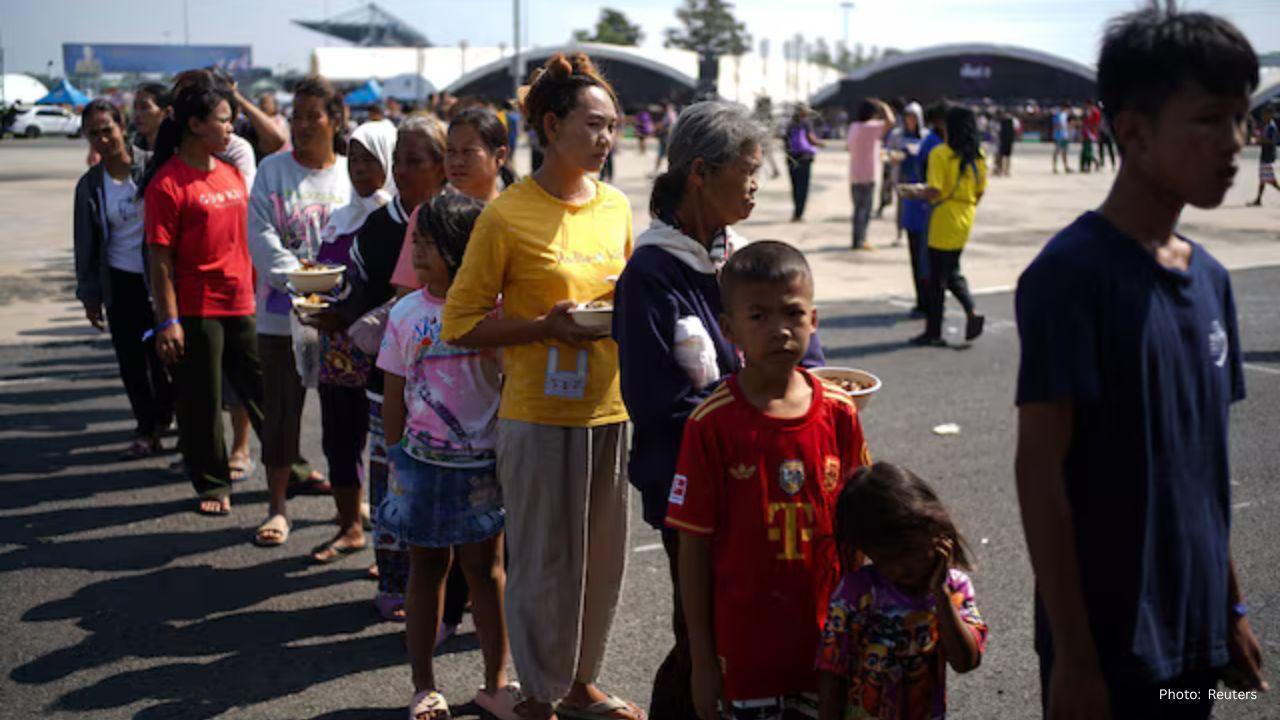
The recent conflict along the Cambodia-Thailand border has led to a dire humanitarian crisis, forcing thousands of families into uncertainty and fear. Residents near the contested border found themselves fleeing amidst gunfire and explosions, carrying only minimal belongings. Many now face the harsh realities of crowded shelters with a lack of food and clean water.
Chay Rey, 54, who worked in a local casino, shared her harrowing escape with her husband during the night, fearing for their lives with each bullet that flew past. Now, they reside in a temple in Srei Snam town along with around 500 others seeking refuge from the violence. However, desperation quickly set in as supplies of rice and drinking water dwindled. Parents face heartbreaking situations as their children plead for food they can’t provide.
Over 130,000 individuals across six Cambodian provinces have been forced into more than 100 evacuation centers, with arrivals surpassing the available support. Aid organizations report that the situation is more severe than during the previous wave of fighting in July, which only impacted two provinces. This time, the needs are intensified, placing further strain on already limited local resources. Additionally, unrest has prompted over 800,000 Cambodian workers to return from Thailand, imposing extra burdens on local communities.
According to Janes Imanuel Ginting, national director of World Vision in Cambodia, the primary challenges include shortages of food, drinking water, suitable shelter, and sanitation. Most families subsist on instant noodles and modest rice portions provided through local efforts. While humanitarian assistance has begun to arrive, it is inadequate against the growing demand, especially if the conflict persists.
The emotional toll is echoed by Linh Thoem, 53, who escaped from Trapeang Ampel district. Despite reaching a shelter with relatives, he had to leave his children behind to tend to livestock. If conditions worsen, he is faced with the painful option of either abandoning his animals or bringing his children into an unstable situation. The cattle represent his family’s livelihood, making the choice excruciating.
Though the shelter provides basic needs like food and medical care, Linh fears dwindling supplies if more people arrive or if fighting continues. His limited provisions may not last, a sentiment shared by many as they witness their food stocks deplete.
The history of tension between Cambodia and Thailand has witnessed clashes before, but this latest escalation has exacerbated suffering and displacement. The rapid evacuations and limited resources have culminated in a humanitarian crisis demanding urgent attention. Most evacuees are impoverished villagers who have lost everything, now cramped in shelters, hoping for a safe return home.
Children, the elderly, and women are disproportionately affected, facing long treks under the heat carrying their few belongings. Many arrive fatigued and ill, prompting aid workers’ concerns about potential outbreaks of disease due to lack of clean water and sanitation. Families are increasingly apprehensive about the future of their homes and safety.
Amid ongoing gunfire, anxiety fills the shelters. People seek updates via radio or await calls from relatives, desperate for good news. Others turn to local temples, praying for safety and an end to the violence. Currently, there are no clear indications that fighting will cease.
This crisis exemplifies how border disputes predominantly harm ordinary people. While governmental leaders trade threats and allegations, it’s the villagers who lose their homes and sense of security. Immediate aid is crucial for the displaced populations in Cambodia not just for survival, but for the rebuilding of their lives once the violence abates.
International entities and neighboring nations must escalate their support if humanitarian conditions worsen. Immediate needs include food, water, medical aid, and temporary housing. Without a significant increase in relief efforts, the plight of displaced families will intensify.
The Cambodian people did not choose this conflict; they seek safety, dignity, and the chance to rebuild their lives. Until peace is achieved at the border, their struggle will persist, and the global community must not avert its gaze from their urgent needs.


 English