Post by : Saif
Al-Najjar
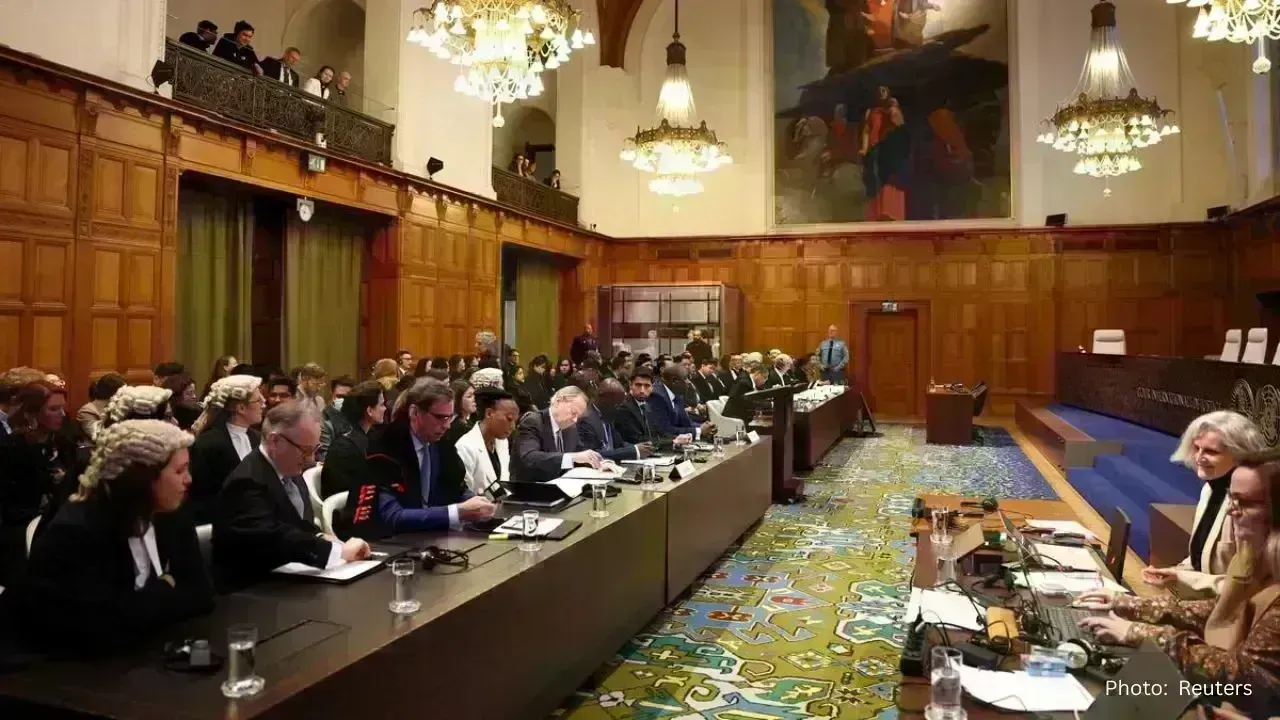
The world is drawn to the Rohingya crisis as a landmark legal case launches at the International Court of Justice (ICJ), the UN's highest judicial body. On January 12, 2026, judges in The Hague commenced hearings questioning Myanmar’s actions against the Rohingya, a Muslim minority.
This case stands out as the first genocide case fully heard by the ICJ in over a decade. Legal scholars indicate that its outcome could influence future interpretations of genocide across various global conflicts.
Filed in 2019 by Gambia, a small West African nation, the case insists on the Rohingya's plight, claiming that Myanmar’s military conducted acts aimed at annihilating the group. The focus is primarily on the military operations that occurred in 2017 within Rakhine state, forcing over 730,000 Rohingya to flee to Bangladesh.
Survivors recounted harrowing experiences, describing their villages burned down, killings, sexual violence, and families torn apart. A subsequent UN report indicated substantial proof that actions of the Myanmar military amounted to genocide.
In sharp contrast, Myanmar has vehemently rejected these accusations, calling its military response a legal maneuver to counter militant attacks. Leaders in Myanmar argue that the claims fail to paint an accurate picture of the events that transpired.
For many Rohingya survivors, this case brings a glimmer of hope after years of suffering. Some victims have made their way to The Hague to witness the hearings, yearning for official acknowledgment of their suffering and a clear message that such atrocities must not recur.
The hearings are anticipated to span three weeks, marking the first occasion for Rohingya victims to share their experiences in an international courtroom, albeit with privacy safeguards in place during certain proceedings.
Complicating matters is the ongoing turmoil in Myanmar, which has seen consistent unrest, violence, and a military-led government since the coup in 2021. The military's recent elections have drawn criticism from both the UN and various human rights organizations for being unfair.
Many experts suggest that the ICJ’s ruling could have broad repercussions, influencing how genocide is recognized, how evidence is evaluated, and fundamentally altering the path to justice for victims worldwide. For the Rohingya, this case signifies a long-awaited opportunity to finally voice their grievances and seek accountability under international law.
As the hearings progress, attention from the global community intensifies, recognizing that the results may pave the way toward justice, truth, and accountability.


 English