Post by : Mariam
Al-Faris
Photo: SPA
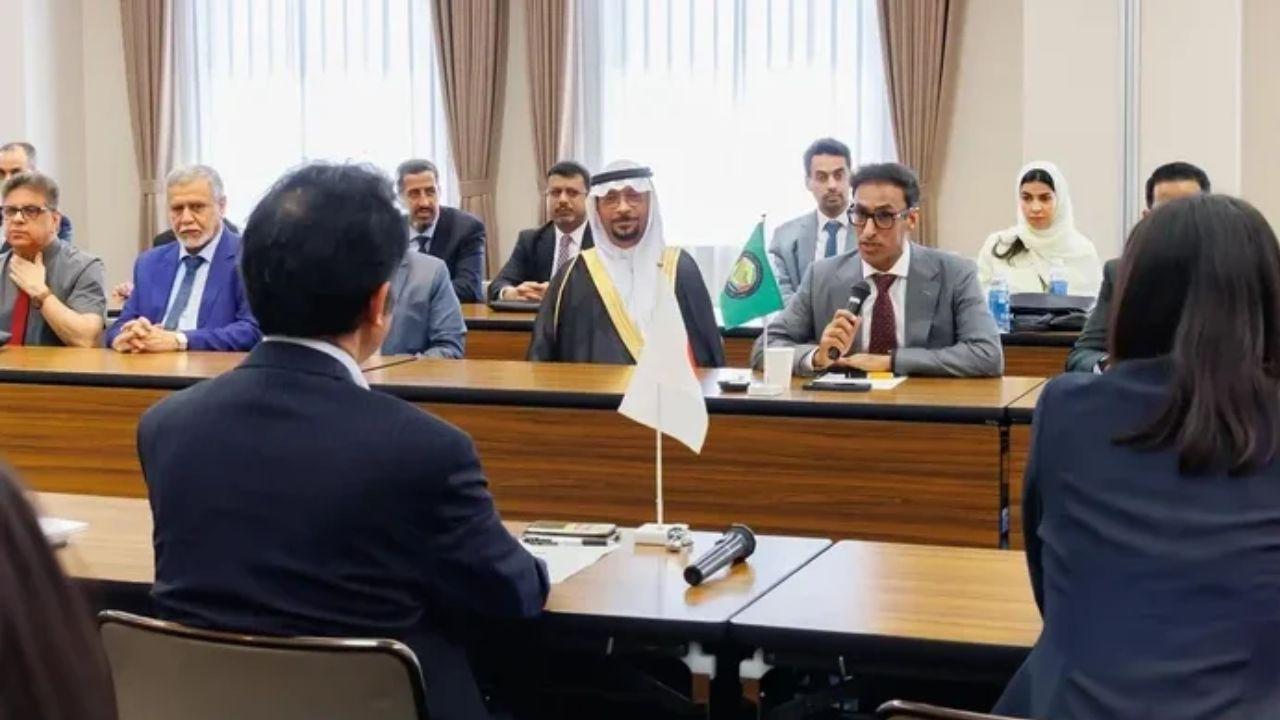
Saudi Arabia recently led the second round of talks for a Free Trade Agreement (FTA) between the Gulf Cooperation Council (GCC) and Japan. These discussions took place in Tokyo from June 30 to July 4, 2025, and are part of the Kingdom’s efforts to strengthen its global trade relationships and support economic growth across the region.
The Saudi delegation was headed by Mr. Fareed bin Saeed Al-Asli, Deputy Governor for International Agreements and Organizations at the General Authority for Foreign Trade. Representing Saudi Arabia, his role was to make sure the Kingdom’s trade priorities were well presented and considered throughout the negotiations.
To handle the wide range of topics in the talks, the Saudi team included nine specialized groups. These groups focused on important areas like trade in goods and services, investments, legal matters, e-commerce, intellectual property, government contracts, rules of origin, and economic studies. Experts from 46 Saudi government departments were involved, all working together to prepare proposals and track progress in line with global trade rules and agreements like those from the World Trade Organization (WTO).
Strong Trade Relationship with Japan
Saudi Arabia and Japan already have a robust trading connection. In 2024, their trade volume will be around $36 billion. Saudi Arabia exported over $28 billion in goods to Japan, with the majority of these being mineral products and organic chemicals. Japan, on the other hand, exported approximately $8 billion in commodities to the Kingdom, which included autos, auto parts, machinery, and tools.
The General Authority for Foreign Trade said it will continue working to expand Saudi Arabia’s presence in global markets and ensure that international trade deals support the Kingdom’s broader development plans.
Looking Beyond Oil
These negotiations show that Saudi Arabia and other GCC countries are looking to expand their trade beyond just oil. While energy exports remain a big part of trade with Japan, both sides are now interested in growing business in other areas—like technology, services, and advanced manufacturing.
Saudi Arabia’s role in leading these talks reflects its growing influence in shaping regional economic policies. The way the Kingdom has organized its team—with focused groups handling modern trade topics like e-commerce and intellectual property—also shows a more advanced and strategic approach to international trade.
If the agreement is finalized, it could open up exciting new opportunities for businesses in both Japan and the Gulf. More importantly, it would support Saudi Arabia’s long-term Vision 2030 goals, helping the country diversify its economy and become more competitive on the global stage.


 English