Post by : Saif
Al-Najjar
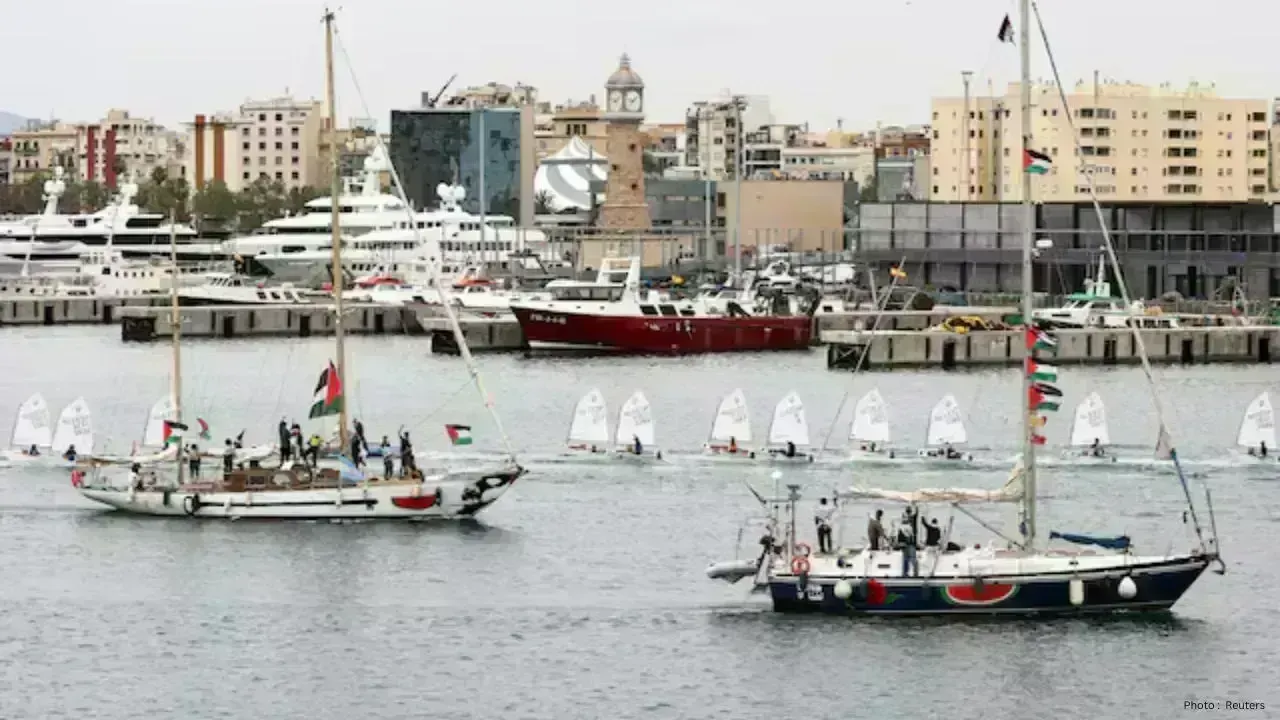
Israel has initiated the interception of vessels delivering aid to Gaza, halting them before they approach the coast. This action signifies a notable shift in the management of such shipments and has incited significant apprehension regarding humanitarian access and security in the area.
This measure fits within Israel’s strategy to regulate the inflow of goods into Gaza, a region that has endured stringent restrictions for many years. Authorities assert that this approach is essential to thwart weapons and other contraband from reaching militant factions. Nevertheless, this decision has drawn substantial backlash from humanitarian organizations and worldwide observers.
Stopping ships far out at sea means that aid doesn't reach Gaza, raising alarms about the delivery of vital supplies such as food, medicine, and essential goods for the local population. Many families already contend with shortages stemming from ongoing hostilities and restrictions.
Proponents of the action argue that security must take precedence, citing that certain shipments may hide dangerous items, necessitating rigorous oversight to avert escalated violence. Israel holds that monitoring entry points is crucial for its national security.
Conversely, detractors argue that these measures may intensify the humanitarian crisis. A considerable segment of Gaza's populace relies on external assistance; hindering aid can exacerbate suffering and complicate daily life for many.
This situation amplifies the existing tensions in the region. Gaza has experienced instability for years, grappling with ongoing cycles of conflict and fragile truces. Any developments impacting aid channels can rapidly become contentious for both residents and the global community.
A critical aspect also lies within international law and maritime protocols. Intercepting vessels in deeper waters raises legal questions surrounding the rights of ships carrying humanitarian materials. These matters are anticipated to gain traction at international discussions.
The scenario highlights the broader challenge of reconciling security imperatives with humanitarian obligations. Governments frequently navigate arduous decisions aimed at safeguarding their borders while ensuring civilians receive essential aid.
For Gaza's residents, the repercussions are immediate. Restricted aid access can influence health, nutrition, and overall living standards. Numerous families lead challenging lives, and any disruption in aid could exacerbate their conditions.
Meanwhile, the global community persistently advocates for solutions that balance security needs with humanitarian access. Achieving a harmonious approach remains a substantial challenge for all parties involved.
This altercation underscores the intricate nature of the regional situation, where security-driven actions can entail broader impacts on civilians and global sentiment.
As the landscape evolves, attention remains on whether aid will successfully reach those in distress and how regional tensions can be navigated without inflicting additional harm.


 English