Post by : Saif
Al-Najjar
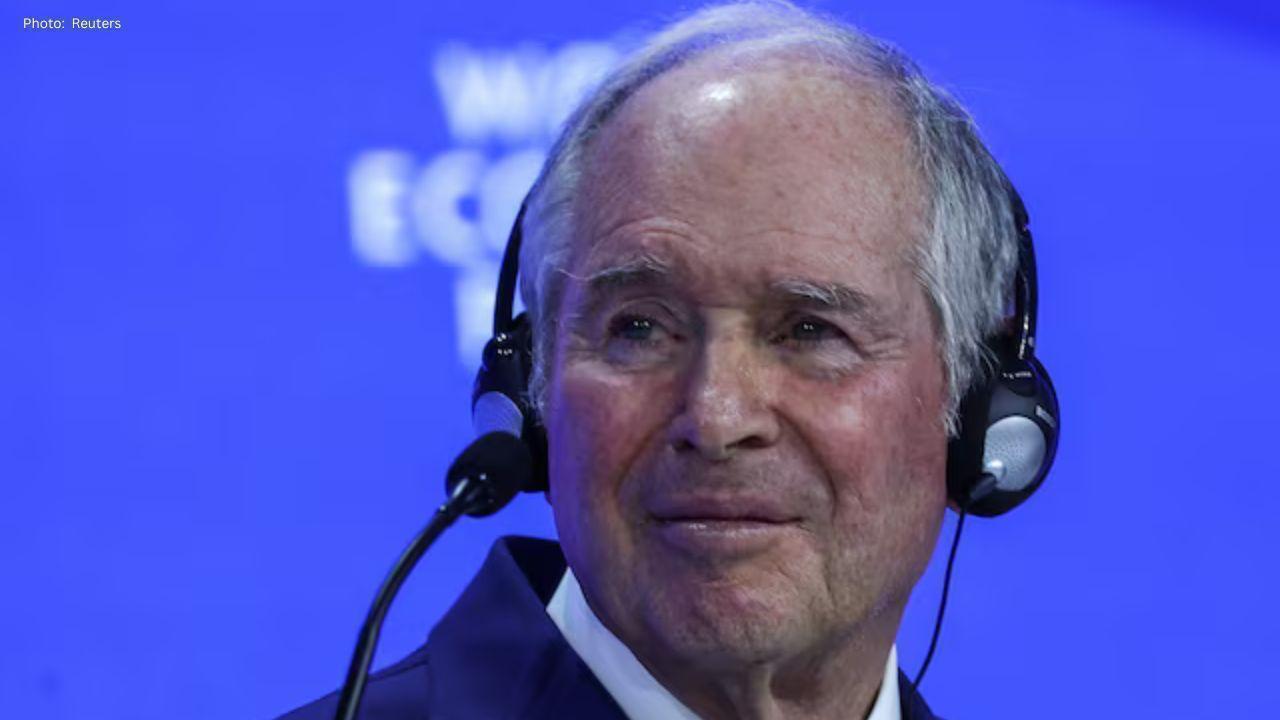
Stephen Schwarzman, CEO of Blackstone, has addressed the rising concerns surrounding private credit and its perceived threats to the financial system. During his remarks at Abu Dhabi Finance Week, he contended that the recent auto sector bankruptcies should not be attributed to private credit.
Private credit refers to instances where businesses secure funds from private investment entities rather than conventional banks. This market has rapidly expanded, drawing substantial investments from major institutional players. The swift growth has led to apprehensions that private credit might present vulnerabilities in the global financial landscape.
The string of notable bankruptcies, including the collapse of auto parts producer First Brands and subprime lender Tricolor, has fueled these concerns, prompting some investors to scale back their involvement in auto and consumer loan markets, thereby dampening the previously buoyant credit market.
Schwarzman firmly rejected the notion that private credit was responsible for these failures, clarifying that the loans linked to these bankruptcies were primarily underwritten by traditional banks. He highlighted that banks undertook the research, funding, and sales of these deals, with little involvement from private credit entities.
He also contrasted the risk profiles of banks and private credit firms, noting that banks frequently operate with high leverage, sometimes borrowing as much as ten times their capital, whereas private credit companies typically utilize lower leverage, about one and a half times their capital. This, according to him, positions private credit as a more cautious and secure lending option than traditional banking.
This discussion is significant given that private credit now plays a pivotal role in the global financial mechanism. As banks grapple with increasing regulation, many firms have sought financing from private lenders, establishing private credit as a crucial funding channel but also a point of concern for regulators and market experts.
Some analysts advocate for a middle-ground perspective. While Schwarzman's assertion that banks have been involved in numerous hazardous transactions holds water, the brisk expansion of private credit has indeed created sectors warranting enhanced oversight. With escalating investments into this domain, ensuring transparency and effective risk assessments is vital.
The recent bankruptcies serve as a cautionary indicator that aspects of the credit market might be unhealthy. Regardless of whether the primary risk lies with banks or private lenders, the ramifications are broadly felt throughout the system, impacting investors, employees, and firms linked to these organizations.
In conclusion, Schwarzman emphasized that private credit should not be singularly blamed for recent setbacks. He asserted it often represents a more stable and prudent lending option. Nevertheless, as financial systems grow increasingly intricate, both banks and private credit firms must demonstrate their capacity to manage risks appropriately to safeguard the broader economy.
Reporting by Utkarsh Shetti and Tala Ramadan in Abu Dhabi; Editing by Alexander Smith


 English