Post by : Raina
Al-Fahim
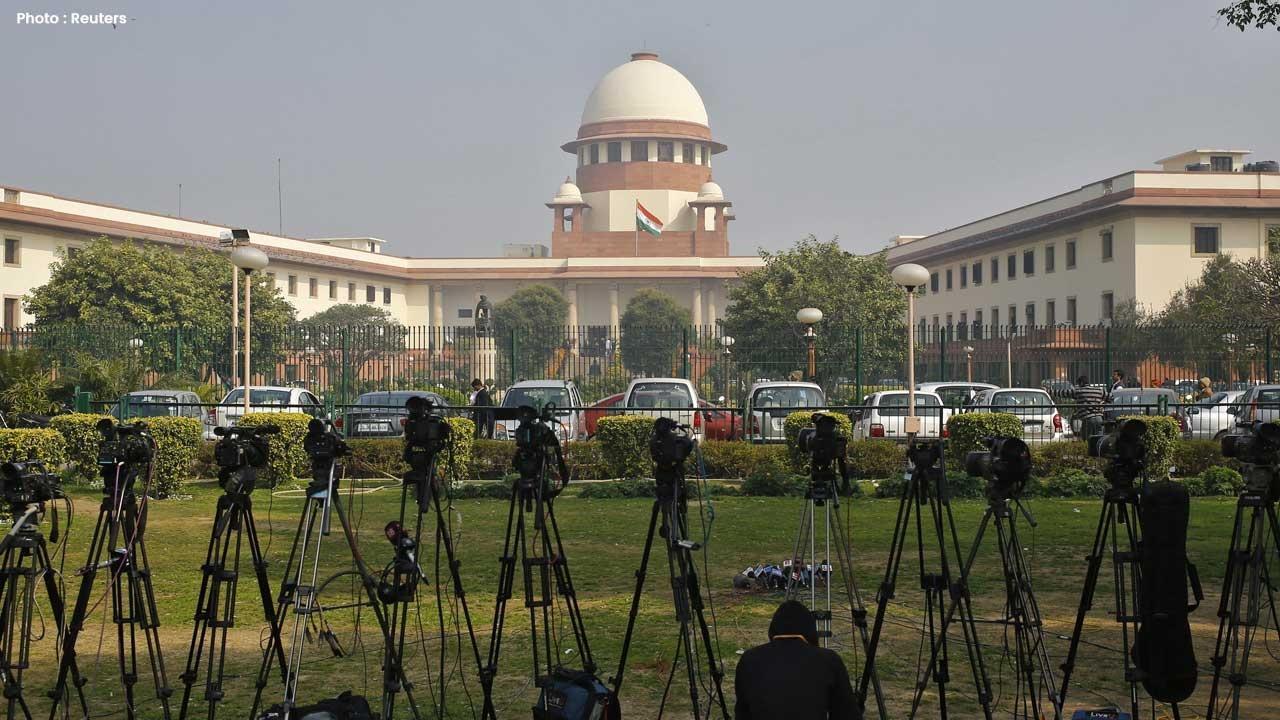
The Supreme Court of India declared on Friday that the pilots of Air India Flight AI-171, which tragically crashed shortly after departure from Ahmedabad on June 12, were not at fault for the calamity that resulted in over 250 fatalities. The judges highlighted that no investigative report had implicated the pilots and underscored that their families should be free from any associated stigma.
This ruling came as Justices Surya Kant and Joymalya Bagchi addressed a petition by Pushkaraj Sabharwal, the father of Captain Sumeet Sabharwal, who was at the controls of the ill-fated flight. The judiciary reassured the family that it would officially recognize that the pilots bear no responsibility for the unfortunate incident.
“This was a deeply tragic accident,” stated the bench. “But there should be no burden upon you that your son is being blamed. The pilot bears no blame whatsoever,” reaffirming that the early findings did not indicate any pilot errors.
Call for Judicial Oversight of AI Flight AI-171 Crash Investigation
The Supreme Court made these statements in response to a petition filed by Captain Sabharwal’s father and the Federation of Indian Pilots, which sought a judicially supervised investigation into the crash. This petition contests the preliminary results from the Aircraft Accident Investigation Board (AAIB), which had initially suggested a possibility of human error.
The petitioners alleged that the investigation was biased and failed to account for critical evidence pointing to a potential electrical or system malfunction. They expressed that the AAIB’s conclusions unjustly leaned toward attributing blame to pilot error without excluding technical malfunctions from the Boeing 787 Dreamliner’s digital control system.
Senior advocate Gopal Sankaranarayanan, who represented the petitioners, argued that the investigation lacked impartiality and transparency. He mentioned that some inquiries made towards the pilot’s family were inappropriate, and selective information leaks to international media distorted the public narrative.
Court Emphasizes Fairness, Dismisses Pilot Accusations
The Supreme Court indirectly referenced international media reports—like those from the Wall Street Journal—saying they hold no legal weight in India. The court remarked, “Respectfully, any challenge to such publications should be taken to an American court. None of India’s 1.42 billion citizens believe the pilots should be held accountable.”
The justices stated that the objective of the inquiry is not to apportion blame but to ensure that similar incidents do not occur in the future. They advised the petitioners that if they wish to dispute the investigation's framework, they must contest the relevant rules under the Aircraft (Investigation of Accidents and Incidents) Regulations.
The Heartbreaking Air India Flight AI-171 Incident
On June 12, Air India Flight AI-171 departed from Ahmedabad’s Sardar Vallabhbhai Patel International Airport with 230 passengers and 12 crew, crashing shortly thereafter, leading to the deaths of 229 passengers, all crew, and 19 individuals on the ground.
The AAIB’s initial report indicated that both engine fuel control switches moved from RUN to CUTOFF moments after takeoff, resulting in an abrupt loss of thrust. The cockpit voice recorder captured a brief conversation between the pilots regarding whether the fuel cutoff was intentional, which the other pilot denied.
Despite the automatic deployment of the Ram Air Turbine (RAT)—a backup power source—and one engine regaining temporary power, the aircraft was unable to maintain altitude and crashed shortly after a Mayday call.
Concerns Raised Over Boeing’s Systems and Call for Transparency
The petitioners contend that the early activation of the Ram Air Turbine indicates a significant electrical or systems failure rather than pilot error. They referenced similar technical issues with Boeing 787 aircraft globally, urging for independent forensic evaluations to investigate potential design flaws.
Additionally, the petition emphasizes that blaming the deceased pilots—especially Captain Sumeet Sabharwal, known for his 15,600 flight hours and impeccable record—is unjustified and lacks evidence. It insists that the investigation should not tarnish the legacy of those who perished while serving passengers.
To secure transparency, the petition seeks a court-supervised investigation led by a retired Supreme Court judge and aviation specialists, warning that a hasty or biased probe could endanger justice and future aviation safety.
Next Steps
This case is scheduled for a hearing next week, alongside another petition from the NGO Safety Matters Foundation, which has also called for an independent and unbiased inquiry into the crash. The Supreme Court reemphasized that aircraft accident investigations must be conducted in a fair, free, and transparent manner, ensuring family members of victims do not experience additional emotional trauma due to rumors or misinformation.


 English