Post by : Bianca
Haleem
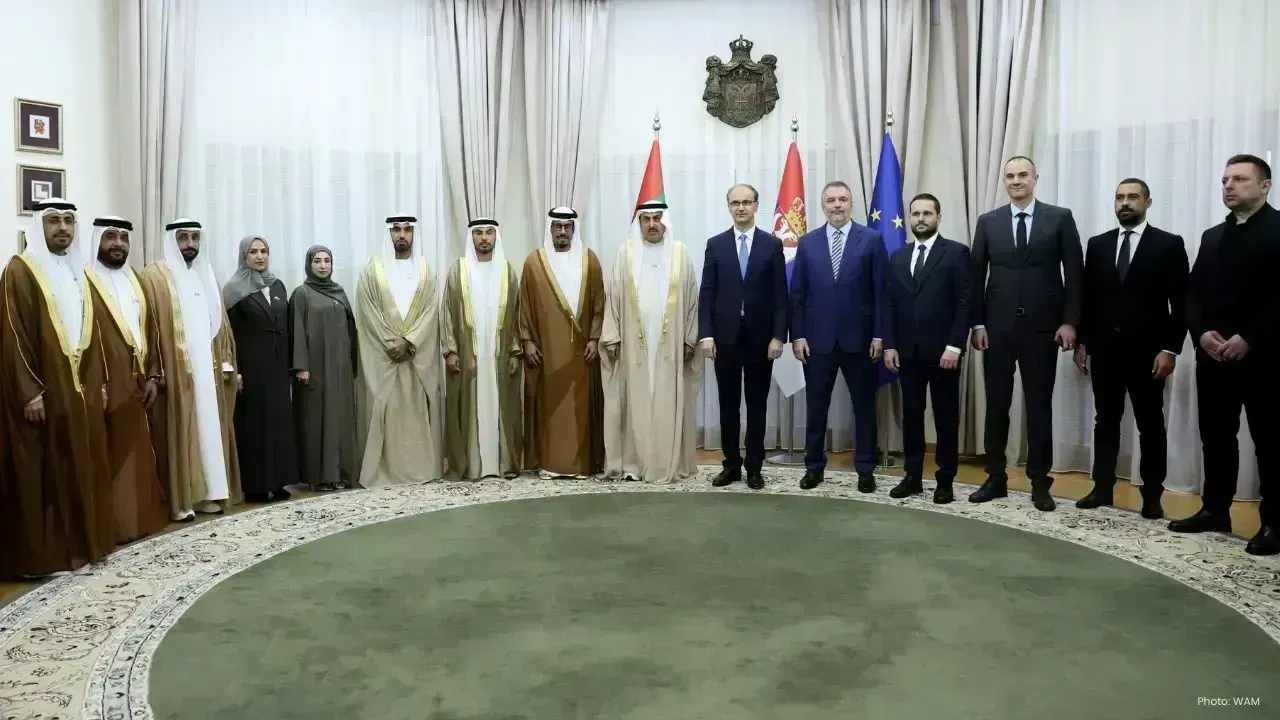
During an official visit to Serbia, Serbian Prime Minister Đuro Macut welcomed Saqr Ghobash, Speaker of the Federal National Council (FNC), and his team, reaffirming their commitment to strengthening cooperation across various sectors.
Ghobash relayed cordial greetings from President His Highness Sheikh Mohamed bin Zayed Al Nahyan, Vice President and Ruler of Dubai, His Highness Sheikh Mohammed bin Rashid Al Maktoum, and His Highness Sheikh Mansour bin Zayed Al Nahyan. They expressed hopes for ongoing progress and prosperity for the Serbian people.
Prime Minister Macut reciprocated, extending his wishes to the UAE for continued success and development.
Both parties assessed their bilateral relations and explored avenues for boosting collaboration in economic, investment, and development sectors. They underscored the significance of trade and investment as essential pillars of the UAE-Serbia partnership.
Officials acknowledged the Comprehensive Economic Partnership Agreement (CEPA), effective from June 2025, as a substantial advancement in economic ties. It aims to enhance non-oil trade, stimulate reciprocal investments, and foster private sector growth, alongside creating new opportunities in renewable energy and other critical industries.
Moreover, they noted the positive impact of UAE investments on Serbia's economic growth and infrastructure, advocating for increased business participation from both nations.
Discussions also encompassed energy cooperation, sustainability efforts, and agricultural investments, allowing Serbian and UAE officials to tap into the UAE's expertise in renewable energy.
Attention shifted to the forthcoming Expo 2027 in Belgrade, which officials believe will enhance economic, investment, and technology partnerships, particularly drawing from the UAE's successful Expo 2020 Dubai experience.
On international matters, both nations stressed the importance of promoting stability and dialogue in the Balkans to resolve conflicts while honoring state sovereignty.
Ghobash emphasized that the UAE advocates for stability, development, and peaceful solutions to regional security issues, highlighting the interconnectedness of Gulf security to global energy markets and trade routes.
He voiced concerns over rising security threats posed by Iranian policies and actions that undermine regional stability and highlighted risks to international shipping lanes.
The FNC Speaker called for collective effort in addressing global challenges, such as energy security and economic pressures.
Finally, the meeting reviewed potential collaboration in cutting-edge technology, AI, and cybersecurity, emphasizing the necessity for partnerships between governments, business sectors, and research institutions to foster innovation.
In conclusion, UAE and Serbian officials confirmed that their relationship has matured into a comprehensive strategic partnership, dedicated to political, economic, and institutional cooperation for mutual benefit.
The meeting was also attended by Ahmed Al Menhali, UAE Ambassador to Serbia, along with FNC members and senior officials of the council.


 English