Post by : Saif
Al-Najjar
The resurgence of air strikes and fierce combat between Thailand and Cambodia has escalated tensions in the region, driving civilians into uncertainty. Once a tenuous ceasefire, the situation has swiftly deteriorated, revealing how quickly trust can erode and conflict can reignite.
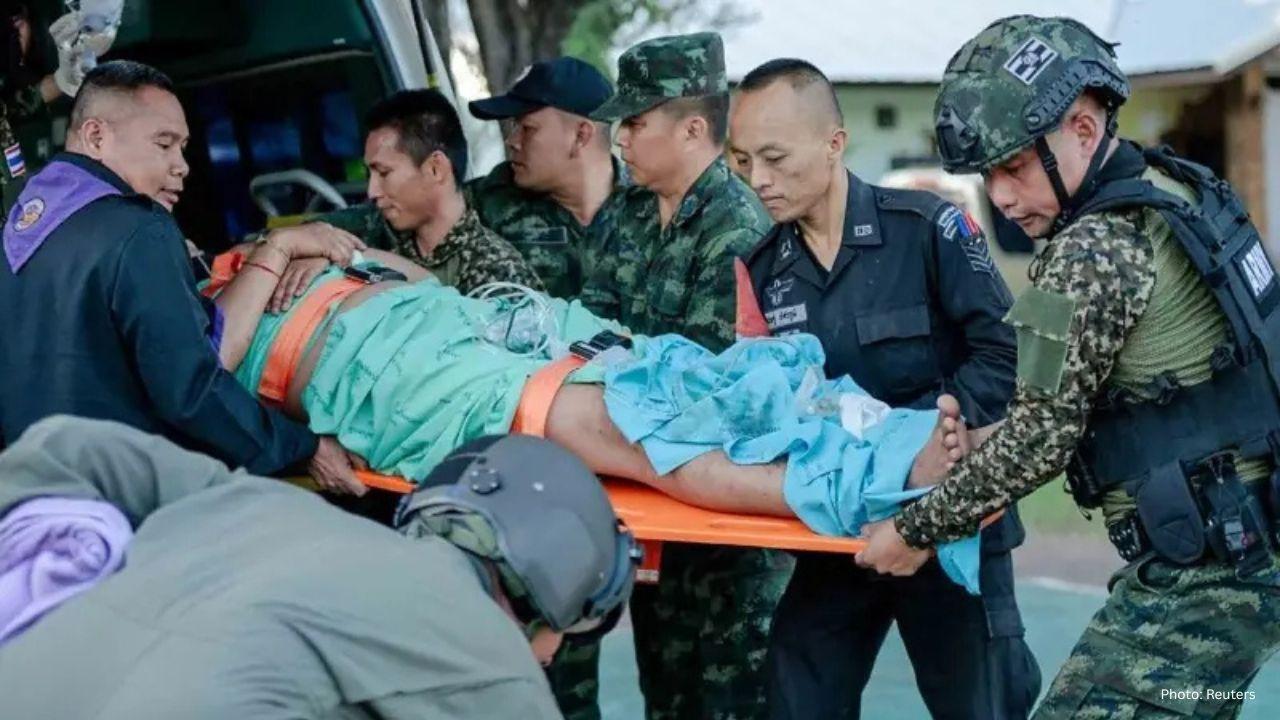
Following renewed confrontations along the disputed border, Thailand confirmed its air strikes on Cambodian soil, resulting in casualties on both sides. Officials stated they aimed to neutralize Cambodian military positions to halt further violence.
Conversely, Cambodia's defense ministry maintains that their troops did not return fire during Thai aggression, reporting injuries among civilians. Former Prime Minister Hun Sen has condemned Thailand as the aggressor, urging restraint among his military.
The humanitarian impact is alarming. In Thailand, over 385,000 civilians are being evacuated from border locales, with more than 35,000 individuals already in temporary shelters. Families have been forced to abandon homes, farms, and schools with scant warning.
On the Cambodian side, fear has prompted mass migrations away from border towns, with families seeking refuge from artillery disturbances. Many have already relocated to safer areas.
This long-standing border dispute, rooted in a century-old territorial disagreement, was first outlined in 1907 amidst colonial governance, with elements never definitively established. This history has set the stage for recurrent violence, including significant conflicts in recent years.
In July, after heavy exchanges led to numerous fatalities and massive displacements, a ceasefire agreement was brokered with U.S. and Malaysian assistance, leading to initial hopes for lasting peace.
However, those hopes dimmed when fresh landmine accusations surfaced, prompting Thailand to terminate ceasefire adherence. Escalating tensions ultimately ignited renewed combat this week.
This ongoing crisis underscores a stark reality: peace agreements lack strength without genuine trust. Paper resolutions cannot quell the emotions of fear, resentment, and distrust. When dialogues lapse, weaponry often assumes communication’s role.
The conflict's true victims are the civilians—farmers, children, and the elderly fleeing their homes, those living in shelters, and laborers losing their means of support.
Calls from ASEAN leaders for restraint and communication reflect the path toward resolution. Increased violence cannot rectify a border dispute embedded in history.
For a sustainable resolution, Thailand and Cambodia must resume talks, engage international mediators, and prioritize human life over national pride.
Ultimately, history will record not who initiated conflict but how many lives were impacted.
Choosing peace is not a sign of weakness but a testament to a nation's strength.


 English