Post by : Saif
Al-Najjar
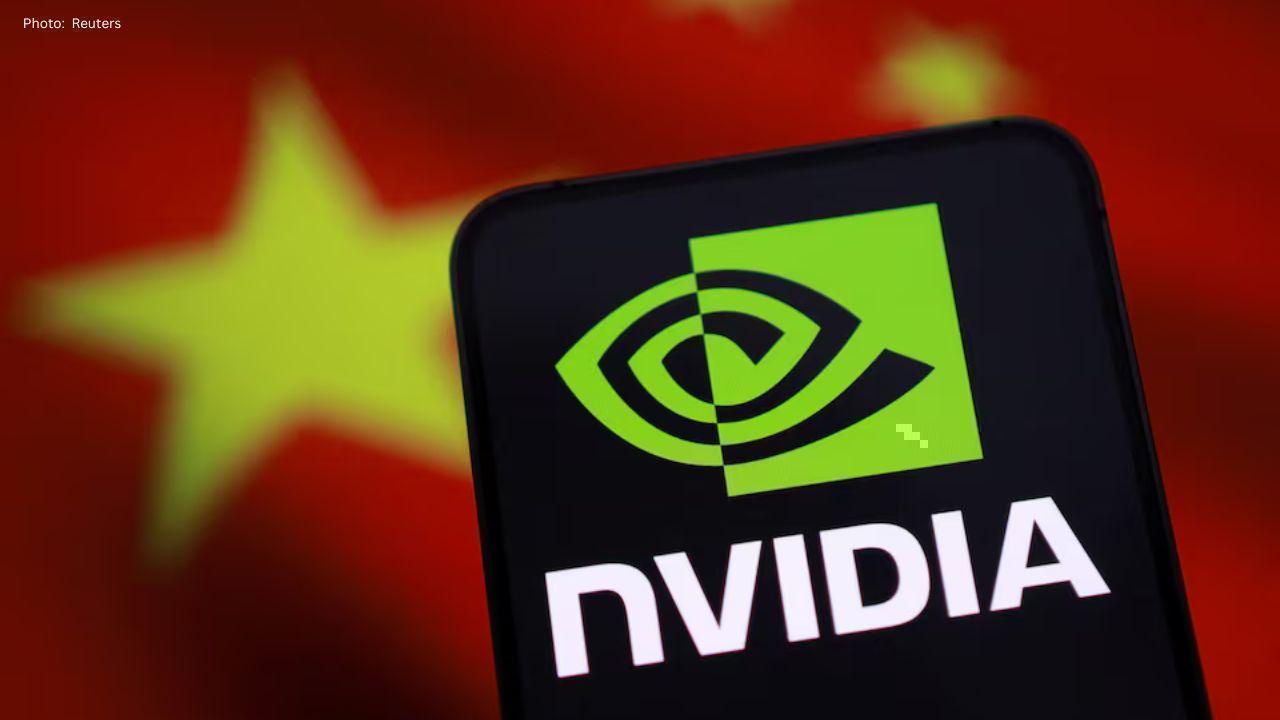
The United States has taken a significant step by permitting Nvidia to export its H200 artificial intelligence chips to China, a noteworthy change in technology and trade policy. President Donald Trump announced that these exports would be allowed with a 25 percent fee directed to the US government.
This decision sparks a heated discussion within the US. Some leaders advocate for American firms to supply advanced tech to maintain their global dominance, while others express concern that such chips could bolster China's military and surveillance capabilities.
Following the announcement, Nvidia's stock increased in after-hours trading, reflecting investor optimism regarding the decision. Trump mentioned that similar export regulations would apply to other chip manufacturers like AMD and Intel, also revealing he informed Chinese President Xi Jinping about the initiative, which received a positive response.
The H200 chip is Nvidia's second most powerful AI processor and significantly outperforms its predecessor, the H20 chip, which was the most advanced chip previously allowed for export to China. Nevertheless, the US continues to restrict the export of its top-tier Blackwell chips.
According to the new framework, the chips will be shipped from Taiwan to the US for a security review before proceeding to China under stringent regulations. The US government believes this approach will safeguard national security while enabling American firms to generate revenue.
Advocates of this policy view it as a pragmatic compromise. They argue that a complete export ban could allow Chinese firms like Huawei to advance unchecked in their domestic market, while limited exports can bolster competitiveness for US companies and hinder Chinese progress.
Conversely, critics have voiced strong opposition, with several US lawmakers denouncing this decision as a grave error. They are concerned that China may use these chips to enhance its military strength and could potentially replicate the technology, eroding the long-term advantages of American corporations.
China's reaction has been mixed. While Chinese officials have expressed support for mutually beneficial cooperation, they have also cautioned domestic companies against excessive dependence on US technology in recent months. Analysts believe China will persistently invest in developing its advanced chip industry.
This decision underscores the escalating conflict between trade and security. On one hand, there are demands from companies and investors for open markets to maximize profits; on the other, governments are tasked with protecting sensitive technologies that could be exploited in future conflicts.
In summary, the US is attempting to strike a delicate balance. It aims to generate revenue and maintain its technological leadership while ensuring that this technology is not utilized against its own interests.
Ultimately, the choice to allow Nvidia to export H200 chips to China encompasses both potential benefits and risks. While it may yield short-term gains for American businesses, it also presents long-term strategic challenges. The global community will keenly observe how this resolution influences future technology and security dynamics.


 English