Post by : Saif
Al-Najjar
Asian stock markets showed small gains on Tuesday, while gold continued to move higher. At the same time, oil prices went down, and worries grew about a possible shutdown of the United States government.
The situation in Washington, D.C., has been tense. President Donald Trump and his Democratic opponents have failed to agree on a budget. U.S. Vice President JD Vance said that the country looks “headed to a shutdown.” If this happens, it will begin on Wednesday.
A government shutdown in the U.S. is not just a local political problem. It has wide effects on global markets, because America is the world’s largest economy. A closure would also delay important job reports that investors, businesses, and even central banks use to make decisions.
Asian Stocks Show Mixed Moves
MSCI’s index for Asia-Pacific shares outside Japan rose 0.5% in early trading. This made the index set for a 5.6% rise this month, its best monthly gain in a year.
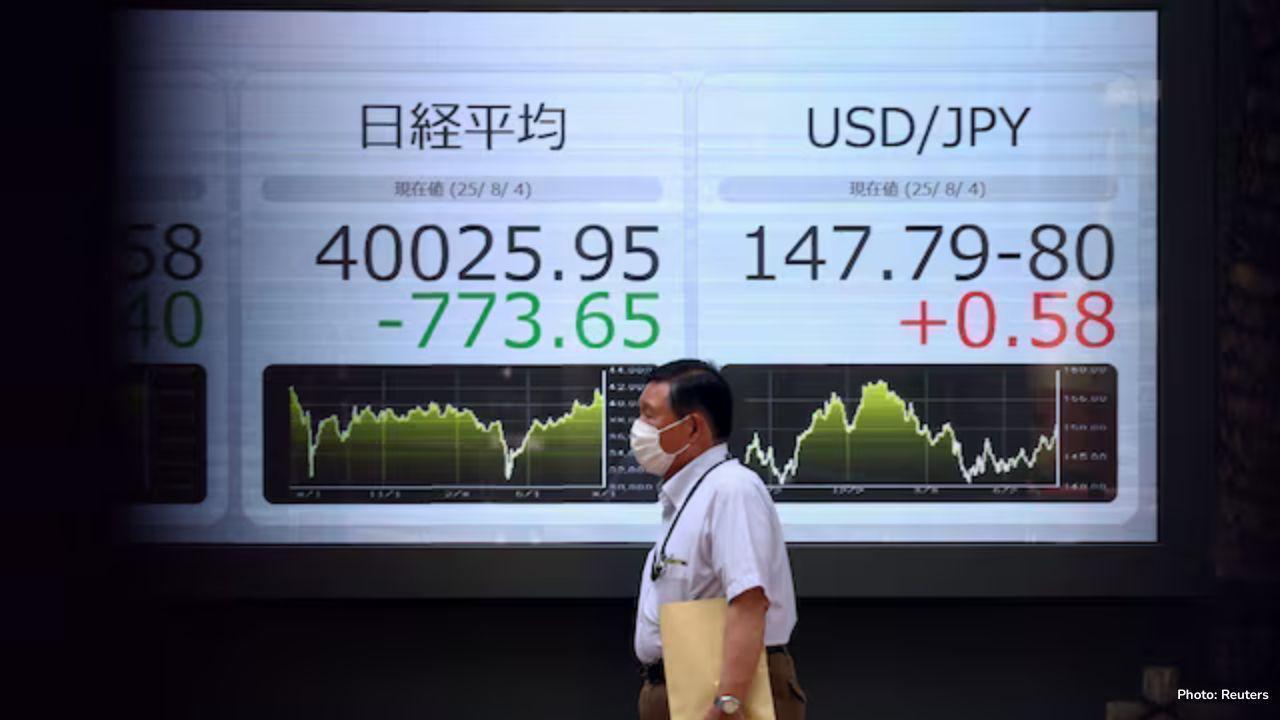
However, Japan’s Nikkei index fell 0.3%, marking its third straight day of losses. Traders in Tokyo were cautious as they watched both U.S. political news and weak signs from China.
Currencies also moved carefully. The U.S. dollar stayed at 148.62 yen, after dropping 0.6% on Monday. The euro was steady at $1.1723. The Australian dollar, however, gained 0.2% against the U.S. dollar to $0.6587. Investors expect the Reserve Bank of Australia to keep its policy unchanged when it meets later in the day.
Gold Rises, Oil Falls
Gold prices, which often rise when people are worried about the economy, continued to climb to record levels. Many investors see gold as a safe place to put money when there is uncertainty.
Oil prices fell, mainly because OPEC+ is expected to increase production. More oil supply in the market usually leads to lower prices.
China’s Factories Struggle
Fresh data from China showed that its manufacturing sector shrank for the sixth month in a row. The purchasing managers’ index (PMI) was 49.8 in September, up a little from 49.4 in August, but still below 50. A reading under 50 means the sector is contracting.
This shows that Chinese factories are still under pressure, waiting for stronger government action to increase local demand. Global demand has also been weak because of trade tensions and slowing economies in other parts of the world.
Why the U.S. Shutdown Matters for the World
One of the biggest worries is that a U.S. government shutdown would stop the release of key job reports. The non-farm payrolls report, due this Friday, is one of the most important pieces of data for the U.S. economy.
The Federal Reserve, America’s central bank, uses this data to decide when and how much to cut interest rates. If the shutdown lasts long, the Fed may have to make decisions without clear information. This could bring even more uncertainty to markets.
Ray Attrill, head of foreign exchange research at National Australia Bank, said, “Markets are bracing themselves for the likelihood of a shutdown. If we know we’re not going to get the payrolls numbers, it will just shine a brighter spotlight on the data that we do have.”
Analysts expect Tuesday’s JOLTS report, which measures job openings, to show around 7.18 million available positions in August. But without more reports later in the week, investors will have only a partial picture of the job market.
Tariffs Add More Pressure
The shutdown threat is not the only problem. New U.S. tariffs are also due to take effect on Wednesday. These will hit imports of heavy trucks, patented drugs, and other products.
On Monday, the White House announced more tariffs on furniture and cabinets. These will start on October 14. Such trade measures add further strain to companies and consumers already dealing with inflation and slowing growth.
What This Means for Ordinary People
For most people, these market moves may feel far away. But they have real effects.
A weaker U.S. economy could slow down global trade, affecting jobs in Asia and Europe.
If oil prices remain low, it could help reduce fuel costs for families and businesses.
If gold prices rise, it shows that many investors are nervous. That fear can later spread into stock markets.
China’s weak factory data shows that one of the world’s largest economies is still struggling. This could mean fewer exports, weaker demand for raw materials, and slower growth worldwide.
Looking Ahead
Investors, businesses, and governments now wait to see if U.S. leaders can reach a deal to avoid a shutdown. If no solution comes, markets may face more uncertainty in the coming weeks.
The focus will also remain on the Federal Reserve, which meets on October 29. Without strong economic data, it may have to rely on limited information. That could increase risks for the global economy.
For now, markets remain caught between hope and fear: hope that U.S. political leaders can strike a deal, and fear that failure will deepen uncertainty worldwide.


 English