Post by : Saif
Al-Najjar
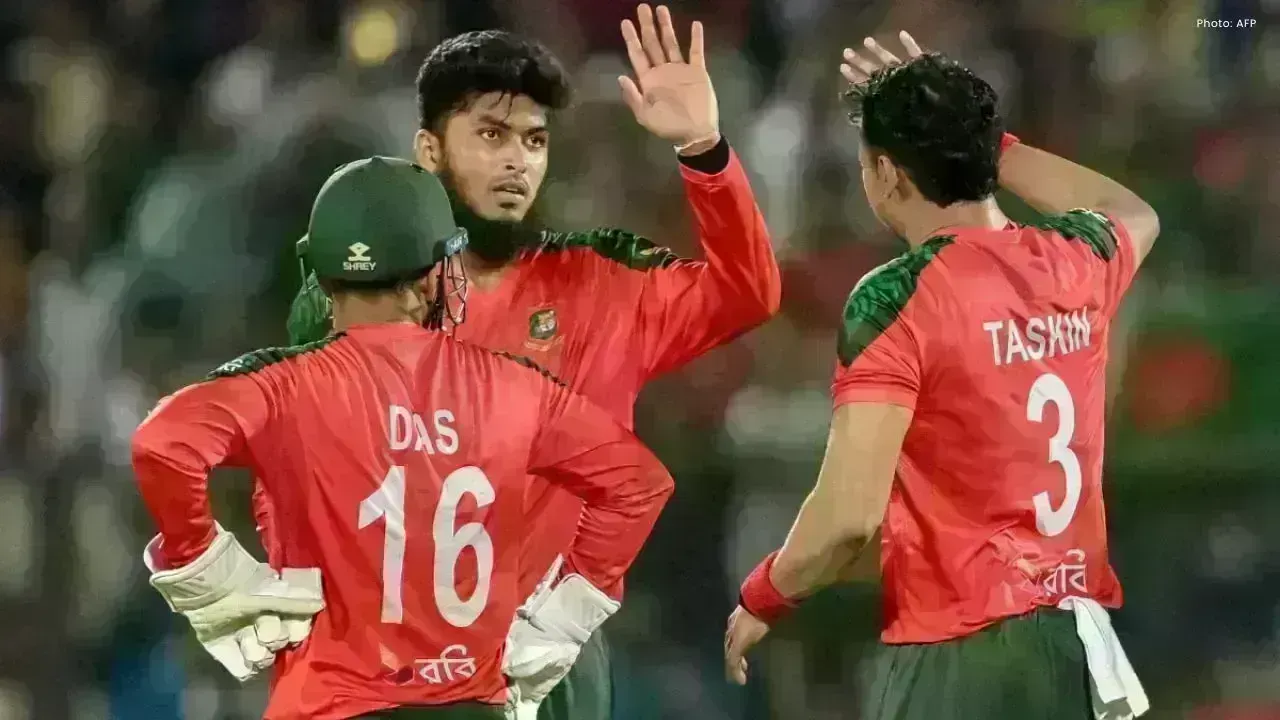
The uncertainty regarding Bangladesh's involvement in the upcoming T20 World Cup 2026 is rising after the government declared it will not send its national team to India—the tournament's host nation. This decision has put both players and cricket authorities in a challenging position.
Despite the ICC’s rejection of a request to relocate the matches and a warning regarding the potential replacement of the team, the Bangladesh government has reiterated its stance. This firm approach has led to considerable concern, especially among cricketers.
A meeting was convened on Thursday with government officials, members of the Bangladesh Cricket Board (BCB), and key players. Sports adviser Asif Nazrul mentioned that the meeting aimed to clarify the government’s rationale. While he withheld specific feedback from players, he indicated they appeared to grasp the situation after listening to the explanations provided.
Nazrul further cautioned the ICC that neglecting Bangladesh could adversely affect global cricket, noting the country’s population of nearly 200 million and its millions of devoted cricket fans. He asserted that excluding Bangladesh from the World Cup would represent a significant detriment to both the tournament and the host nation.
Nonetheless, many players remain significantly anxious. Former captain Tamim Iqbal and current Test captain Najmul Hossain Shanto have publicly voiced the importance of prioritizing players' welfare. They assert that the focus should be on ensuring players' careers, safety, and financial stability.
Tamim faced backlash for his suggestion that Bangladesh should not adopt a confrontational stance. A senior BCB official even accused him of acting in favor of India, sparking anger and controversy within the cricket community.
The financial ramifications of potentially missing the T20 World Cup are alarming. Players risk losing a substantial portion of their earnings, including match fees and brand sponsorships. Compounding this issue, BCB director Nazmul Islam remarked that players wouldn’t receive compensation due to past underperformance in ICC events, leading to public outrage and his eventual resignation from the BCB's finance committee.
This situation underscores the widening gap between sports and political affairs. While governments hold the authority to make national decisions, international sporting events rely heavily on collaboration and mutual understanding. For players, the World Cup represents not just a tournament but the pinnacle of their careers and an opportunity to showcase their nation on a global platform.
As the ICC's deadline looms, Bangladesh cricket finds itself at a pivotal juncture. An urgent resolution that balances national interests with player welfare is essential. Failing this, Bangladesh risks forfeiting its place in the World Cup and harming its reputation in the global cricket landscape for years ahead.


 English