Post by : Saif
Al-Najjar
The Chinese government has introduced provisional tariffs reaching as high as 42.7% on select dairy imports from the European Union, intensifying existing trade conflicts with Brussels. This action comes in the wake of an initial phase of an anti-subsidy inquiry carried out by China, viewed as a direct response to EU tariffs on Chinese electric vehicles.
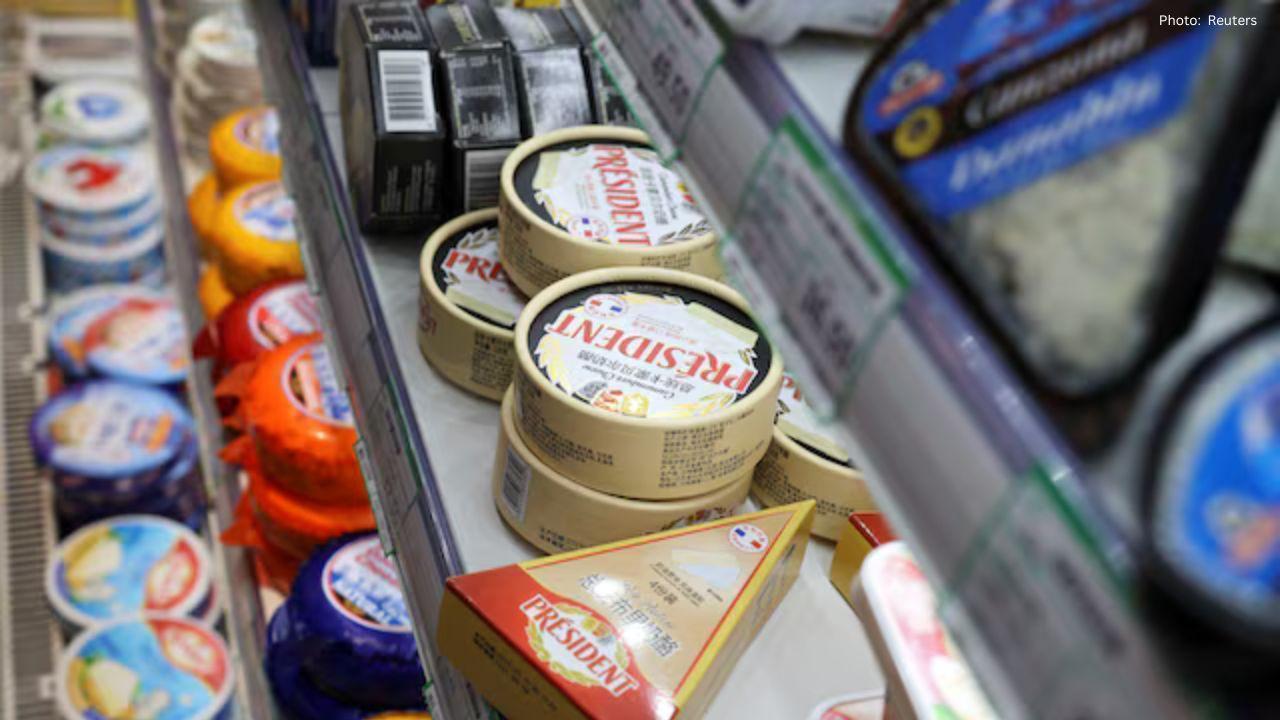
The newly enacted duties, which range from 21.9% to 42.7%, significantly impact products like milk and cheese, including renowned European items such as Roquefort from France. Most companies will encounter a duty of around 30%, starting Tuesday, as indicated by Chinese authorities.
Chinese officials clarified that these tariffs are provisional. This implies potential changes once a final determination is announced. In previous cases involving pork imports, provisional rates were adjusted prior to final rulings, indicating possible flexibility in this scenario as well.
Trade tensions between China and the EU have escalated in 2023 after the European Commission initiated an investigation into potential unfair subsidies on Chinese electric vehicles. In retaliation, Beijing has commenced its own investigations into various EU commodities, which now include dairy, brandy, and pork. These measures are perceived as tactics to exert pressure during ongoing trade discussions.
China's Ministry of Commerce has indicated its findings suggested that EU dairy producers benefit from subsidies detrimental to Chinese farmers and businesses. Approximately 60 European companies are affected, with significant players like Arla Foods facing duties between 28% and 30%. Italy’s Sterilgarda Alimenti will incur the lowest rate, while FrieslandCampina’s Belgian and Dutch operations will see the highest rate set at 42.7%. Firms failing to cooperate during the inquiry will also be subjected to the maximum rates.
So far, the European Commission has not responded officially. Meanwhile, negotiations concerning electric vehicle tariffs between China and the EU resumed earlier this month, yet no new conclusions have emerged. European diplomats have expressed that substantial disagreements remain unresolved.
In 2024, China imported roughly $589 million worth of EU dairy products specified in the investigation, maintaining similar levels to 2023. Although a small fraction of total trade, this measure signals China’s readiness to leverage trade policies for its protection.
Domestically, Chinese dairy producers are likely to view this decision favorably, aimed at alleviating pressures from dwindling demand, lower milk prices, and decreased birth rates impacting dairy consumption. As the world’s third-largest milk producer, China is already advocating for farmers to reduce surplus and herd numbers.
Ultimately, these new tariffs reveal how trade disagreements can extend across different sectors. What started as a dispute over electric vehicles has now significantly influenced the EU dairy sector, underscoring the interconnectedness of global commerce and the rapidity with which tensions can affect daily products, including milk and cheese.


 English