Post by : Shakul
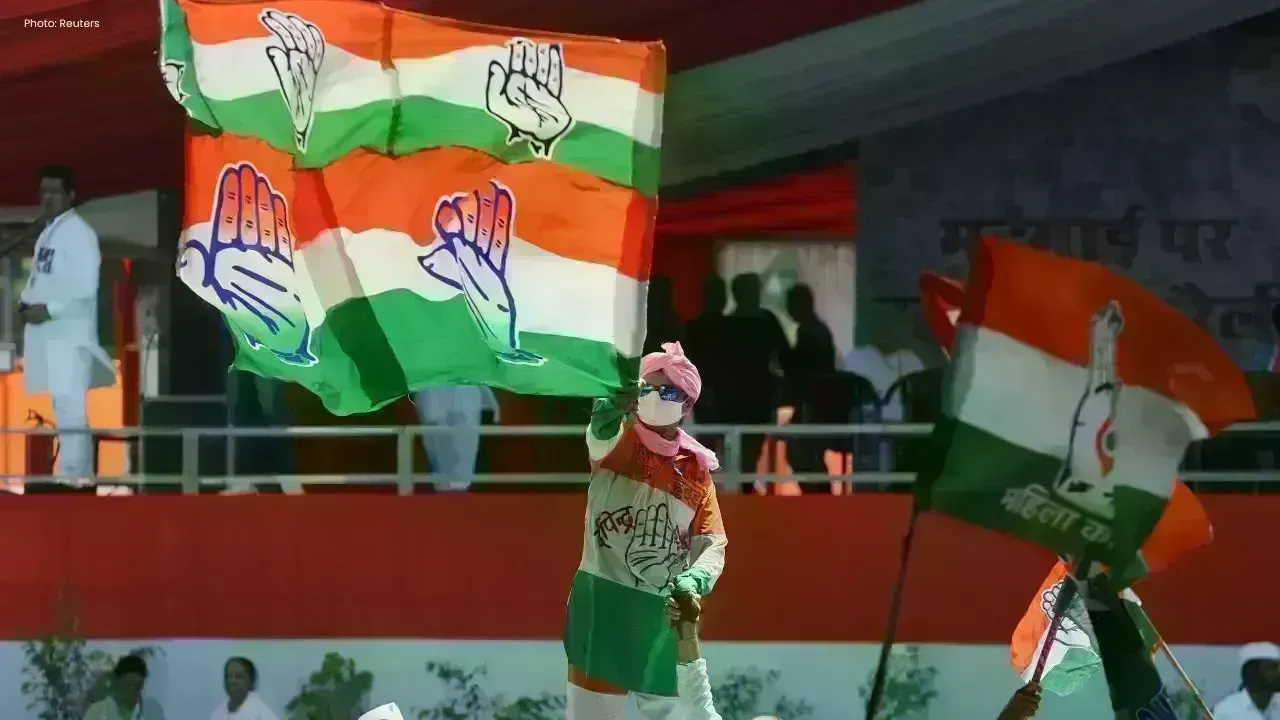
In the wake of the recent assembly elections in Assam and West Bengal, the Indian National Congress is defending its political image against accusations of favoring minority votes. Critics from rival parties contend that the party has become overly reliant on Muslim support. In response, Congress representatives are emphasizing their commitment to national representation and secular principles.
The uproar originated from the election results revealing that 18 out of 19 Congress MLAs in Assam are Muslims, leaving just one Hindu MLA. Similarly, two Muslim candidates from Congress were also successful in West Bengal. The Bharatiya Janata Party (BJP) and All India United Democratic Front leveraged these results to label Congress as a “Muslim League.”
Supriya Shrinate, the social media chief of Congress, has firmly countered these claims, providing data that illustrates a broader representation within the party. She stated that of Congress' 664 MLAs nationwide, approximately 78% are Hindus, 12% Muslims, and the remainder from other religions. Shrinate highlighted that this distribution mirrors India’s demographic diversity.
Senior party officials assert that Congress remains devoted to representing all societal segments, irrespective of religion or caste. They accuse the BJP of attempting to fragment the voter base and propagate misleading narratives for political advantage. Leaders within Congress suggest that Muslim constituents naturally gravitate towards secular options given the BJP’s stance on minority support.
Prime Minister Narendra Modi previously labeled Congress as the “Muslim League Maoist Congress” during his election campaigns, remarks that Congress leaders rebuffed, claiming they serve only to distract from pressing socio-economic concerns.
In Assam, the election results were particularly disheartening for Congress, which only secured 19 seats in a 126-seat assembly, with merely two of the 24 opposition legislators being Hindus. Minister Pijush Hazarika remarked that Congress is primarily sustained by minority backing in Assam.
Badruddin Ajmal, head of AIUDF, echoed similar sentiments, intensifying scrutiny on Congress. As the party gears up for upcoming crucial elections in states like Uttar Pradesh, Uttarakhand, Gujarat, Karnataka, Rajasthan, and Madhya Pradesh, observers believe this issue will remain sensitive.
Nevertheless, Congressional leaders assert they aren't fazed by the backlash, maintaining that such accusations have been used against them since India's early political days. They emphasize the importance of accurate data to combat what they call political propaganda.
As discussions about religious representation continue to shape Indian political landscapes, analysts predict that this controversy may impact future campaign strategies, particularly as national parties prepare for forthcoming state elections where identity, secularism, and religious polarization will remain critical issues.


 English