Post by : Saif
Al-Najjar
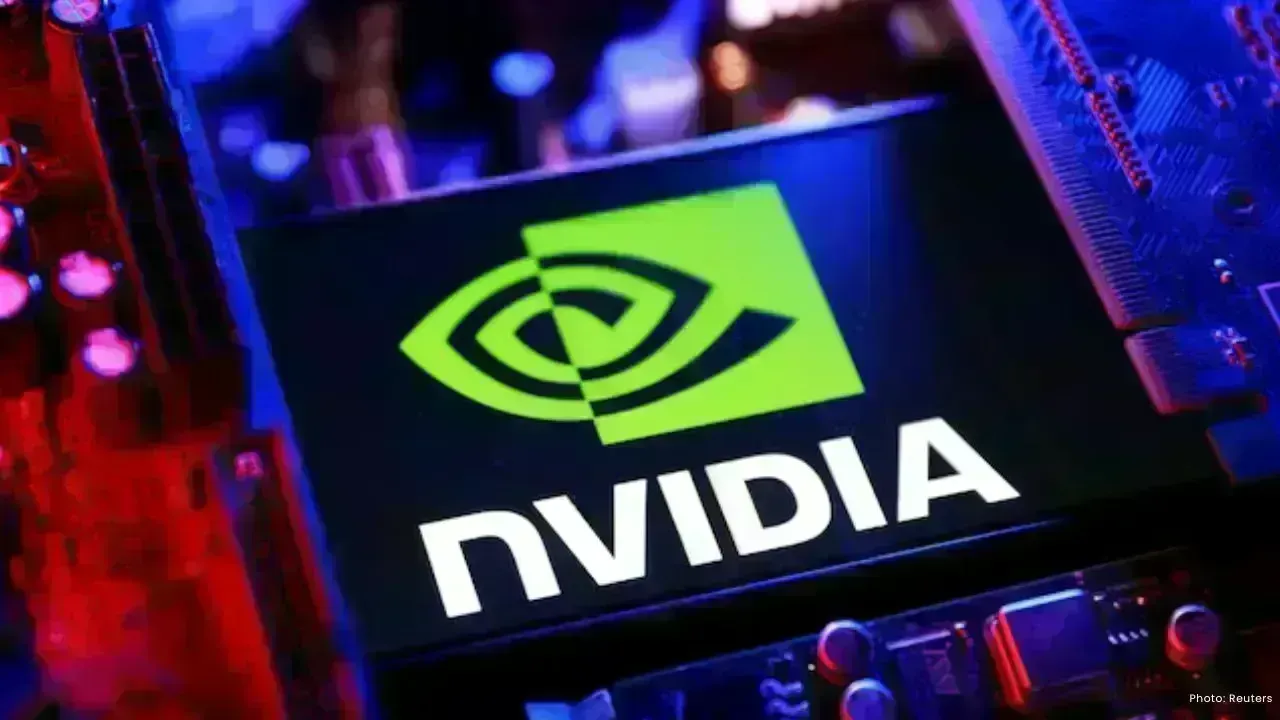
The Taiwanese technology firm Inventec has announced delays concerning the sale of Nvidia's H200 artificial intelligence chip to China, indicating that the decision is now contingent upon Chinese authorities. This situation underscores the rising concerns in global tech trade, where regulations and political factors are increasingly influential.
As a significant producer of servers and notebooks, Inventec collaborates closely with Nvidia, incorporating its chips into a range of AI applications. The company mainly manufactures AI servers for Chinese clients at its Shanghai facility. Thus, any limitations on chip exports significantly impact its operational strategies.
Last week, the U.S. government granted official approval for the export of Nvidia's H200 chip to China, albeit under specific conditions. This development hinted that U.S. officials were open to restricted sales of the sophisticated chip. However, recent reports have indicated that Chinese customs authorities are withholding permission for the chip's entry into the nation.
It remains uncertain whether this action by Chinese customs is a formal prohibition or merely a temporary suspension. The ambiguity surrounding the situation has left companies in a state of uncertainty about their subsequent steps. This has complicated planning for manufacturers and clients alike concerning production cycles and delivery schedules.
Inventec President Jack Tsai stated that the resolution now hinges on China’s political and regulatory stance. He noted that while U.S. approval has been granted, adherence to Chinese regulations is imperative. Should China permit the chip’s entry, Inventec is prepared to move forward. Conversely, if not, the company must comply with the rules, as violating them is not an option.
The H200 chip ranks as Nvidia's second most powerful AI chip and has become a contentious topic in U.S.-China relations. The U.S. has imposed limitations on advanced chip exports due to security concerns, while Beijing aims to bolster its domestic chip industry and reduce dependency on foreign technologies.
In spite of the strong demand from Chinese firms, the future of the H200 chip hangs in the balance. It is possible that China is currently evaluating the repercussions of U.S. restrictions, supporting local chip manufacturers, or leveraging this situation in dialogues with the U.S.
Until explicit guidance is provided by Chinese authorities, companies such as Inventec and Nvidia are left awaiting a resolution. This situation illustrates how the global tech landscape is increasingly swayed by political maneuverings, rather than solely by market demand or technological progress.


 English