Post by : Mariam
Al-Faris
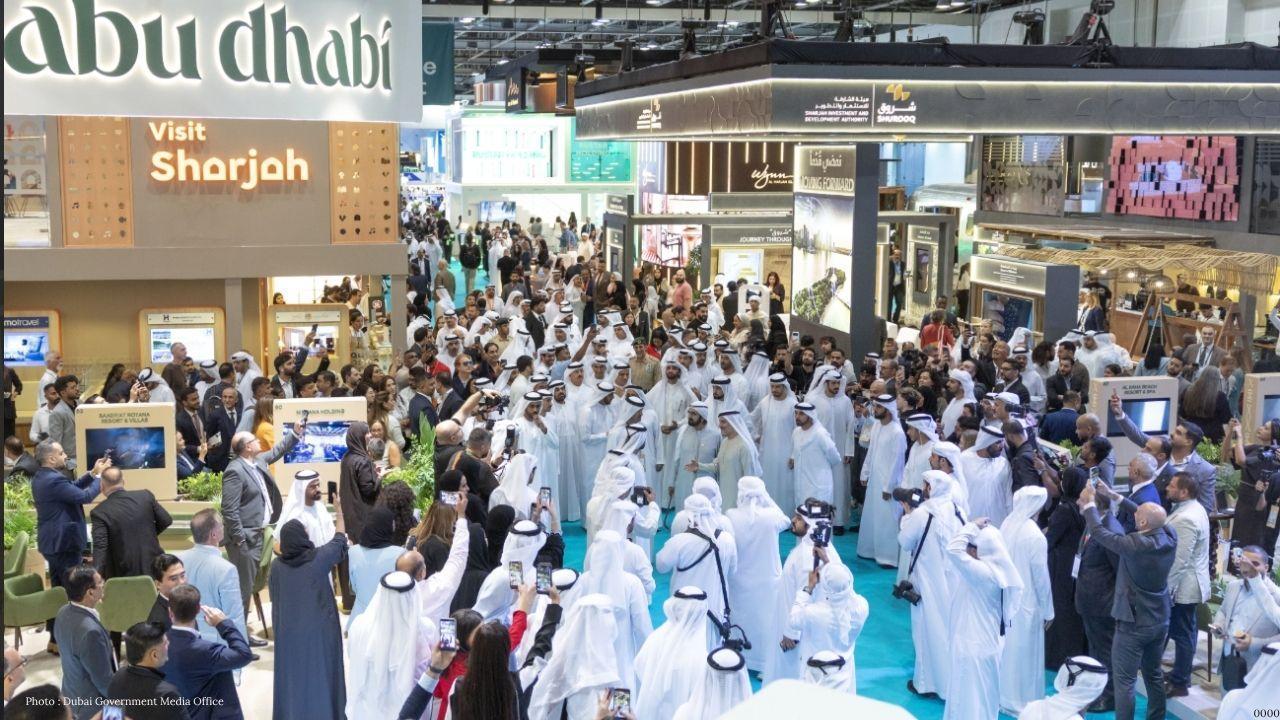
Photo: Dubai Government Media Office
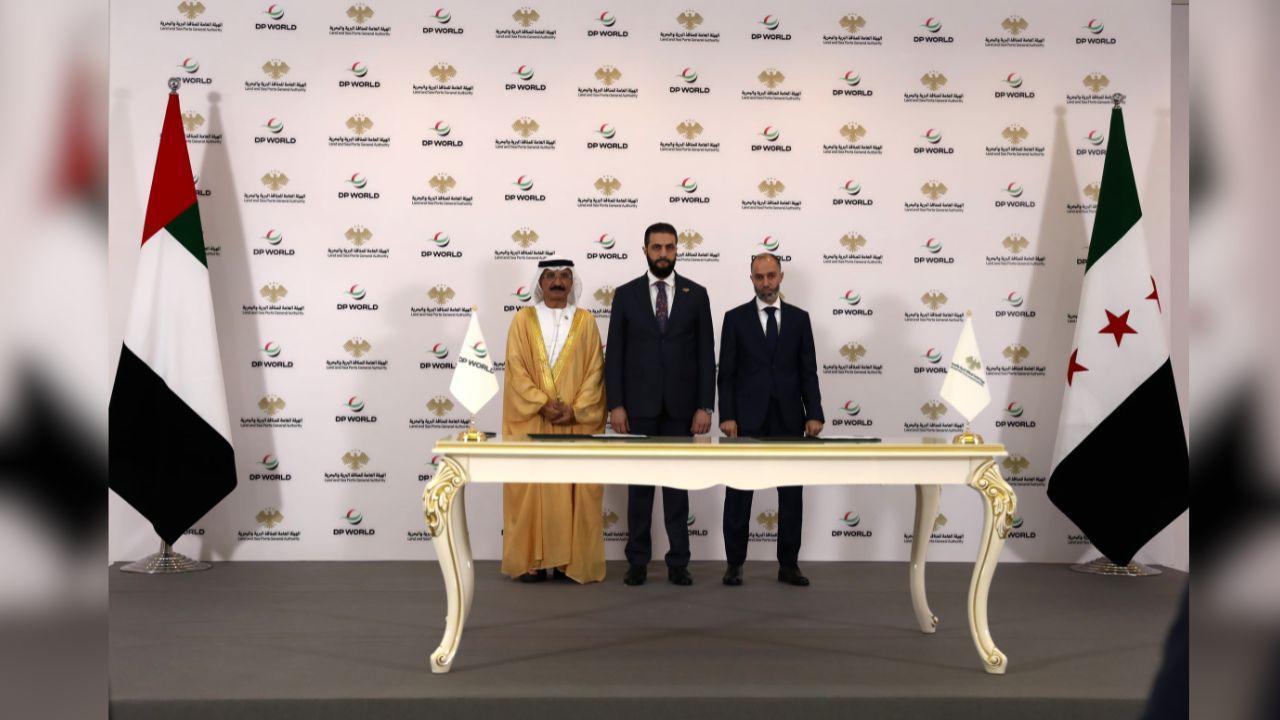
DP World, one of the world’s leading logistics and port management companies, has signed a 30-year concession agreement with Syria’s General Authority for Land and Sea Ports. The agreement gives DP World the responsibility to develop, operate, and manage the Port of Tartus, one of Syria’s most important seaports.
The agreement was signed in Damascus, in the presence of Syrian President Ahmed Al-Sharaa, by Sultan Ahmed bin Sulayem, the Chairman and Group CEO of DP World, and Qutaiba Ahmed Badawi, Chairman of the Syrian Ports Authority.
$800 Million Investment to Modernize the Port
As part of this long-term agreement, DP World will invest $800 million over the 30-year period to upgrade Tartus Port’s infrastructure. This includes building new facilities, installing modern equipment for loading and unloading cargo, and introducing digital systems to speed up port operations.
The investment aims to turn Tartus into a key trade hub for the region, connecting Southern Europe, the Middle East, and North Africa. It will also boost Syria’s economy, which has suffered from over ten years of conflict and underinvestment in critical infrastructure.
A Build-Operate-Transfer (BOT) Model Project
The deal follows a Build-Operate-Transfer (BOT) model, where DP World will fully finance and manage the port redevelopment, operate the port for 30 years, and then hand it back to the Syrian government after the concession period ends.
This model is common in large-scale infrastructure projects and allows countries to benefit from private investment and global expertise without losing ownership of national assets.
Statements from Both Sides Highlight Shared Vision
Speaking at the signing ceremony, Sultan Ahmed bin Sulayem said:
“This agreement reflects our long-term commitment to enabling global trade and creating resilient supply chains. We see strong potential in Tartus to serve as a vital trade gateway and look forward to strengthening regional connectivity and economic opportunity through this investment. We believe in the power of trade to help drive long-term stability and prosperity for Syria and the region.”
On the other side, Qutaiba Ahmed Badawi emphasized the importance of this partnership for Syria’s recovery:
“This agreement marks an important step forward for the Port of Tartus and Syria's maritime sector. Partnering with DP World will allow us to modernise and strengthen the efficiency of our trade infrastructure as we continue to rebuild key trade lanes, support the national economy and provide more opportunities for the Syrian people. The agreement reflects our shared vision to transform Tartus into a strategic gateway linking Syria with regional and international markets and it will pave the way for sustainable growth for years to come.”
Tartus: A Key Port on Syria’s Mediterranean Coast
Tartus is Syria’s second-largest seaport, located on the Mediterranean Sea. It plays a major role in the country’s import and export activities. Due to its strategic location, the port has access to major maritime routes that connect Europe, the Levant, and North Africa.
Its position also allows it to support trade flows through the Bosporus in Turkey and the Suez Canal in Egypt. These routes are some of the busiest trade passages in the world, and upgrading Tartus will allow Syria to benefit from increased cargo movement and trade traffic.
Economic Benefits for Syria and the Region
This agreement is seen as a positive step for Syria’s economic recovery after many years of conflict. By improving port infrastructure and efficiency, Tartus will be able to handle more types of cargo, including:
These improvements will increase the port’s capacity and reduce delays, making it more attractive for regional and international shipping companies. In the long run, this could lead to more trade, job creation, and a stronger Syrian economy.
Additional Plans for Free Zones and Logistics Hubs
Beyond just the port itself, DP World has also announced plans to explore the development of free trade zones, inland logistics hubs, and new transit corridors in partnership with local authorities.
Free zones typically offer tax incentives and reduced regulations to attract foreign investment and create business-friendly environments. Logistics hubs help manage cargo distribution and reduce delays between ports and final destinations.
These plans aim to help Syria diversify its economy and create long-term economic opportunities for its people.
Why DP World Is a Key Player
DP World is based in Dubai, United Arab Emirates, and is known for operating ports, terminals, and logistics services in over 75 countries. Its ports handle over 9% of global container traffic, making it one of the biggest port operators in the world.
The company brings more than 40 years of experience in building and managing large logistics projects, particularly in challenging markets. It already has several operations in the Middle East, and the Tartus deal further strengthens its footprint in the region.
The partnership is also a reflection of the growing cooperation between Gulf countries and post-conflict economies looking to rebuild.
Restoring Syria’s Place in Global Trade
The Port of Tartus project is not just about trade — it’s about restoring Syria’s role in the global economy. Before the conflict, Syria was a key player in regional trade, with its location giving it an advantage in connecting Europe, the Middle East, and Africa.
This agreement is a signal of hope and progress. It shows that international companies are willing to invest in Syria’s recovery and that infrastructure development can be a pathway to peace and stability.
A Gateway to Growth and Stability
The $800 million agreement between DP World and Syria marks a milestone for both parties. For Syria, it represents a new phase of reconstruction and reintegration into the global trade network. For DP World, it adds another strategic project to its portfolio and strengthens its influence in regional logistics.
More than just a business deal, the redevelopment of Tartus Port holds potential to improve lives, create jobs, and support sustainable economic growth in a country that has long been affected by war and isolation.
By turning Tartus into a modern and efficient port, Syria can move closer to economic recovery — and once again serve as a bridge between continents.


 English