Post by : Sami
Al-Rahmani
US Influence on Venezuela’s Oil: Global Implications Unveiled
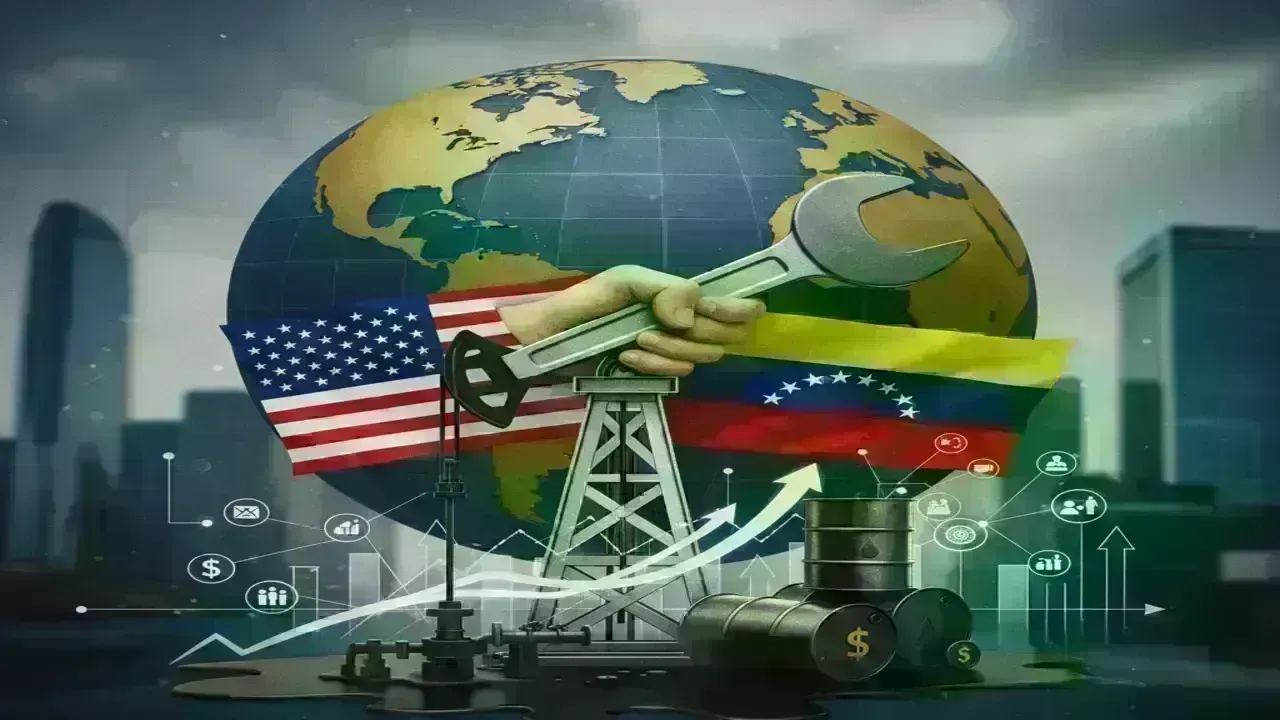
The term “US influence on Venezuela’s oil sector” signifies not American forces or firms taking over operations directly, but a strategic change in regulatory power, sanctions management, financial control, and trading capabilities. This allows the US to mold the production and pricing of Venezuelan oil on a global scale. Such influence is transforming energy dynamics, geopolitical relationships, and oil pricing internationally.
A thorough analysis is required to grasp what this influence entails, its timely relevance, and its ramifications for global oil markets, emerging economies, and consumer fuel expenses.
Venezuela’s Role in the Global Oil Landscape
Venezuela is home to the largest proven oil reserves in the world, surpassing even Saudi Arabia. Much of its crude is heavy oil, which, though needing complex refining, can become immensely valuable as global supplies dwindle.
Nevertheless, Venezuela has seen a severe decline in oil production over the last decade due to:
-
Sanctions affecting exports and payment systems
-
Mismanagement within PDVSA, the state-run oil entity
-
A shortage of foreign investments and technological expertise
-
Crumbling infrastructure
At its peak, Venezuela produced over 3 million barrels daily. Currently, output has plummeted to under 800,000 barrels, creating an unmet demand in global markets.
Deciphering “US Influence” in Practical Terms
The United States does not have ownership of Venezuela’s oil resources. Its influence emerges through economic tools, not outright ownership.
Sanctions as Instruments of Control
Historically, US sanctions have limited:
-
The nations permitted to acquire Venezuelan oil
-
The methods of financial transactions
-
The companies allowed to function in the sector
By modulating sanctions, the US can effectively control the volume of Venezuelan oil entering the marketplace and its conditions.
Licensing Powers Over Energy Firms
Licenses from US authorities enable certain companies, particularly American and allied interests, to:
Financial Surveillance
Global oil trades largely rely on dollar-denominated systems. Even when Venezuela sells oil to distant nations, US-managed financial networks control transactions, insurance, shipping, and compliance.
Political Conditions for Exports
Enhancements in oil exports are contingent upon political promises, elections, or reforms. This situation gives the US long-lasting influence extending beyond mere production increases.
Reasons Behind the US’s Renewed Approach
This strategic shift is propelled by global energy instability, not altruism.
Supply Disruptions from International Conflicts
Conflicts including those in Russia and the Middle East have disrupted global oil availability. Sanctions on Russia have eliminated millions of barrels from the Western oil landscape.
Production Restraints by OPEC
OPEC and OPEC+ members have frequently curtailed output to maintain pricing, leaving consuming countries exposed.
Domestic Political Pressure
Fuel prices affect inflation, electoral outcomes, and public opinion. The US is in need of stable, manageable sources of supply.
Venezuela represents a convenient, resource-rich option that can be swiftly utilized under regulated conditions.
Impacts of Venezuela’s Oil Recovery on Global Supply
Even a slight resurgence in Venezuelan production can significantly alter the global landscape.
Immediate Supply Boost
An increase of 300,000 to 500,000 barrels daily could:
-
Alleviate supply constraints
-
Mitigate price fluctuations
-
Reduce reliance on emergency reserves
Markets factor in potential future supplies as well as current availability.
Lessened Dependence on Unstable Regions
Venezuelan oil lessens dependence on:
Effects on Global Oil Pricing
Oil pricing is driven as much by market psychology as by physical supply.
Price Stabilization Trends
-
Limits drastic price surges
-
Restrains speculative price increases
-
Establishes a price cap
Traders consider anticipated future supplies alongside current pricing.
Reasons for Avoiding Price Crashes
Despite the potential increase in supply:
-
Recovery will be gradual
-
Infrastructure challenges persist
-
OPEC can adjust production levels accordingly
Thus, Venezuelan oil serves to moderate pricing instead of collapsing it.
Repercussions for OPEC and Key Producers
Venezuela’s return shifts power dynamics in the market.
Strain on OPEC Unity
Some OPEC members heavily depend on elevated prices. Increased supply could:
Strategic Adjustments by Major Producers
Saudi Arabia and other Gulf nations may need to:
-
Reassess production quotas
-
Postpone any expansions
-
Prioritize long-term market positioning
In this scenario, Venezuela might serve as a balancing force rather than a dominant player.
Effects on China, India, and Developing Economies
Venezuela has historically sold oil at discounts to navigate sanctions.
Access to Reduced Discounts
As exports move through licensed systems:
Increased Competition for Resources
Emerging markets will encounter:
Effects on Global Energy Corporations
International energy companies proceed with caution.
Regulated Re-Entry into the Market
Active companies must adhere to:
-
Strict compliance protocols
-
Limited opportunities for expansion
-
Ongoing political scrutiny
This minimizes risk but curtails profit potential.
Renewal of Technology and Infrastructure
Gradual enhancements may:
-
Increase extraction efficacy
-
Mitigate environmental impacts
-
Enhance long-term output capabilities
However, considerable time will be necessary for recovery.
Expected Impacts on Consumer Fuel Prices
Consumers may experience delayed effects.
Short-Term Relief Potential
Price surges may become less acute during supply shocks.
Long-Term Stability
A more varied supply can minimize abrupt shortages.
However, taxes, refining costs, and local market policies continue to dominate retail fuel pricing.
Risks and Uncertainties Surrounding This Strategy
Influence-based control introduces various risks.
Potential Political Shift
Changes in governance or adherence may:
Fragility of Infrastructure
Years of neglect have resulted in:
-
Frequent equipment breakdowns
-
Increased environmental hazards
-
Delays in production timelines
Market Overconfidence Issues
Investors might overrate the speed of recovery, resulting in distorted pricing.
Geopolitical Reverberations
Venezuela’s oil is now a geopolitical asset.
Lessened Energy Dependency on Russia
Each barrel sourced from Venezuela diminishes Western reliance on Russian oil.
Altered Political Landscape in Latin America
Regional dynamics will shift as Venezuela:
-
Resumes its economic engagements
-
Secures selective legitimacy
-
Loses unilateral influence
Enhanced US Strategic Positioning
The US will strengthen its diplomatic leverage through its energy influence across trade and security agendas.
Long-Term Prospects for Venezuela
This does not signify a comprehensive recovery for Venezuela.
Potential Advantages
Intrinsically Imposed Limitations
-
Restricted sovereignty over oil policies
-
Reliance on external validations
-
Slow progression in social recovery
While control yields cash, it does not ensure autonomy.
What Global Markets Are Truly Pricing In
Markets are not anticipating a boom in Venezuelan oil. Instead, they are pricing:
The Significance of This Move Surpassing Headlines
Its importance extends beyond mere barrels; it signifies a paradigm shift. It highlights how energy control is exerted in modern geopolitics through finance and regulation, not just ownership.
This approach may guide future engagements in other resource-laden countries.
A Final Reflection on Global Energy Equilibrium
The US's involvement in shaping Venezuela’s oil landscape marks a transition from seclusion to managed integration. It enhances supply security for consumption-focused nations while curtailing price instability. However, this also redefines sovereignty within global energy sectors.
Control is no longer solely about reservoir ownership; it now revolves around who governs access, compliance, and transactional flow.
Disclaimer
This content serves informational and analytical purposes exclusively. It should not be mistaken for financial, investment, legal, or geopolitical counsel. Energy markets and global policies are intricate and subject to rapid fluctuations. Readers are encouraged to consult credible sources or qualified specialists before making decisions informed by geopolitical or market events.


 English