Post by : Saif
Al-Najjar
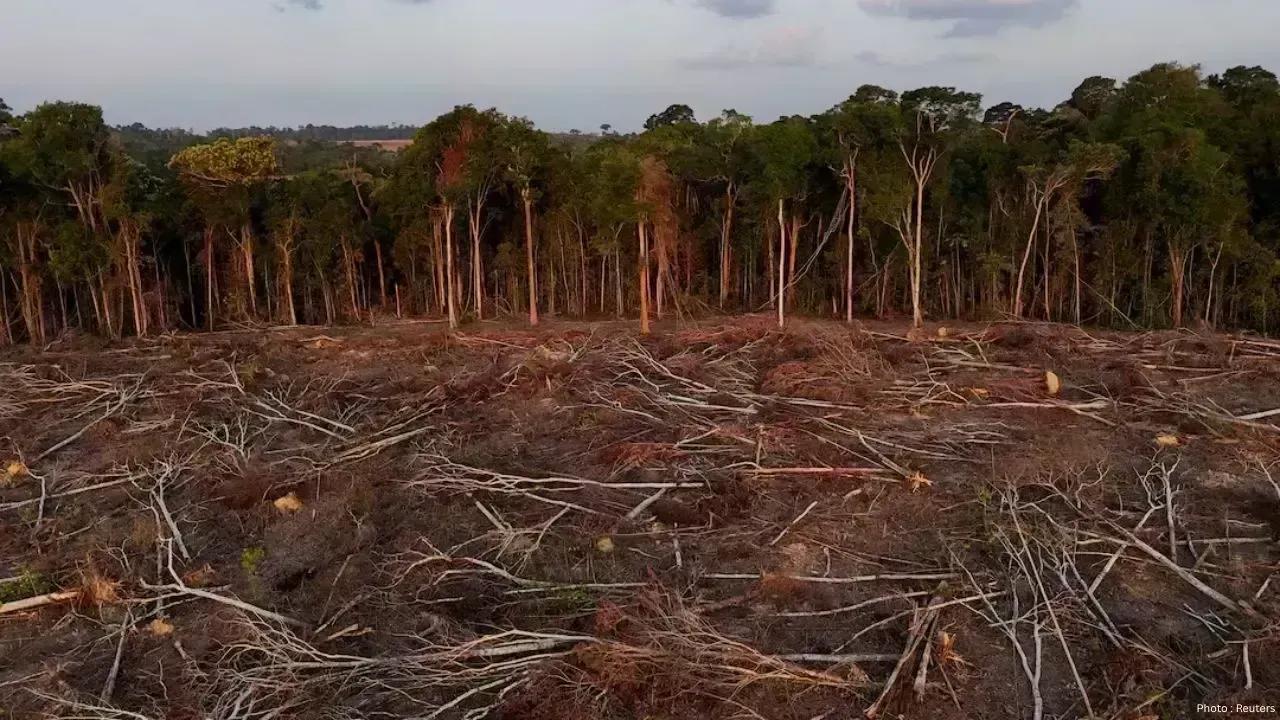
A recent global report shows a decline in tropical forest loss in 2025 compared to the record highs of the previous year. While this is a positive shift, experts caution that the broader deforestation crisis persists.
In 2025, approximately 4.3 million hectares of tropical primary forest were lost globally, marking a 36% decrease from the unprecedented levels witnessed in 2024. This reduction is seen as an encouraging sign that effective policy measures in various countries can yield positive results.
Brazil stands out as a key example, enhancing its environmental protections through stricter enforcement against illegal land clearing and robust conservation initiatives. These measures have notably curbed forest loss in vital rainforest areas.
Despite the promising trend, experts raise alarms about the ongoing severity of the situation. The current deforestation rates remain significantly above the targets needed to achieve the global climate objectives set for 2030. In essence, forests continue to vanish at a rate outpacing their ability to regenerate and be safeguarded.
Agricultural expansion continues to drive the majority of forest loss. Vast stretches of tropical forest are being turned into farmland for crops and livestock. In many regions, local populations also rely heavily on these forested areas for their livelihoods, intensifying the strain on these essential ecosystems.
Contributing to the dire situation is climate change, which exacerbates conditions for forest fires triggered by soaring temperatures and erratic rainfall patterns. These fires have become increasingly frequent and difficult to manage, leading to rapid devastation of forested areas.
Moreover, progress in reducing forest loss has shown to be inconsistent globally. While some nations have made strides, others continue to experience rampant deforestation fueled by lax enforcement, economic demands, and agricultural growth. This disparity complicates collective global efforts.
Forests play a crucial role in carbon storage, wildlife support, and climate regulation. Their destruction not only threatens biodiversity but also escalates carbon dioxide emissions, further aggravating global warming.
Though the recent downturn in forest loss is a positive indicator, experts warn against complacency. The world remains off course from its long-term aim of halting and reversing deforestation by 2030.
The data clearly signals one vital truth: progress is attainable, yet it must be accelerated and uniform. Enhanced policies, improved enforcement, and collaborative international efforts will be essential to conserve the remaining tropical forests.


 English