Post by : Bianca
Haleem
Airlines across the world are facing growing financial pressure as jet fuel prices rise sharply, outpacing the increase in crude oil prices. The surge has forced several carriers to raise ticket fares, add fuel surcharges and reduce flight capacity to manage costs.
The sudden jump in fuel costs has been linked to the ongoing U.S.–Israeli war involving Iran, which has disrupted global energy markets and pushed refining margins to unusually high levels.
Typically, jet fuel prices move closely with crude oil prices. However, since the conflict began, jet fuel prices have nearly doubled, while crude oil prices have increased by only about one-third. This widening gap is putting significant strain on airline profit margins worldwide.
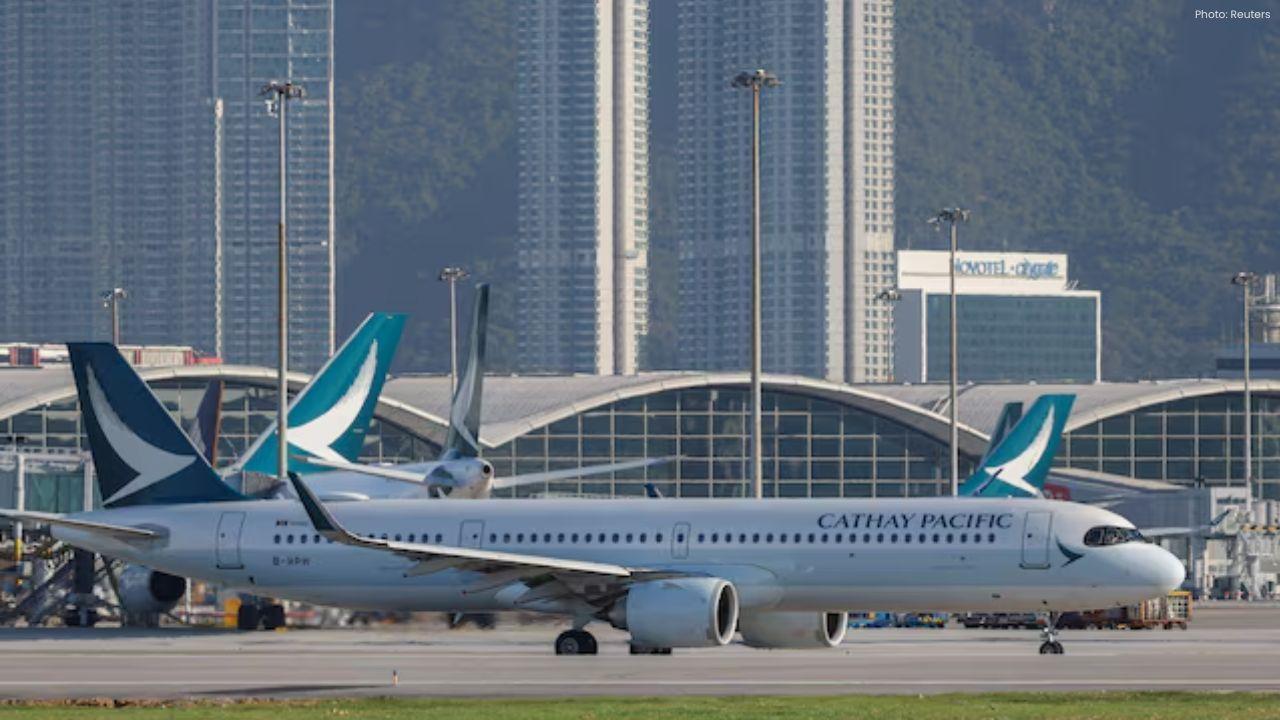
Rebecca Sharpe, Chief Financial Officer of Cathay Pacific Airways, described the rise as dramatic while speaking in Hong Kong after the airline reported its earnings.
According to Sharpe, the airline hedges against crude oil price fluctuations but not specifically against jet fuel. As a result, the existing hedging strategy only offers partial protection against the sharp increase in aviation fuel costs.
Airlines Face Uneven Impact
The impact of rising fuel prices varies across airlines. Many major carriers in the United States and China do not use fuel hedging contracts, leaving them fully exposed to sudden increases in fuel costs.
Aviation expert Hans Joergen Elnaes noted that during geopolitical tensions such as conflicts in the Middle East, jet fuel prices historically remain elevated for months.
Analysts also warn that low-cost airlines could be hit hardest. Nathan Gee, Bank of America's head of Asia-Pacific transportation research, said budget carriers typically serve price-sensitive passengers, making it harder for them to pass rising fuel costs onto customers.
Hedging: Protection With Risks
Fuel hedging allows airlines to protect themselves from sudden price spikes through derivative contracts. However, the strategy also carries risks. If fuel prices fall, airlines locked into higher contract prices may suffer financial losses.
In Europe, where hedging is widely used, analysts estimate that a 10% rise in jet fuel prices could significantly affect airline profits.
According to J.P. Morgan estimates:
-
Budget airline Wizz Air could see operating profit drop by up to 31% this year.
-
Airlines such as Air France-KLM, Lufthansa, IAG (owner of British Airways) and Ryanair could face profit impacts ranging from 3% to 10%.
Wizz Air has already warned that the Middle East conflict could cost the airline about 50 million euros. The company has hedged about 83% of its jet fuel needs through March, but coverage drops to 55% for the following year.
CEO Jozsef Varadi recently said the airline remains well protected and is “not naked” against fuel price volatility.
Refining Margins Spike
The biggest shock for airlines has come from refining margins. Before the conflict, jet fuel prices in Asia were around $21 per barrel higher than crude oil.
However, the refining margin surged to $144 per barrel on March 4 and remained unusually high at around $65 per barrel this week.
Industry analysts say this sharp rise in refining margins is where airlines have the least protection.
Airlines Already Raising Fares
Even airlines that do not operate flights to the Middle East are feeling the impact. Carriers such as Air New Zealand and Qantas Airways—which are more than 80% hedged against crude oil for the current half-year—have already increased ticket prices to protect their profit margins.
With jet fuel prices continuing to rise faster than crude oil, airlines worldwide may face prolonged cost pressures, which could lead to higher airfares and reduced flight capacity for passengers in the coming months.


 English