Post by : Saif
Al-Najjar
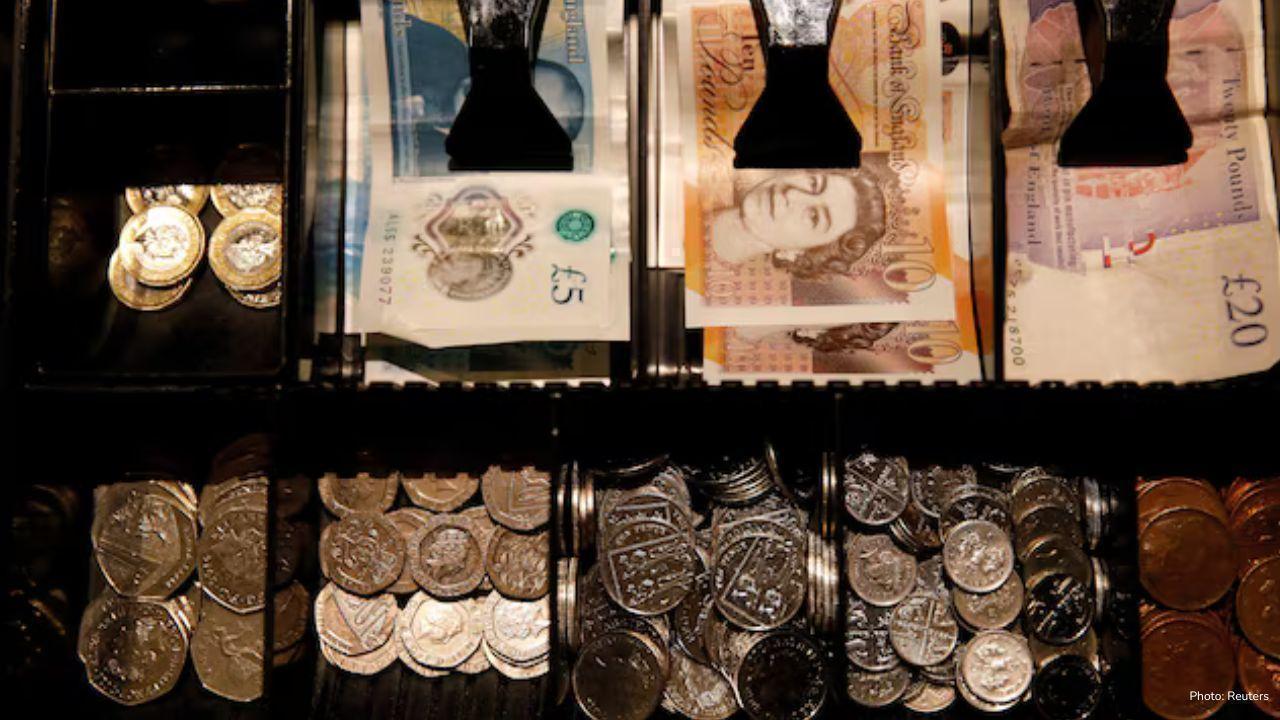
The British pound weakened slightly on Tuesday after a survey showed that business activity in the UK slowed in early September. The S&P Global preliminary UK Composite Purchasing Managers’ Index (PMI), which measures growth in the services and manufacturing sectors, fell to 51.0 in September from 53.5 in August. A reading above 50 indicates growth, while below 50 signals contraction, so the drop shows a slowdown in economic momentum.
Economists had expected a smaller decline to 53.0, so the result was weaker than anticipated. Following the survey, the pound fell 0.2% to a session low of $1.34885 before recovering slightly to around $1.35. Despite this decline, sterling remains about 8% higher against the U.S. dollar for the year and nearly 5.5% stronger against the euro.
The slowdown comes as UK companies face growing concerns about future tax increases. Rising uncertainty has reduced business confidence, causing firms to become cautious about investments and expansion. BBVA strategists noted that while investor sentiment is positive and UK equities are near record highs, the pound is struggling to gain strong momentum. They highlighted the potential for further weakness in sterling, as markets are currently pricing in only minimal Bank of England (BoE) rate cuts by the end of the year.
The Bank of England has not yet lowered interest rates despite weakening economic data. Part of the pound’s resilience against the dollar comes from expectations that the BoE will act more slowly than the U.S. Federal Reserve. UK inflation is currently running near 4%, almost twice the central bank’s target, which gives the BoE reason to keep rates higher for longer.
Investors are also watching closely for comments from U.S. Federal Reserve Chair Jerome Powell, who is expected to emphasize caution in lowering rates. This is in contrast to new Fed Governor Stephen Miran, appointed by President Donald Trump, who argues that the Fed’s monetary policy is too tight and may hurt the labor market.
In the UK, finance minister Rachel Reeves faces pressure to manage public finances carefully. Analysts suggest this could lead to tax increases in the upcoming November budget, adding another layer of uncertainty for businesses and markets.
In summary, the pound’s slight decline reflects slower UK economic activity and growing uncertainty about taxes and monetary policy. While sterling has remained relatively strong this year, investors are keeping a close eye on upcoming economic data and central bank actions, both in the UK and the United States.


 English