Post by : Saif
Al-Najjar
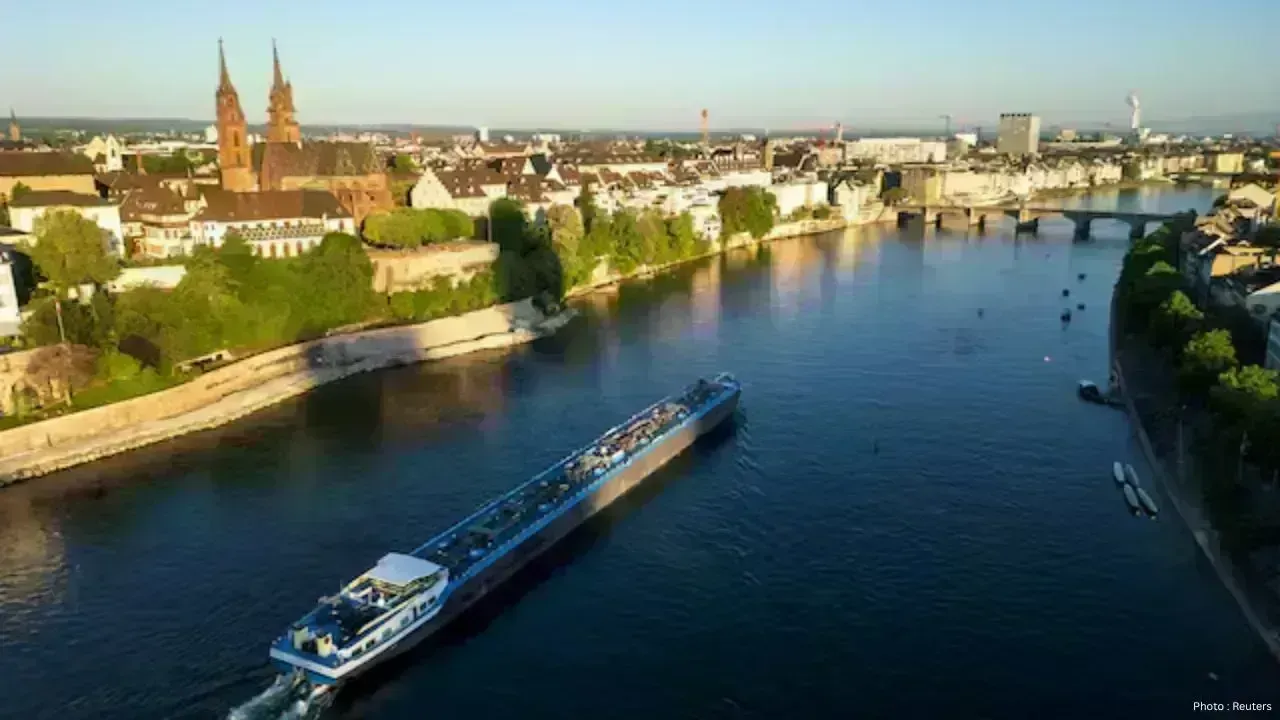
Following recent rainfall, the water levels in Germany's Rhine River are on the rise, offering much-needed relief to shipping businesses reliant on this vital European trade artery. This positive change comes after several weeks of dry weather that had significantly hindered transport and raised fears of supply chain interruptions throughout Germany.
Recognized as one of Europe’s key waterways, the Rhine is crucial for the movement of essential goods including coal, oil derivatives, chemicals, grains, and minerals. Numerous German industries are heavily reliant on this river for their operational and supply chain needs.
Earlier this month, an unusual lack of rain had caused water levels along various stretches of the Rhine to plummet. The shallow waters prevented cargo vessels from carrying their full loads safely. Consequently, ships in some zones had to operate at approximately half their usual capacity.
This reduction in water levels translated into increased transport costs as companies required more vessels to transport the same quantity of goods. Additionally, shipping operators levied extra charges to their freight rates to compensate for losses stemming from diminished carrying capacity. Many businesses expressed concern that if the situation persisted, it could adversely affect industrial output and energy supplies.
Fortunately, recent precipitation across Germany and neighboring river regions has significantly improved conditions. Commodity traders report that vessels can now navigate with about 70% to 90% of their usual cargo capacity, an uptick from just 50% the previous week. Moreover, shipping operations in northern localities near Duisburg and Cologne are gradually returning to normal.
Nevertheless, challenges persist near Kaub, a critical choke point along the Rhine where vessels continue to struggle with lower load capacities due to still-subpar water levels. Experts speculate that conditions may further enhance later in the week as additional rain continues to flow into the river system.
This isn’t the first occasion the Rhine has faced such challenges; the severe drought of 2022 had similarly affected supply chains throughout Germany, impacting fuel deliveries and industrial production, laying bare the economic ramifications of climate change.
Experts emphasize that the current developments underscore the escalating impact of shifting weather patterns on transportation and trade infrastructures. While the Rhine remains a cornerstone of Europe’s economy, the rise in droughts and climate-induced interruptions is an emerging trend.
For the moment, the recent rains offer a temporary reprieve for businesses and shipping entities. Should the weather conditions continue to improve, we may witness a full restoration of cargo operations on the Rhine in the days ahead.


 English