Post by : Shweta
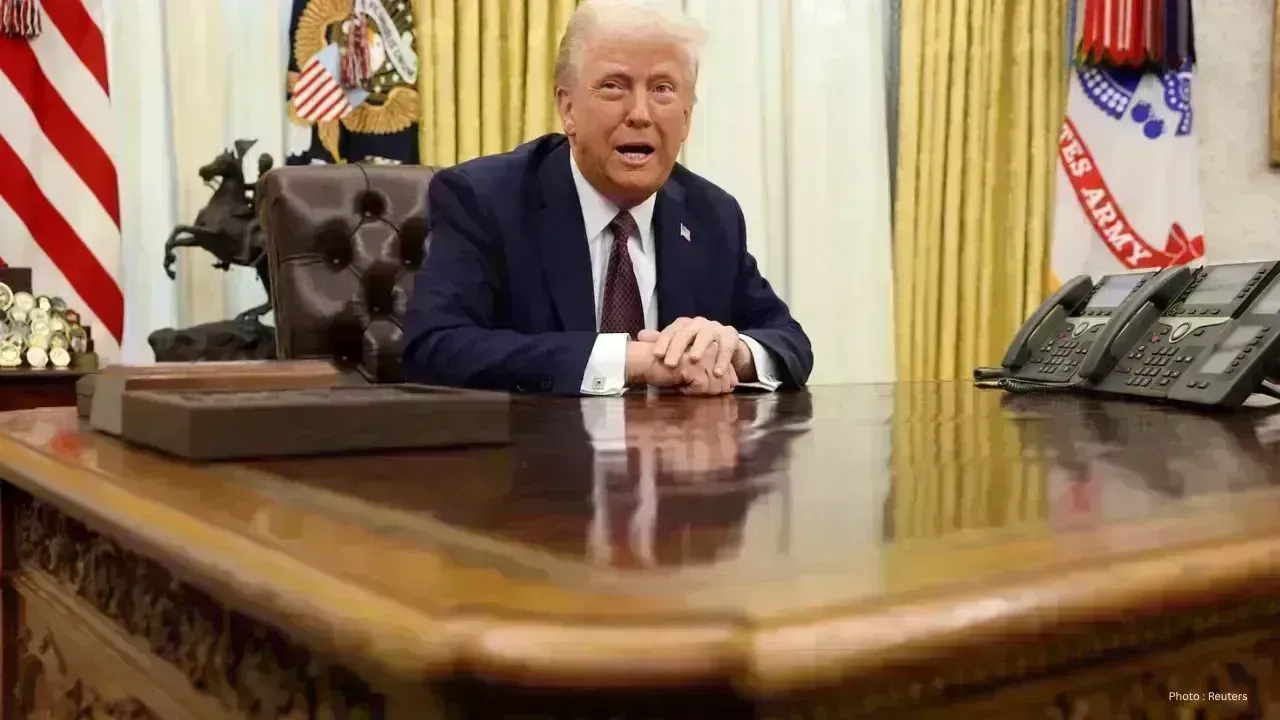
In light of recent remarks from U.S. President Donald Trump concerning Taiwanese independence, Taiwan has opted for a measured response, highlighting the critical nature of its relations with both China and the U.S.
Trump's cautionary statements reportedly emerged during discussions focused on regional security intertwined with diplomatic strains involving China. He highlighted the necessity of maintaining peace in the Taiwan Strait, cautioning that any formal declaration of independence by Taiwan could escalate military tensions with Beijing. Given the Taiwan issue's potential to spark serious geopolitical conflicts, his comments were met with close scrutiny.
In Taiwan, government officials reinforced their dedication to defending democracy, security, and the island’s right to engage globally. The leadership reiterated that Taiwan's future should be determined through peaceful means, respecting the wishes of its population.
While avoiding direct critique of Trump, Taiwanese officials underscored that upholding regional tranquility depends on constructive dialogue and stable diplomacy from all involved parties. They pledged to enhance national defense capabilities and collaborate closely with global partners to maintain security in the Indo-Pacific.
China, perceiving Taiwan as part of its territory under the “One China” doctrine, remains highly sensitive to any moves towards independence. The Chinese government has consistently rebuked foreign support for Taiwan’s autonomy, escalating military maneuvers around the island, including increased air and naval activities.
While the United States adheres to the “One China” policy, it sustains informal relations with Taiwan and continues to provide defensive military assistance. Washington has historically backed Taiwan’s self-defense capabilities without extending formal recognition of independence.
Analysts note that Trump’s remarks may be intended to balance support for Taiwan while simultaneously mitigating the risk of military confrontation with China. They believe that U.S. officials are wary that any sudden shifts towards declaring independence might instigate a significant crisis sparked by a Chinese military response.
These comments occur amid intensifying competition between the U.S. and China over various fronts, including trade, technology, and military power across Asia. Taiwan’s geographical significance and its pivotal role in global semiconductor production render it crucial in this rivalry.
International experts interpret Taiwan’s cautious reaction as an effort to maintain stability while safeguarding its political autonomy. Taiwanese leadership has generally sought to uphold steady international associations without taking definitive steps that could be construed as a move towards independence.
Security analysts project that the Taiwan issue will remain a key geopolitical challenge in the years ahead. Significant policy shifts from Washington, Beijing, or Taipei could have profound implications for regional stability and global trade routes.


 English