Post by : Saif
Al-Najjar
Though it might seem like a relic of the past, carbon paper has a significant history that intertwines with modern technology. Even terms like “CC” in emails trace back to its role in facilitating duplicate copies. Revisiting its origins highlights how this simple invention aided in document duplication long before the digital age.
In an era devoid of laptops, screens, and digital archives, copying required tangible materials and considerable time. Early media staff utilized bromides for document edits. If a spelling mistake occurred or a visual change was necessary, they would carefully cut and adhere pieces, giving birth to the expression “cut and paste,” a time-consuming yet necessary process.
Various innovations sought to enhance copying methods. Early in the 1900s, Photostats, which employed light projection to reproduce documents, emerged, followed by the introduction of Xerox copy machines in the 1950s, which revolutionized copying.
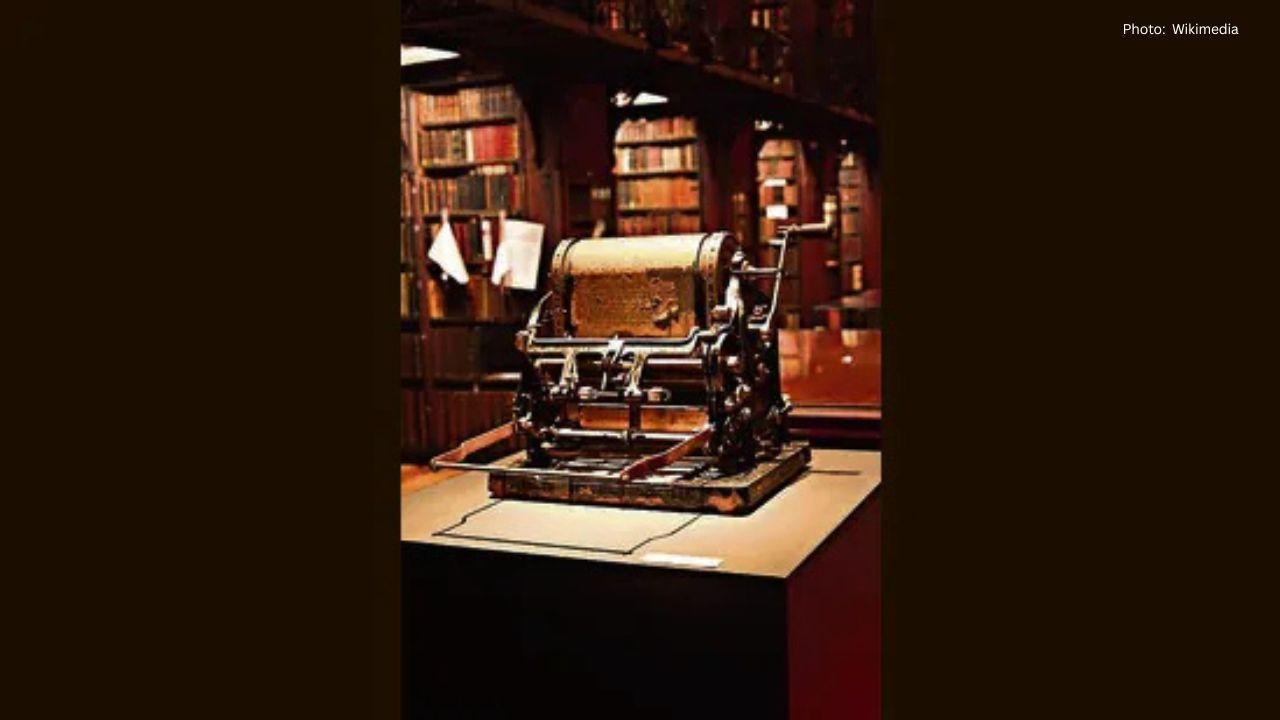
The journey to modern copiers wasn't instantaneous. Hand-operated “cyclostyle” devices introduced in the 1880s enabled ink to flow through stencils to create duplicates. These machines were the precursors to today’s inkjet printers, marking a significant advancement in duplication technology.
Typewriters also contributed to replication, yet creating multiple copies meant repetitively typing the same text—a tedious undertaking. The invention of the typewriter in the 1860s by Christopher Sholes laid the groundwork for the qwerty keyboard that endures today.
Before typewriters became prevalent, carbon paper emerged as a revolutionary option, allowing for immediate copying when positioned between two sheets of paper. The pressure from writing transferred the carbon coating to the underlying sheet, resulting in a direct duplicate without the need for electricity or machinery.
Though often seen as outdated, carbon paper continues to find utility in various sectors. It's still commonly used in receipt books, legal documentation, shipping forms, and anywhere that requires duplicates without electronic means. Artists, too, utilize carbon paper for design tracing, making it a persistent resource in small offices and towns globally.
Despite significant technological advancements, the legacy of carbon paper persists. The “carbon copy” option in emails serves as a historical nod to the manual duplication methods of yesteryear. The successors to carbon paper, like typewriters and photocopiers, have been foundational in crafting the digital frameworks we depend on today.
In essence, carbon paper, while seemingly simple, has profoundly influenced communication, office practices, and printing technology. It maintains a connection between the past and the present, showcasing how minor innovations can significantly shape workflows across generations.


 English