Post by : Meena
Hassan
US President Donald Trump maintained his composure regarding the recent Chinese military activities near Taiwan, downplaying the significance of these drills as standard practice. In brief remarks to the press, Trump highlighted his strong rapport with Chinese President Xi Jinping, noting that Xi did not bring up the exercises during their discussions. He pointed out that China has been conducting naval operations in the area for over two decades, suggesting no significant threat.
The drills commenced shortly after the US disclosed a substantial arms sale to Taiwan, simulating a blockade and a takeover of crucial territories, framed by Beijing as a response to Taiwan’s independence aspirations and external interference.
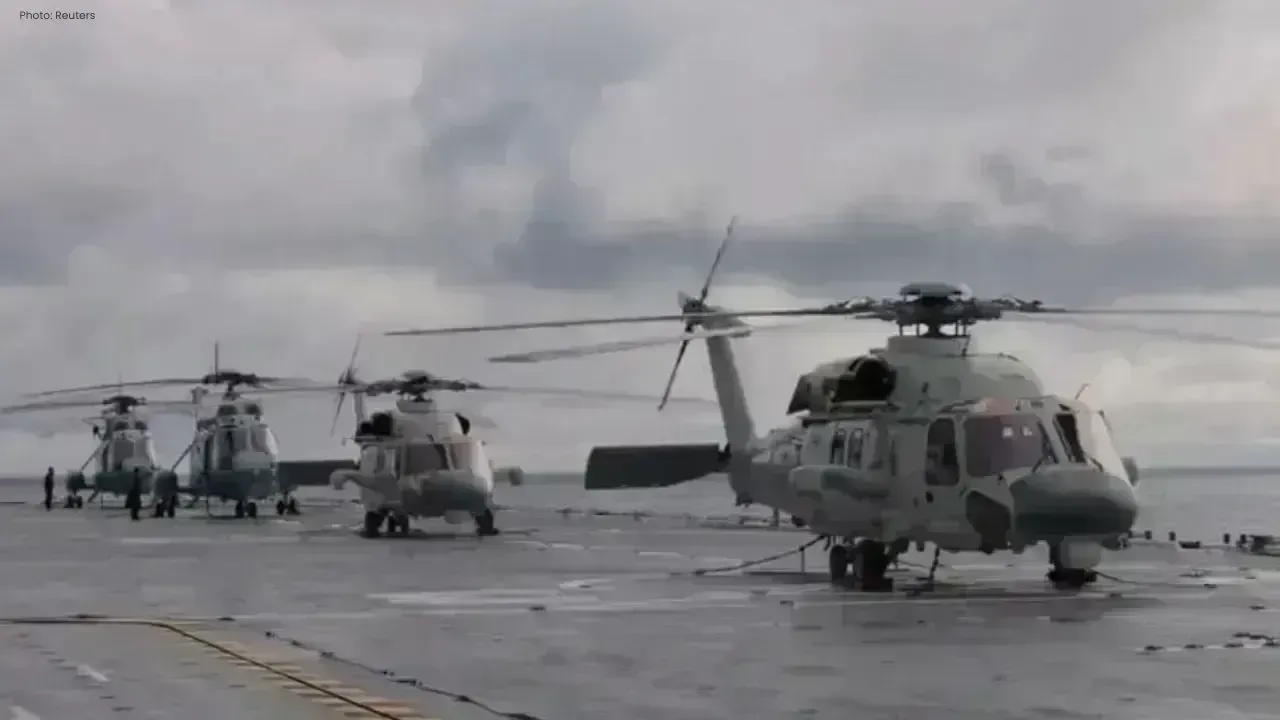
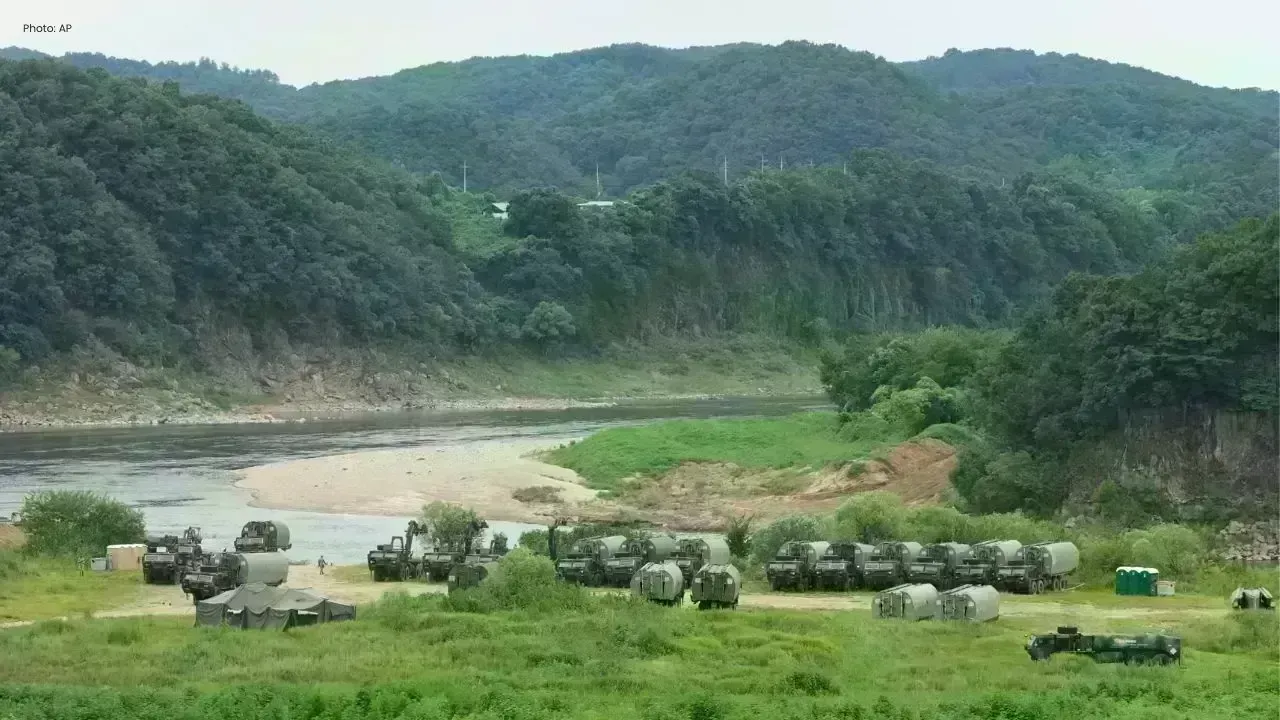
The Chinese military outlined a plan to execute 10 hours of live-fire operations spanning five maritime and aerial zones surrounding Taiwan. The Eastern Theater Command has mobilized various vessels, including destroyers and fighter-bombers, to assess coordinated operations.
Taiwan's defense ministry recorded around 130 Chinese military aircraft near the island, with 90 crossing an unofficial median line that divides the airspace—a boundary not acknowledged by China. Additionally, numerous Chinese naval units were observed in proximity to Taiwan. In response, Taiwan has activated its aircraft, naval fleets, and missile systems for monitoring and counteractions.
Taiwan’s presidential office condemned the drills as a violation of international standards. President Lai Ching-te criticized the escalated military pressure as reckless, reaffirming that Taiwan would operate carefully to maintain national security without provoking conflict.
Analysts suggest that the core message of these exercises targets the US, Japan, and former President Trump, as Beijing expresses its resentment toward US arms sales to Taiwan, which now include offensive capabilities that could reach the Chinese mainland, heightening tensions.
Some U.S. analysts are expressing concern that Trump’s perspective on Taiwan could become more transactional, potentially diminishing American commitment for economic benefits.
While Trump dismisses the drills as mere routine, experts warn that China’s military modernization and increased activities around Taiwan represent a more assertive posture. They emphasize that personal relationships between Trump and Xi Jinping are unlikely to sway China’s strategic objectives.
China's stance on reunification with Taiwan remains firm, with military force not ruled out. Pressure has intensified in recent years, prompting Taiwan to strategize its defense enhancements. The US is Taiwan's principal arms supplier, while it simultaneously upholds diplomatic protocols with Beijing.
In retaliation for the US arms sale, China has sanctioned American defense firms, vowing to robustly counter what it perceives as provocations from Taiwan’s independence advocates and US assistance.
Chinese Foreign Minister Wang Yi reiterated the goal of achieving complete reunification with Taiwan as a historical obligation that China is resolutely pursuing.


 English