Post by : Mariam
Al-Faris
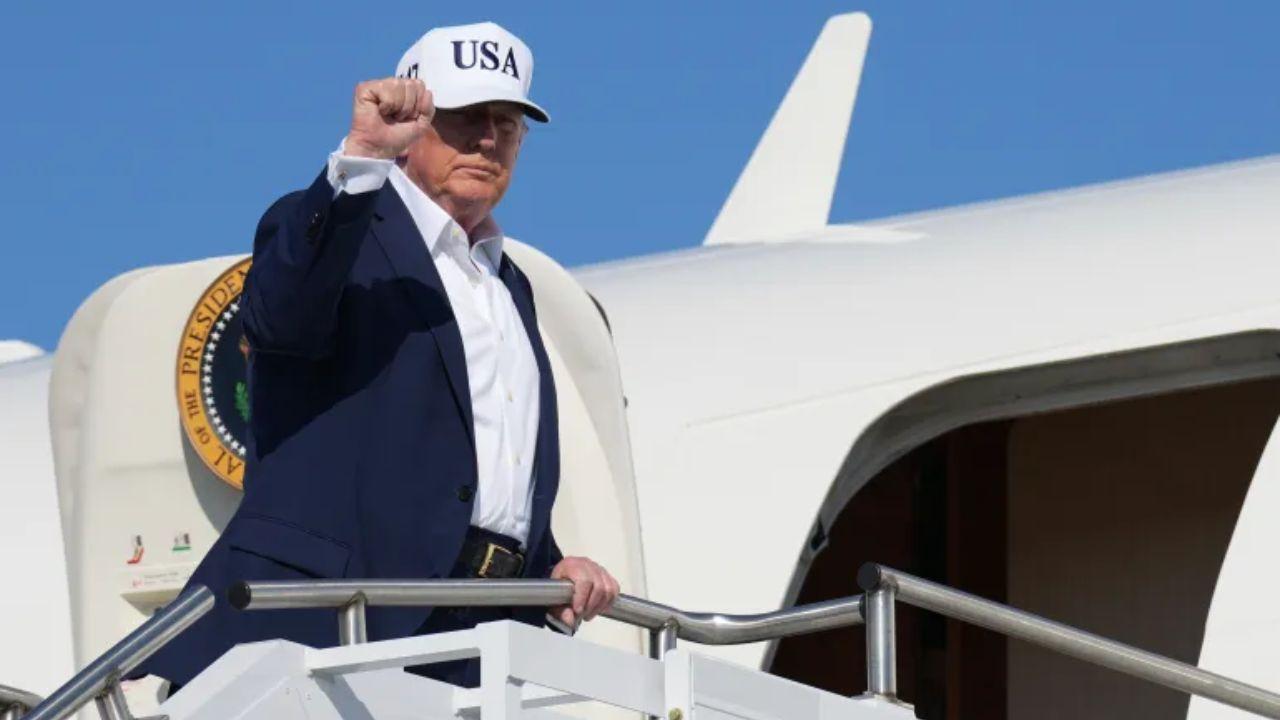
Photo: AP
Former U.S. President Donald Trump has announced a new set of tariffs—import taxes—on 14 countries, with rates ranging from 25% to 40%. These tariffs are aimed at countries with which the U.S. has significant trade deficits and are expected to take effect on August 1, 2025.
In a series of nearly identical letters posted on Truth Social (Trump’s social media platform), he stated that while the U.S. will continue working with these nations, the current trade relationships are "far from reciprocal." According to Trump, these tariffs are just the starting point, and he warned that if any of the countries respond by raising their own tariffs, the U.S. would match that increase and add it on top of the original amount.
Countries and Tariff Rates
The tariff rates vary by country and are similar to the ones announced in April under Trump’s “Liberation Day” policy. The proposed rates are
-
25% tariffs for Japan, South Korea, Malaysia, Kazakhstan, and Tunisia
-
30% tariffs for South Africa, Bosnia and Herzegovina
-
32% tariffs for Indonesia
-
35% tariffs for Bangladesh and Serbia
-
36% tariffs for Thailand and Cambodia
-
40% tariffs for Myanmar and Laos
This marks a significant move, especially against longtime allies such as Japan and South Korea, who have historically maintained close economic and security ties with the United States.
Free Trade Agreements Challenged
Experts have raised concerns over these tariff plans. Wendy Cutler, vice president at the Asia Society Policy Institute and a former U.S. trade negotiator, said it was surprising to see such strong action against South Korea. The country has had a free trade agreement (FTA) with the U.S. since 2012.
Cutler emphasized that imposing tariffs against a partner with an existing FTA could severely damage trust in U.S. trade policies. “This certainly calls into question the value of having a free trade agreement with the United States,” she said.
Trump’s Argument: Fixing Trade Imbalances
The Trump administration argues that these tariffs are necessary to correct trade imbalances and to rebuild U.S. manufacturing. Trump said that other countries have unfair advantages due to their tariffs and non-tariff barriers, which make it harder for U.S. goods to compete abroad.
White House Press Secretary Karoline Leavitt explained, “He is literally looking at the map and checking which countries have hollowed out our industrial base. This is his way of correcting that.”
Deadline Extension & Market Reactions
These tariffs were originally expected to start this week, but Trump extended the tariff pause deadline to August 1, giving countries additional time to negotiate trade deals with the U.S.
However, the uncertainty surrounding these new trade policies has made investors nervous. On the day the new tariffs were announced, all three major U.S. stock indexes dipped, each closing the day down slightly—less than 1%.
Is This Just a Threat or a Real Shift?
There is still confusion about whether Trump is serious about implementing these tariffs or whether he is using them to gain leverage in ongoing trade talks. Marcus Noland, Executive Vice President at the Peterson Institute for International Economics, said:
“There’s this enormous threat, but it’s like he doesn’t want to squeeze the trigger. Whether or not this is another bluff, it certainly leaves things unsettled.”
Treasury Secretary Scott Bessent added that the letters were intended to speed up stalled negotiations. “I think we’re going to see a lot of deals very quickly,” he told CNN.
Trade Talks Already Underway
Despite the aggressive tone of the tariff letters, Trump has also mentioned ongoing or completed trade deals with other nations. These include new trade talks or agreements with Vietnam, the United Kingdom, China, and possibly India. Details on many of these deals are still unclear.
Trump previously referred to the U.S.-Korea free trade deal as “job-killing” and has often criticized trade relationships that he sees as unfair to American workers.
Economic Concerns from Analysts
Many economists and analysts believe that even the threat of tariffs can hurt the economy by creating instability and uncertainty for businesses.
Desmond Lachman, a senior fellow at the American Enterprise Institute, warned:
“You just don’t know what [Trump] is going to do tomorrow, and that’s what’s scaring the markets. Even if all of this gets rolled back, there’s going to be a price for the economy.”
Global Trade Community Watches Closely
Other countries, including China, have already responded critically to Trump’s past tariffs, calling his trade accusations “groundless.” Meanwhile, legal challenges to earlier tariffs are still playing out in U.S. courts.
There are also concerns among U.S. businesses that these tariffs could lead to higher prices, layoffs, and supply chain disruptions, particularly in sectors such as steel, aluminum, apparel, and consumer electronics.
What’s Next?
With just weeks to go before the August 1 deadline, all eyes are on how the 14 targeted countries will respond. Trump’s administration insists that the tariffs can be adjusted if other nations lower their own barriers and open their markets to U.S. goods.
As trade talks continue, the international community remains cautious, watching to see whether Trump’s tough stance results in real deals—or a new round of global trade conflicts.


 English