Post by : Samir
Qureshi
Unveiling the Pyramids: How Ancient Civilizations Crafted Timeless Marvels
The pyramids have been steadfast sentinels of history for millennia, magnificent structures that invoke admiration and intrigue. Emerging from the Egyptian sands and beyond, they represent the zenith of early human creativity, engineering skill, and spiritual desire.
What lies at the heart of the pyramids' secrets? How did these civilizations, without the luxuries of modern machinery, construct such perfectly aligned constructions that have endured through the ages? Join us as we delve into the remarkable methods employed by ancient engineers, architects, and laborers to create these timeless wonders.
The Allure of the Pyramids
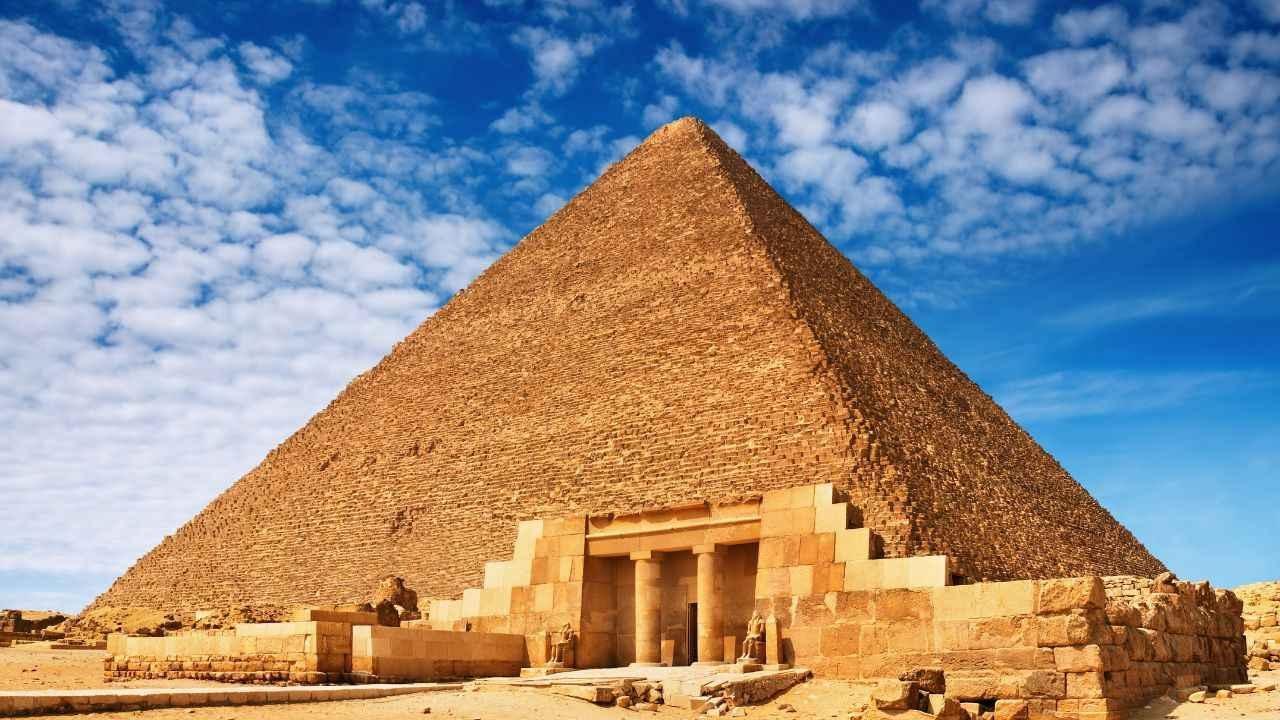
Pyramids transcend mere architectural feats; they serve as profound symbols of immortality. Among them, the Great Pyramid of Giza stands out as the only remaining wonder of the ancient world. Erected circa 2560 BCE for Pharaoh Khufu, this colossal structure originally soared to over 146 meters and was constructed from about 2.3 million limestone blocks, each weighing several tons.
What astounds about the Great Pyramid is not just its grandeur but its precision. Its base is nearly a perfect square, and its edges align with cardinal directions. Achieving such accuracy with today’s technology is still a formidable task.
The intriguing blend of mystery and architectural brilliance keeps the secrets of the pyramids attracting scholars, archaeologists, and engineers alike.
Construction Techniques of the Pyramids
For ages, the question has loomed: “How were the pyramids constructed?”
Devoid of cranes or advanced tools, the ancient Egyptians relied on ingenuity, collaboration, and meticulous planning.
1. The Builders: Skilled Hands, Not Slaves
Contrary to widespread belief, the pyramids were not erected by enslaved individuals but by organized teams of skilled artisans. Archaeological findings reveal that tens of thousands of Egyptians, from engineers and masons to carpenters, participated actively in these constructions. They resided in nearby workers’ villages, received ample sustenance, and took immense pride in their contributions. Constructing a pyramid was viewed as an honor, a divine service to the gods and the pharaoh.
2. Sourcing and Transporting Materials
The majority of limestone was sourced from local quarries, while granite blocks destined for inner chambers came from Aswan, located hundreds of kilometers away. Workers likely maneuvered these stones using wooden sleds over paths that were moistened to lessen friction, enabling them to slide multiple-ton blocks with remarkable ease.
3. The Ramp Methodologies
Many scholars support the theory that ramps were essential for elevating these massive stones.
-
Straight ramps could have been erected in front of the pyramid, ascending as it grew in height.
-
Spiral ramps could have encircled the pyramid, facilitating gradual elevation of the stones.
-
Some propose the idea of internal ramps, cleverly integrated within the pyramid’s structure, explaining how precise alignments were maintained with minimal scaffolding.
While no singular explanation covers all aspects, the ramp theory holds substantial weight from archaeological support.
Mathematical Precision and Celestial Alignments
Ancient Egyptians were accomplished in mathematics and astronomy, concepts that are prominently featured in the pyramids.
The Great Pyramid’s alignment to true north is astoundingly accurate, deviating by less than a tiny fraction. It’s believed that the creators used stars, particularly from the constellation Orion, as guides.
Furthermore, the pyramid’s proportions reveal remarkable math skills, as the ratio of its height to its perimeter approximates the relationship between a circle's radius and circumference, closely relating to π (pi). Such precision suggests that the Egyptians masterfully intertwined geometry, observational skill, and spiritual significance within their monuments.
Engineering Marvels of the Pyramids
The engineering of the pyramids continues to baffle contemporary scientists. Each stone was meticulously hewn, transported, and placed with extraordinary care, achieving such perfect fits that not even a sheet of paper can fit between them.
Using straightforward yet effective tools like copper chisels, dolerite stones, and wooden levers, the secret truly lay in their superb organization and foresight. Egyptian teams devised ramps, marked stone levels with red ochre, and worked in units focused on particular tasks.
The outcome is a construction approach that melded human strength, mathematical acumen, and careful planning — a genuine testament to ancient engineering marvels.
Pyramids Beyond Egyptian Boundaries
While Egypt’s pyramids are the best-known, they are not solitary in the global landscape. Other ancient cultures constructed pyramid-like edifices for varied purposes.
-
Mesoamerican pyramids, including those at Chichen Itza and Teotihuacan in Mexico, primarily served as temples dedicated to deities rather than tombs, equipped with stairways and flat tops for rituals.
-
In Sudan, the Kingdom of Kush erected over 200 smaller, steep pyramids as royal burial sites.
-
Preceding pyramids, Mesopotamian ziggurats were tiered temples symbolizing a link between the earthly and divine realms.
These examples highlight how the pyramid form—sturdy, symbolic, and grand—independently emerged across cultures as a universal emblem of authority, divinity, and perseverance.
Modern Revelations and Ongoing Mysteries
Even in the present day, advanced technologies are unveiling more of the pyramids' secrets. Tools like ground-penetrating radar, 3D scanning, and cosmic-ray imaging have revealed concealed chambers and passages within the Great Pyramid that may offer undiscovered artifacts or insights into engineering methods.
Despite these advancements, numerous questions remain. How did laborers maneuver the heaviest blocks, some exceeding 70 tons? What purposes did the specific angles of the internal passages serve? And what hidden meanings may still be encoded within the pyramid's geometry?
The continued discovery only deepens the mystery—the pyramids seem to protect their secrets, reminding us that some enigmas persist by design.
The Enduring Importance of the Pyramids' Secrets
The tale of the pyramids transcends just engineering or architecture — it embodies human aspiration. These ancient masterpieces illustrate that millennia ago, humanity could unite around a collective vision to achieve the unimaginable.
The pyramids of Egypt stand agelessly, not merely because of their antiquity, but due to their embodiment of the eternal pursuit of the heavens — a legacy intended to span time, culture, and existence.
Ultimately, the true essence of the pyramids lies not solely in their stone composition but in their foundation of faith, intellect, and unwavering belief in human potential.


 English