Post by : Shakul
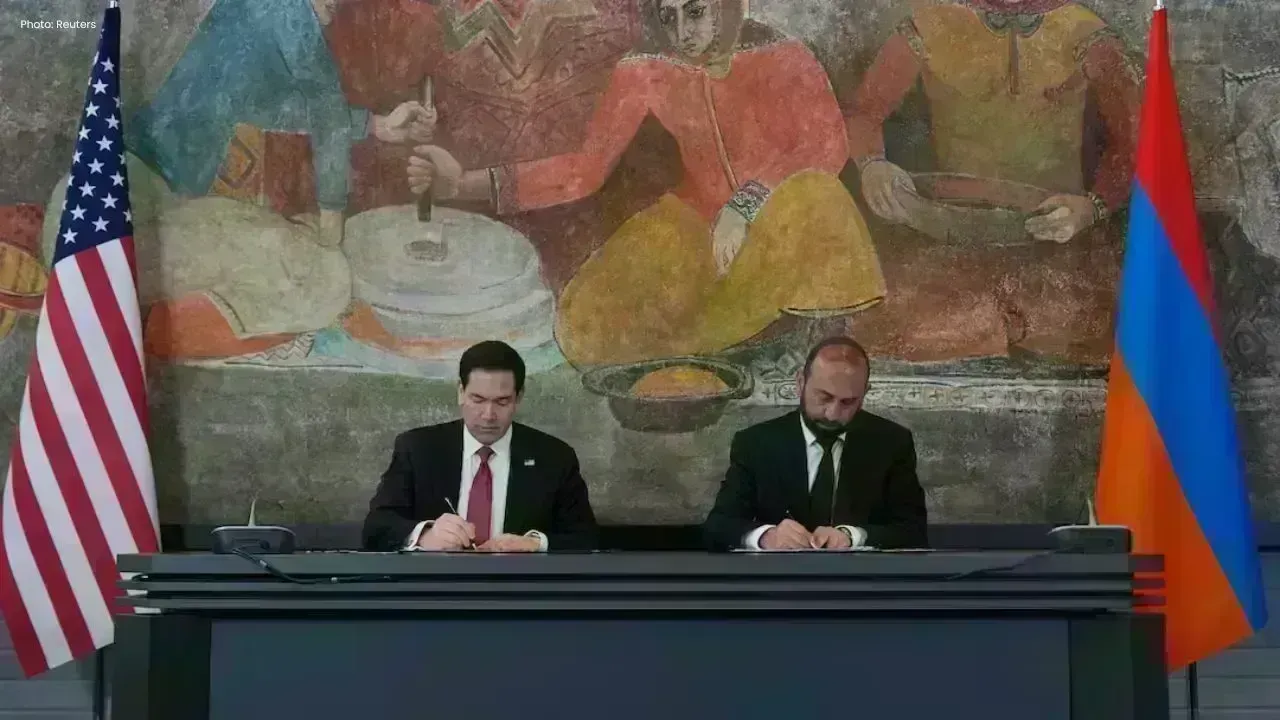
In a significant development ahead of Armenia's parliamentary elections, the United States and Armenia have come together to sign an essential strategic partnership agreement in the Armenian capital of Yerevan. This deal emphasizes Armenia’s increasing collaboration with Western countries amid rising tensions with Russia.
The signing took place during a high-profile ceremony on Tuesday, with U.S. Secretary of State Marco Rubio and Armenian Foreign Minister Ararat Mirzoyan spearheading the agreement. It encompasses areas such as critical minerals, enhancing regional transport, and fostering economic growth.
This agreement arrives on the eve of Armenia's elections scheduled for June 7, wherein Prime Minister Nikol Pashinyan's ruling Civil Contract party confronts stiff competition from political factions advocating closer ties with Russia.
There’s also a framework related to critical mineral resources included in the agreement. The U.S. and Armenia aim to collaborate on ensuring steady access to essential minerals that feed into modern industries and technologies.
Moreover, the partnership supports a proposed 43-kilometer transit corridor traversing southern Armenia, intended to link Azerbaijan with its Nakhchivan exclave and Turkey. This initiative has been dubbed the “Trump Route for International Peace and Prosperity,” or TRIPP.
The corridor is seen as a cornerstone in the peace dialogue between Armenia and Azerbaijan, following decades of strife in the South Caucasus. Though a peace understanding has been reached, a final treaty remains outstanding.
This new transit route is anticipated to bolster trade connections between Asia and Europe, while lessening reliance on paths through Russia and Iran. Experts predict that this project might assume strategic significance for global trade and energy resources.
Armenia’s move toward the West has begun to strain relations with Moscow, which has cautioned that this alignment could lead to economic repercussions, including soaring gas prices. Recently, Russia limited imports of Armenian flowers, mineral water, and brandy, reflecting its discontent with Yerevan's Western pivot.
Despite these warnings, Armenian authorities seem committed to deepening their ties with Western allies, including the U.S. and the European Union, the latter of which hosted a major summit in Armenia.
Political analysts contend that the results of the upcoming elections will crucially influence Armenia's geopolitical trajectory. The nation is now tasked with navigating traditional bonds with Russia while fostering new alliances with Western and regional partners.


 English