Post by : Saif
Al-Najjar
The White House has stated that military intervention regarding Greenland is “always an option”, despite strong rejections from European leaders concerning President Donald Trump’s repeated claims of seeking American control over the world’s largest island. This commentary has sparked considerable concern across Europe, raising significant doubts about NATO cohesion, international law, and security in the Arctic region.
Since his first term, Trump has discussed the acquisition of Greenland, but his recent remarks carry additional weight following U.S. military actions in Venezuela. According to the White House, Greenland has become a critical national security issue, highlighted by the rising competition with China and Russia in Arctic territories. White House press secretary Karoline Leavitt noted that multiple avenues, including military force, are being considered by the president and his advisors.
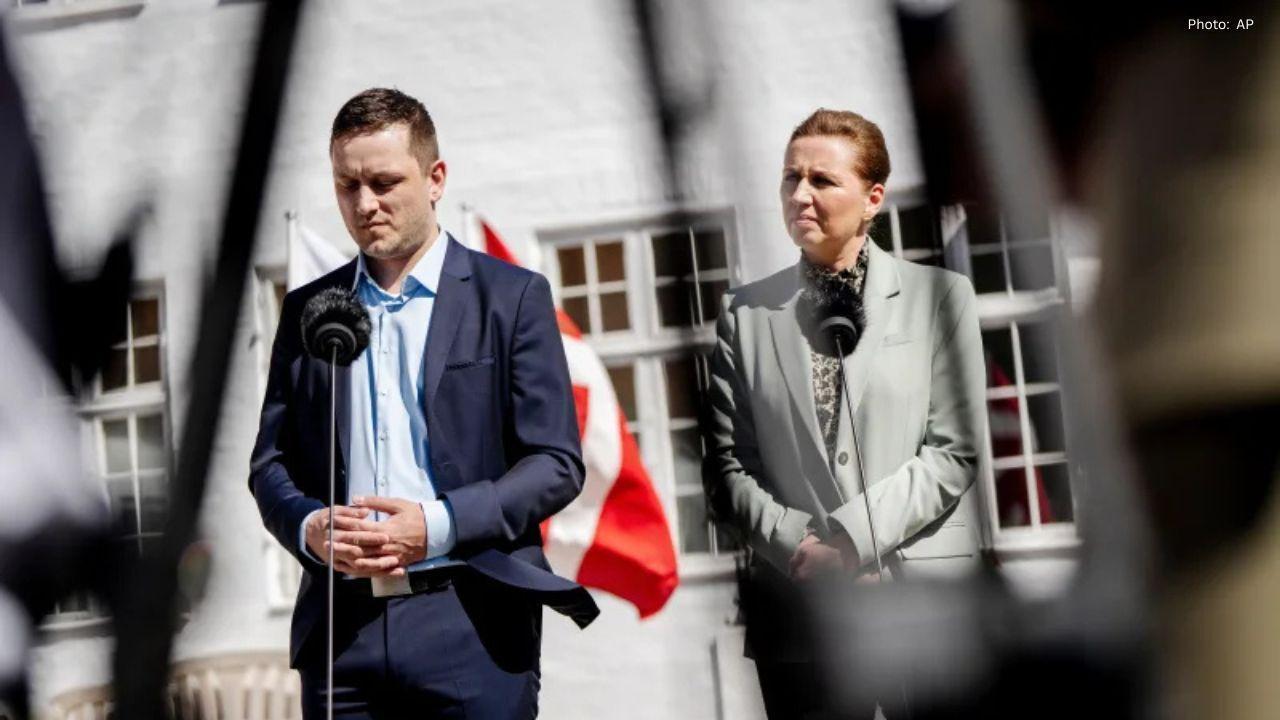
This pronouncement has unsettled U.S. partners, particularly Denmark, which oversees Greenland as a semi-autonomous territory. Danish Prime Minister Mette Frederiksen emphasized that Trump’s statements must be taken seriously, arguing that any military intervention would undermine the principles of NATO. In turn, Greenland’s Prime Minister Jens-Frederik Nielsen dismissed the notion of a U.S. takeover, while reinforcing that Greenland desires a strong and respectful relationship with Washington.
European officials rapidly rallied in support of Denmark and Greenland. A collective statement from leaders of France, Germany, Italy, Spain, Poland, and the United Kingdom asserted that Greenland solely belongs to its inhabitants. They affirmed that any decisions regarding Greenland’s future ought to stem from the Danish government and Greenland's people, not external forces. Canada also expressed robust backing, with Prime Minister Mark Carney asserting that the island's future should be determined exclusively by its citizens. Subsequently, Canada announced an upcoming visit to Greenland by its Governor General and foreign minister to demonstrate solidarity.
The strong tone coming from the White House is particularly striking given that other high-ranking U.S. officials had earlier downplayed the prospect of military action. Even Republican House Speaker Mike Johnson voiced his belief that using force in Greenland is not appropriate. Yet, Trump’s advisor Stephen Miller insisted that Greenland should be integrated into the U.S. defense framework, questioning Denmark’s historical rights to the island, which further infuriated Danish leaders.
Trump contends that Greenland is critical for U.S. national security due to increasing Chinese and Russian activities in the Arctic region. The island's strategic location is significant for missile defense, space monitoring, and controlling Arctic shipping routes. The U.S. already operates the Pituffik Space Base in Greenland under a long-standing defense agreement with Denmark, affording Washington considerable military access without the need to own the land.
Greenland also possesses extensive rare earth mineral deposits vital for modern technology, renewable energy, and defense apparatus. Additionally, it may harbor offshore oil and gas reserves, drawing further global interest as climate change opens new Arctic shipping lanes.
Tensions escalated further due to a social media post by Stephen Miller’s wife, which illustrated Greenland adorned like the U.S. flag and featured the word “soon.” Trump subsequently told reporters to “talk about Greenland in 20 days,” igniting fears in Denmark that the U.S. was gearing up for a serious initiative. Danish officials described the situation as deeply concerning and argued that threats between NATO allies would be disastrous.
Amidst this heated discourse, Greenland’s prime minister remarked that there’s no expectation of an imminent takeover. He highlighted the need for dialogue and collaboration instead of confrontation. U.S. lawmakers from both political parties also called for calm, cautioning that discussions of annexation are unwarranted since the U.S. already enjoys extensive military access in Greenland.
Editiorially, this situation illustrates the risks associated with aggressive rhetoric in international relations. While Greenland’s strategic importance is clear, so too are the tenets of sovereignty and trust among allies. NATO has historically been built on cooperation rather than threats within its ranks. Any endeavor to exert pressure on an ally through force or intimidation could erode the alliance at a time when solidarity is crucial.
The escalating discord has heightened anxiety across Europe and generated uncertainty in the Arctic. As security challenges in the area grow, solutions must arise through diplomacy and a commitment to international agreements. The future of Greenland should be determined by its own people, free from the influence of power politics. How Washington navigates this issue in the upcoming weeks will serve as a test of both its leadership and the robustness of its alliances.


 English