Post by : Saif
Al-Najjar
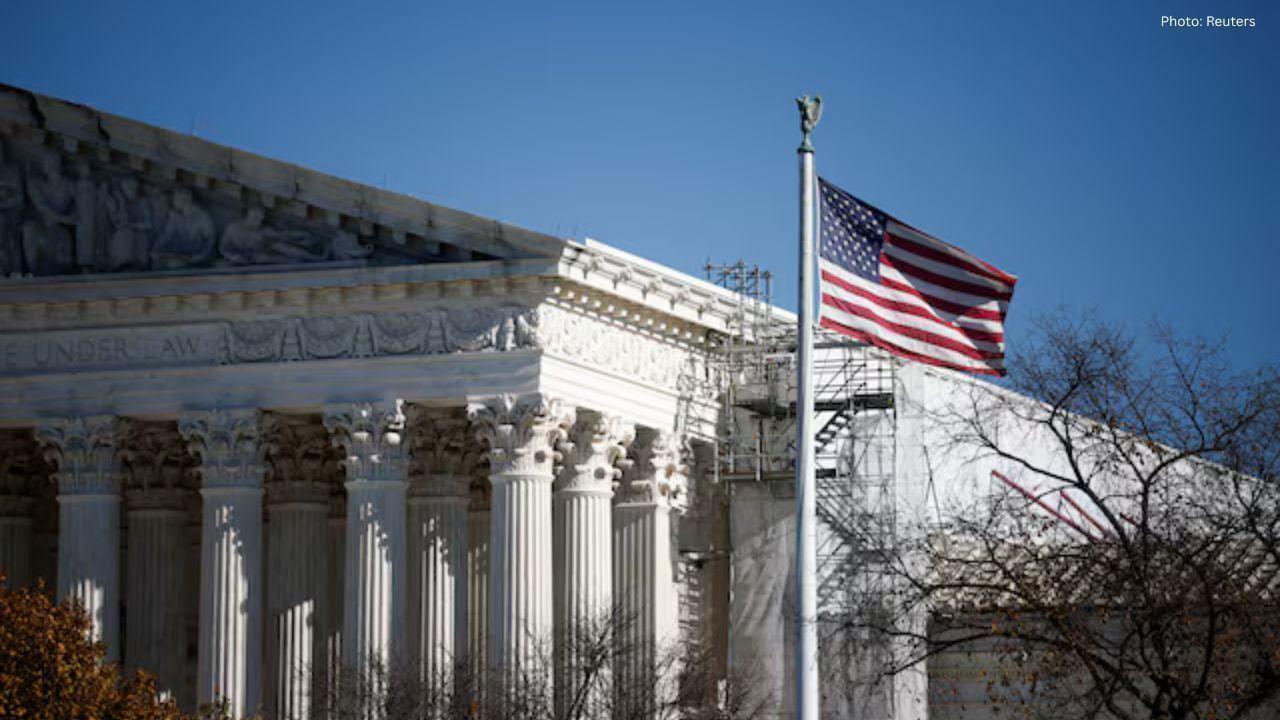
The United States Supreme Court is poised to revamp American jurisprudence by reconsidering and potentially overturning additional past decisions. This shift has ignited intense discussions regarding fairness, stability, and the legal landscape's future in the nation.
Central to this discourse is the legal principle known as stare decisis. This term signifies that courts should honor and adhere to previous rulings when faced with similar cases. Historically, this doctrine has helped maintain law's continuity, allowing individuals and businesses to plan their affairs with assurance.
However, the current court displays a greater readiness to undo earlier judgments, particularly in pivotal and sensitive matters. Recently, it annulled established decisions concerning abortion rights and affirmative action, altering laws that influenced American life for many years.
Now, the court is set to review new cases that challenge the viability of stare decisis. A significant case from 1935 pertains to the extent of presidential authority over independent government bodies. The court will determine whether this precedent should continue to apply.
The Trump administration is urging the court to abrogate this old ruling. Should the court acquiesce, it could bestow the president with enhanced control over independent agencies, raising concerns among critics about jeopardizing the checks and balances fundamental to democracy.
Additionally, a case regarding campaign finance regulations is under consideration. The court is asked to reassess the financial limits imposed on political party spending with direct candidate endorsements, which may redefine future political campaign financing.
An ongoing case may also influence voting rights, as lawmakers seek a re-evaluation of prior decisions safeguarding minority voters. These cases underscore the court's potential to redefine critical aspects of election law.
Proponents of these changes contend that previous decisions were flawed and warrant correction. They adhere to a legal philosophy known as originalism, advocating for a Constitution interpretation based on its original intent.
Conversely, detractors argue that excessive changes induce confusion and instability, proclaiming that frequent alterations in law erode trust in the legal system. Families, businesses, and governments depend on stable regulations for long-term planning.
Some justices champion the court's cautious approach, asserting that it does not overturn decisions lightly, with rectifying past errors fortifying the law. They argue that the judiciary must not maintain outdated mistakes merely because of their age.
Instances in history reveal that overturning established rulings is not inherently erroneous. A notable case, Brown v. Board of Education, nullified a ruling that endorsed racial segregation in schools, a necessary reform for justice and equality.
Ultimately, the pressing question remains regarding balance. How often should the court revise its stance? At what point does rectification become disruption?
This new court term promises to introduce significant transformations in U.S. governance. The forthcoming decisions could fundamentally influence executive power, electoral protocols, and the operation of federal agencies for years to come.
For ordinary Americans, these potential shifts are not abstract; they impact how leaders are held accountable, how votes are safeguarded, and how authority is regulated.
Democracy’s strength hinges on law as well as trust. The Supreme Court currently confronts the challenge of balancing change with stability, and authority with accountability.


 English