Post by : Shweta
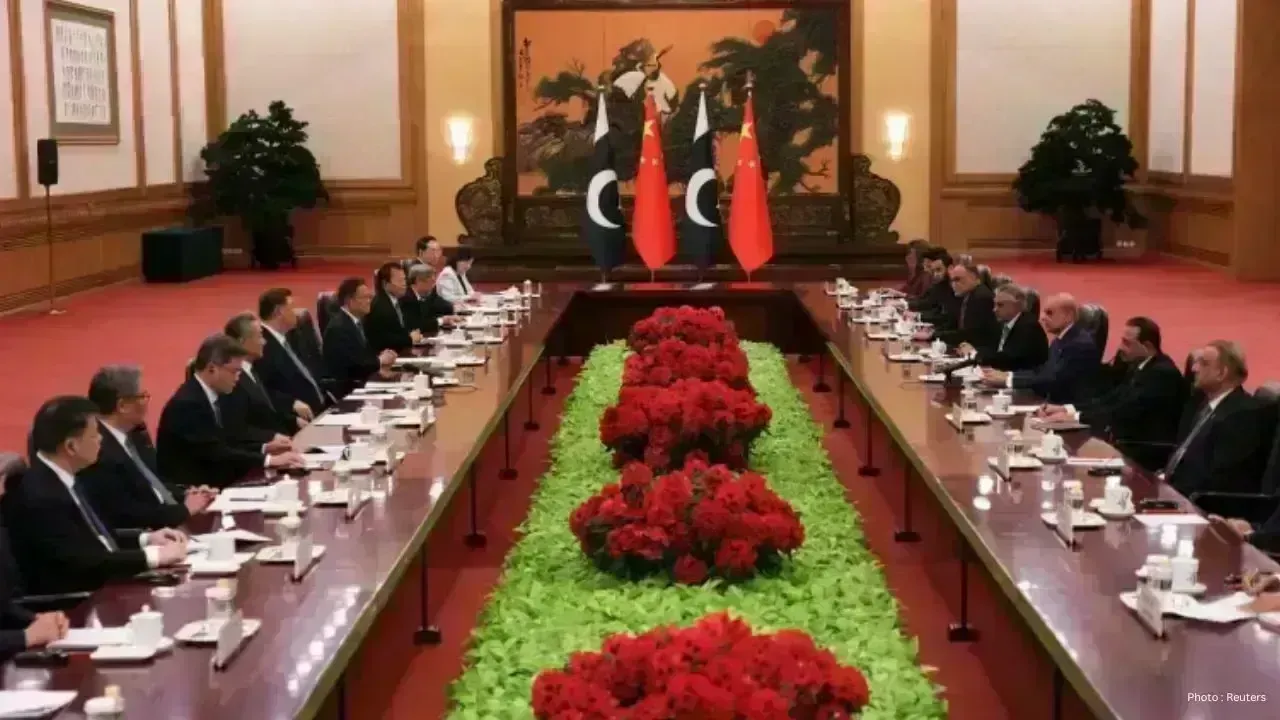
In a significant display of camaraderie, Chinese President Xi Jinping hailed the "unbreakable" bonds shared with Pakistan during his meetings with Prime Minister Shehbaz Sharif in Beijing. Their discussions primarily aimed at bolstering economic partnerships, enhancing regional security, and promoting investment in infrastructure and political alignment between these long-standing allies. Both nations considered these consultations a vital step toward fortifying their strategic alliance in light of escalating regional and global challenges.
During the discussions, Xi emphasized that the friendship between China and Pakistan has remained resilient despite shifting global dynamics. Chinese state outlets reported Xi's characterization of their relationship as an "all-weather strategic partnership," reiterating Beijing's unwavering support for Pakistan’s economic advancement, sovereignty, and stability. The president also accentuated the importance of initiatives under the China-Pakistan Economic Corridor (CPEC), a flagship project intertwined with the wider Belt and Road Initiative.
In response, Prime Minister Sharif expressed gratitude for China's ongoing financial and diplomatic backing, especially during Pakistan’s recent economic turbulence. He affirmed Pakistan’s commitment to nurturing collaboration in areas like trade, infrastructure, and energy. Sharif also commended China's pivotal role in various development initiatives within Pakistan, which encompass highways, ports, railways, and energy facilities linked to CPEC.
This visit arrives at a critical juncture for Pakistan, which is grappling with economic strains, inflation, and security predicaments. Analysts indicate that Islamabad is keen on amplifying Chinese investments and fiscal collaboration to catalyze economic recuperation and stabilize essential development undertakings. Reports hint at discussions on expanding industrial cooperation, increasing investments from China, and expediting stalled infrastructure initiatives.
Security emerged as a crucial element in their discussions. China has voiced consistent concerns regarding attacks on its nationals and projects operating within Pakistan. Pakistani representatives assured their counterparts that enhanced measures are forthcoming to secure Chinese personnel and enterprises in the country. Counterterrorism cooperation and regional stability were also on the agenda, especially amid rising tensions in South Asia and Afghanistan.
The Sino-Pakistani partnership is recognized as one of the most intimate strategic alliances in Asia. Historically, both nations have engaged robustly in defense, trade, energy, and diplomatic fronts. China now stands as Pakistan's largest trading partner and a substantial source of foreign investments. Their military collaboration has intensified, marked by joint exercises, defense technology ventures, and arms contracts.
Political analysts assert that this visit holds broader geopolitical significance. Both China and Pakistan are fortifying their ties at a time when global power rivalries are on the rise. Analysts view Pakistan as a crucial partner for China due to its strategic location, access to the Arabian Sea, and role in enhancing regional connectivity. In turn, Pakistan regards China as a trustworthy ally during challenging international scenarios.
The meetings in Beijing drew attention from neighboring nations and global observers alike. Experts contend that enhanced Sino-Pakistani collaboration could reshape regional politics, trade routes, and security frameworks in South Asia. The discussions also underscored China’s expanding influence through sustained infrastructure projects and investment alliances in the region.
At the visit's conclusion, both nations reiterated their dedication to deepening their cooperation and sustaining long-term partnerships. Chinese and Pakistani officials expressed their commitment to collaborating on economic progress, regional tranquility, and development efforts designed to enhance connectivity throughout Asia. This recent dialogue serves as a renewed testament to the value both countries place on their close diplomatic ties.


 English