Post by : Mariam
Al-Faris
Photo: Reuters
A mild earthquake of magnitude 4.1 shook Myanmar on Thursday morning, according to a report by the National Center for Seismology (NCS).
The earthquake occurred at 6:10 AM IST on July 3, 2025, and struck at a shallow depth of just 10 kilometers. The NCS shared details of the quake in a post on social media platform X, stating:
"EQ of M: 4.1, On: 03/07/2025 06:10:48 IST, Lat: 22.01 N, Long: 95.58 E, Depth: 10 Km, Location: Myanmar."
Experts say shallow earthquakes can be more dangerous than deeper ones. This is because the seismic waves from shallow quakes have less distance to travel to reach the surface, which causes stronger shaking and may lead to more damage to buildings and higher chances of injuries.
This latest earthquake comes just days after two other quakes hit the region. On July 1, an earthquake of 4.2 magnitude occurred at a much greater depth of 135 kilometers. The NCS reported that quake with the following details:
"EQ of M: 4.2, On: 01/07/2025 08:14:16 IST, Lat: 24.92 N, Long: 95.39 E, Depth: 135 Km, Location: Myanmar."
Earlier, on June 25, Myanmar experienced another 3.9 magnitude quake, also deep underground at a depth of 136 kilometers.
The NCS post read: "EQ of M: 3.9, On: 25/06/2025 13:01:48 IST, Lat: 22.56 N, Long: 95.74 E, Depth: 136 Km, Location: Myanmar."
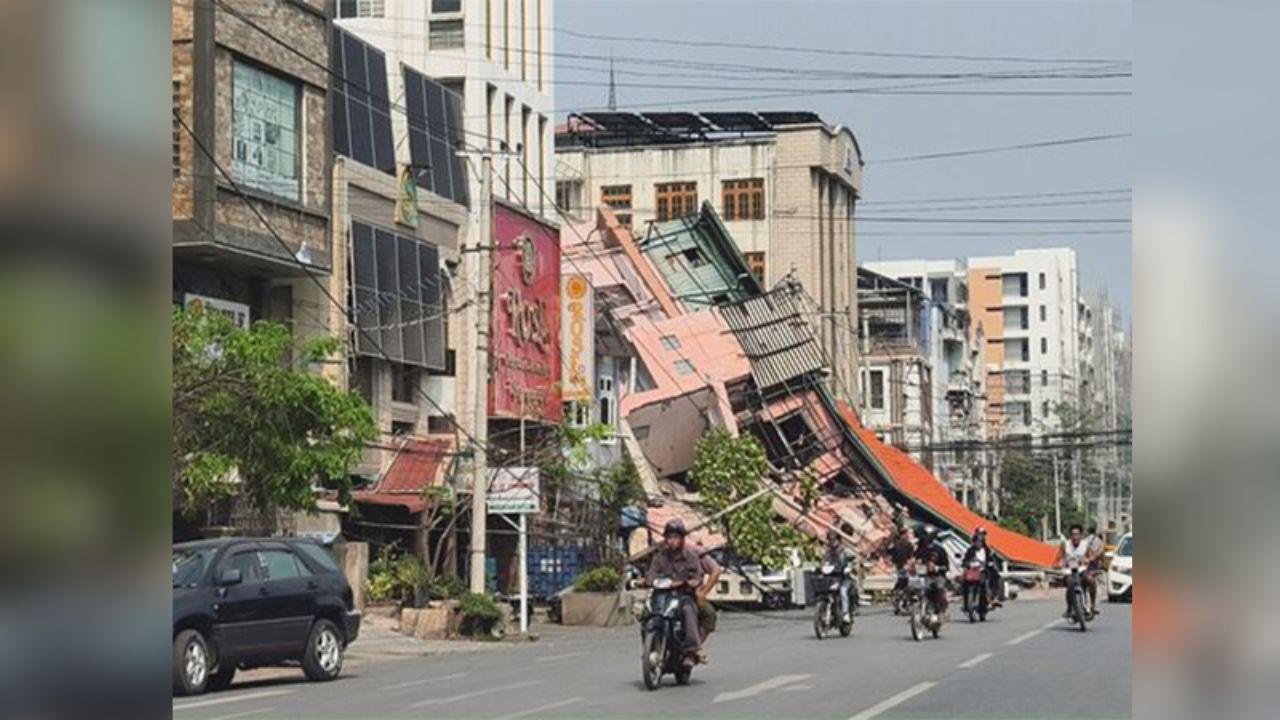
These repeated tremors are raising concerns among both local residents and health experts. Following the strong earthquakes of magnitude 7.7 and 6.4 that hit central Myanmar on March 28, the World Health Organization (WHO) issued a warning about increasing health risks in the affected areas. Many people were displaced from their homes, and the risk of diseases like tuberculosis (TB), HIV, and water- or mosquito-borne illnesses has risen sharply in temporary shelters.
Myanmar is located in a seismically active region, meaning it is prone to moderate and strong earthquakes. The country’s long coastline also makes it vulnerable to tsunamis in the case of powerful underwater quakes.
One of the main sources of earthquake activity in Myanmar is the Sagaing Fault. This fault line increases earthquake risk for major cities such as Sagaing, Mandalay, Bago, and Yangon. These cities together are home to nearly half the country’s population. Although Yangon is not located directly on the fault, its dense population makes it especially vulnerable to earthquake damage. A historical example is the 1903 earthquake in Bago, which also caused heavy damage in Yangon.
With continued tremors and past devastation, officials and experts are urging people to stay alert and follow safety guidelines.


 English