Post by : Sami
Al-Rahmani
AI and Smart Infrastructure: From Autonomous Vehicles to Smarter Cities
Artificial Intelligence (AI) now reaches beyond apps and analytics to reshape how cities function. From to adaptive traffic systems and intelligent energy networks, AI is driving a shift in urban infrastructure toward more connected, efficient environments often described as smart cities.
These technologies are already in active deployment in cities worldwide, changing daily life, commuting and service delivery. Below we examine how AI is accelerating the smart infrastructure transition and what it means for urban areas in the GCC and beyond.
The Emergence of Smart Infrastructure
Smart infrastructure covers physical systems — transport, power, water and buildings — that use AI, IoT (Internet of Things) and data analytics to run more reliably and sustainably.
Rather than reacting after failures occur, smart systems anticipate issues, cut waste and bolster public safety.
Examples include:
-
AI-driven traffic controls that dynamically alter signal timings to ease jams.
-
Smart electricity grids that autonomously match supply and demand.
-
Connected water networks that spot leaks instantly, conserving vast quantities of water.
Put simply, AI is converting fixed urban systems into responsive, adaptive networks.
AI in Transport: Moving Toward Autonomous Mobility
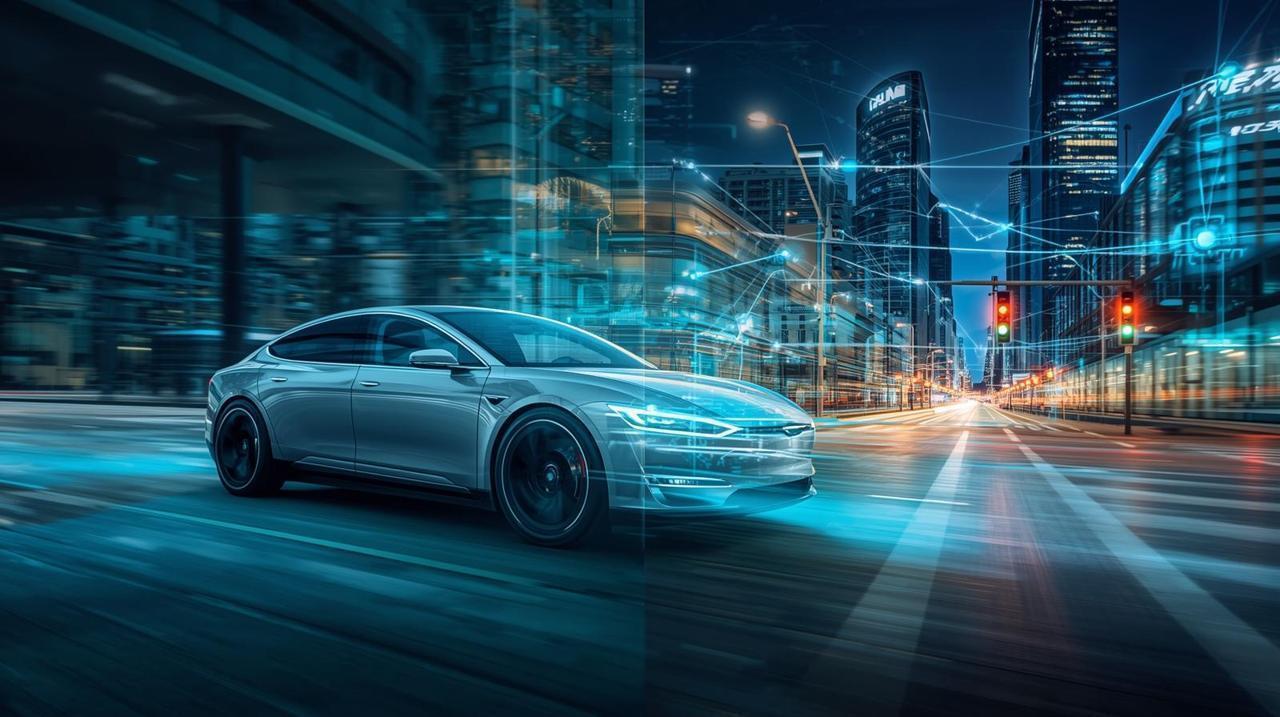
The most visible application of AI is in transport. Technologies for self-driving mobility have moved from labs to city streets.
1. Autonomous Vehicles and Navigation Systems
Companies such as Tesla, Waymo, and Baidu are advancing autonomous driving. These platforms rely on machine learning, cameras and sensors to interpret surroundings, forecast movements and make rapid control choices.
AI systems continuously merge data from:
The goal is to cut human error — responsible for the majority of collisions — while improving fuel use and smoothing traffic flows.
2. Smart Traffic Management
AI is also central to modern urban traffic management. Cities such as Dubai, Singapore and Los Angeles deploy systems that analyse live feeds to fine-tune signal timing and reroute traffic instantly.
These platforms have reduced congestion by up to 25%, sped emergency response and lowered emissions — benefits for drivers and the environment alike.
AI in Energy and Utilities: Intelligent Grids
AI-enabled smart grids are central to a cleaner energy future. They forecast demand, spot faults and distribute power more efficiently.
For example:
-
AI models predict peak usage times and locations.
-
Smart meters adapt supply in real time to avoid outages.
-
Renewables like solar and wind are integrated more smoothly into networks.
Cities such as Amsterdam and Tokyo employ AI energy platforms to balance consumer demand and supplier capacity in real time.
The result is fewer blackouts, improved efficiency and lower costs.
AI in Urban Planning
Urban planning benefits from predictive analytics and AI models. Planners can test the effects of new roads, housing or transit before breaking ground.
AI tools analyse:
That insight supports the design of greener, more efficient urban spaces with stronger public transport and lower emissions.
Singapore’s Smart Nation programme, for instance, leverages AI to optimise land use and infrastructure while maintaining livability.
AI and Smart Buildings
Buildings are evolving into smart environments that respond to occupants.
AI in buildings can:
-
Automatically control lighting and HVAC settings.
-
Monitor indoor air quality and energy consumption.
-
Detect maintenance needs before failures occur.
In offices, AI helps with space utilisation, identifying unused areas and improving resource allocation, which can cut running costs significantly.
Public Safety and City Operations
AI supports safer, more efficient municipal services.
-
Intelligent surveillance flags abnormal behaviour in real time.
-
Automated chat services handle public queries instantly.
-
Disaster forecasting uses AI to model floods, fires and earthquakes.
Dubai’s Smart Police Stations (SPS) demonstrate AI-led governance: 24/7 kiosks and automated services manage reports and requests with minimal human staffing.
Environmental Monitoring and Sustainability
AI not only makes cities more efficient but also more sustainable.
Sensors and AI systems track pollution, air quality and waste, enabling early intervention.
For example:
-
AI-based waste logistics forecast collection needs and optimise pickup routes.
-
Smart irrigation conserves water by analysing soil and weather data.
-
Climate models guide sustainable urban planning.
Cities like Copenhagen and Helsinki use AI-driven environmental data to progress faster toward net-zero targets.
Challenges for Smart Infrastructure
Adopting AI brings clear advantages but also notable risks:
-
Data privacy — protecting citizens’ sensitive information.
-
High setup costs that can strain smaller municipalities.
-
Cybersecurity risks to interconnected systems.
-
Labour market shifts as automation changes job roles.
Addressing these issues requires ethical AI policies, transparent data practices and programmes to reskill the workforce.
Global Examples Leading the Transition
Several cities set the standard for AI-enabled infrastructure:
-
Dubai, UAE: Testing autonomous taxis and AI-managed traffic systems.
-
Singapore: Advanced urban analytics and digital public services.
-
South Korea: AI applications in energy and disaster resilience.
-
Estonia: Widespread digital government services supported by AI.
These cases show how strategic AI use can deliver safer, greener and more efficient urban living.
Looking Ahead: Fully Integrated Smart Cities
The next stage is deeper integration — where vehicles, buildings, power systems and citizens exchange data seamlessly.
Envision:
-
Electric cars charging automatically when renewable supply is abundant.
-
Roads communicating with vehicles to reduce collisions.
-
Buildings producing and sharing clean energy across the grid.
-
AI coordinating city functions with minimal manual oversight.
With broader 5G and IoT rollout, AI will increasingly underpin the operational backbone of future cities.
Conclusion
The rise of AI-powered infrastructure is transforming urban life, enabling smarter, cleaner and more efficient cities. From transport and energy to planning and public safety, AI helps use resources better while improving residents’ quality of life.
Challenges like privacy and cost remain, but the potential gains — in sustainability and safety — are significant.
As AI advances, it will not only reshape cities but play a central role in building a more connected, adaptive world.
Smart cities are becoming a reality — and AI is at their core.


 English