Post by : Mariam
Al-Faris
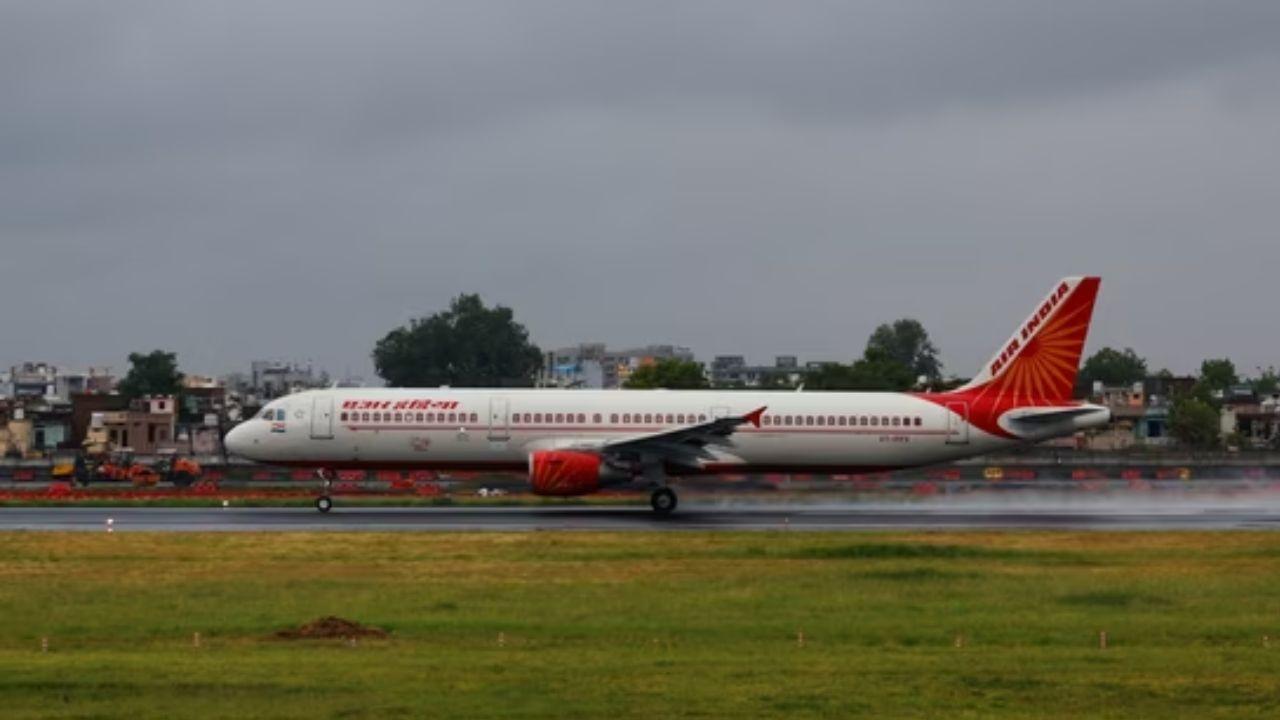
Photo: Reuters
A serious incident occurred at Delhi’s Indira Gandhi International (IGI) Airport on Tuesday, July 22, when an Air India flight from Hong Kong caught fire shortly after landing. The aircraft, operating as Flight AI 315, had just arrived at the airport and was parked at the gate when the fire was detected in the tail section. The part that caught fire is known as the auxiliary power unit (APU), a small engine located at the back of the aircraft.
Fire Breaks Out as Passengers Begin to Leave
According to reports, the fire started right when passengers had started getting off the plane. This timing was very fortunate because it allowed many of the passengers to leave the aircraft safely before the situation became more dangerous. There were 170 people onboard, including both passengers and crew members. Fortunately, all of them were reported safe, and no injuries have been mentioned by the airline or authorities.
APU Fire Controlled Quickly
The APU, or auxiliary power unit, is a small engine that helps power the plane when it is not in the air. It supplies electricity for cabin lights, air conditioning, and even helps start the main engines when needed. In this case, the APU caught fire just after the aircraft had landed and was parked at the terminal. The plane’s systems automatically shut down the APU once the fire was detected, which is part of the built-in safety design. Thanks to this automatic shutdown, the situation did not escalate further.
Air India Issues Official Statement
Air India quickly acknowledged the incident and released an official statement on its X account. The airline stated, “Flight AI315, operating from Hong Kong to Delhi on 22 July 2025, experienced an auxiliary power unit (APU) fire shortly after it had landed and parked at the gate. The incident occurred while passengers had begun disembarking, and the APU was automatically shut down as per system design. There was some damage to the aircraft; however, passengers and crew members disembarked normally and are safe. The aircraft has been grounded for further investigations, and the regulator has been duly notified.”
Aircraft Grounded for Inspection and Repairs
As per Air India’s confirmation, the aircraft involved has now been grounded. This means it will not operate any further flights until it is fully inspected and any necessary repairs are made. The aviation regulator has been informed, and they will now conduct a detailed investigation to understand exactly what led to the APU catching fire. The safety of aircraft and passengers is the top priority, and such investigations are a standard part of aviation procedures after any fire or technical failure.
More Details About the Aircraft
The aircraft involved in the incident is a relatively new Airbus model, just two years old, and was previously operated by Vistara Airlines before being transferred to Air India. Since the aircraft is modern and equipped with advanced safety systems, the automatic shutdown of the APU functioned as intended, preventing the fire from spreading. Still, the fire caused damage to the tail section of the aircraft, and engineers will now assess how severe the damage is and what repairs are needed.
What Is an Auxiliary Power Unit (APU)?
Many people might not be familiar with what an APU is, so here’s a simple explanation. An auxiliary power unit is a small engine located at the tail end of most modern aircraft. It is not used for flying the plane but plays a very important role while the aircraft is on the ground. It provides power for lights, air systems, entertainment screens, and helps in starting the main engines. When a plane is parked at an airport and its main engines are off, the APU keeps basic systems running. Because it handles electrical and mechanical tasks, it can sometimes develop technical problems if not maintained correctly.
Another Air India Incident in Mumbai Raises Concerns
This incident in Delhi is not the only recent case involving Air India that has raised safety concerns. Just a few days earlier, another Air India flight, numbered A12744, coming from Kochi to Mumbai, skidded off the runway while landing. This happened because of heavy rainfall at the Mumbai airport. Thankfully, all passengers and crew on that flight were also safe, and no injuries were reported. However, the runway had to be temporarily closed, and flight operations were affected for a while. This incident, along with the Delhi fire, has once again brought attention to the importance of strict safety checks and maintenance routines in the aviation industry.
Investigation Underway to Find the Root Cause
Even though it has been mentioned that the fire was caused by the auxiliary power unit, a full investigation is now underway. The aviation regulator and Air India’s engineering teams will carefully inspect the aircraft, check maintenance records, and try to find out if the fire happened due to a mechanical issue, overheating, a short circuit, or something else. It is also possible that faulty wiring or a technical malfunction might have played a role. The results of the investigation will help the airline take necessary steps to prevent similar incidents in the future.
Air India Faces Public and Industry Scrutiny
With two back-to-back incidents in the same month, Air India is likely to face questions from the public and the aviation industry about its aircraft safety and maintenance procedures. While both incidents ended without injuries, they serve as reminders of the need for constant vigilance and strict safety standards in aviation. Air India has said that passenger safety is its top priority, and steps will be taken based on the outcome of the investigations.
A Close Call But All Are Safe
The most important fact is that no lives were lost, and all 170 passengers and crew members are safe. The fire was brought under control quickly, and emergency systems on the aircraft worked as they were designed to. The grounded aircraft will now be thoroughly checked, and the findings will be shared with the regulator. This incident highlights how even small technical parts of an aircraft, like the APU, can lead to dangerous situations if something goes wrong. Thankfully, timely action and system design prevented a disaster, and all passengers were able to return home safely.


 English