Post by : Bianca
Haleem
China is strategically evolving its military framework by embedding artificial intelligence into its cutting-edge weaponry. State-sponsored defense firms are advancing the AI model known as DeepSeek, which aims to enhance the decision-making abilities and situational awareness of autonomous combat systems.
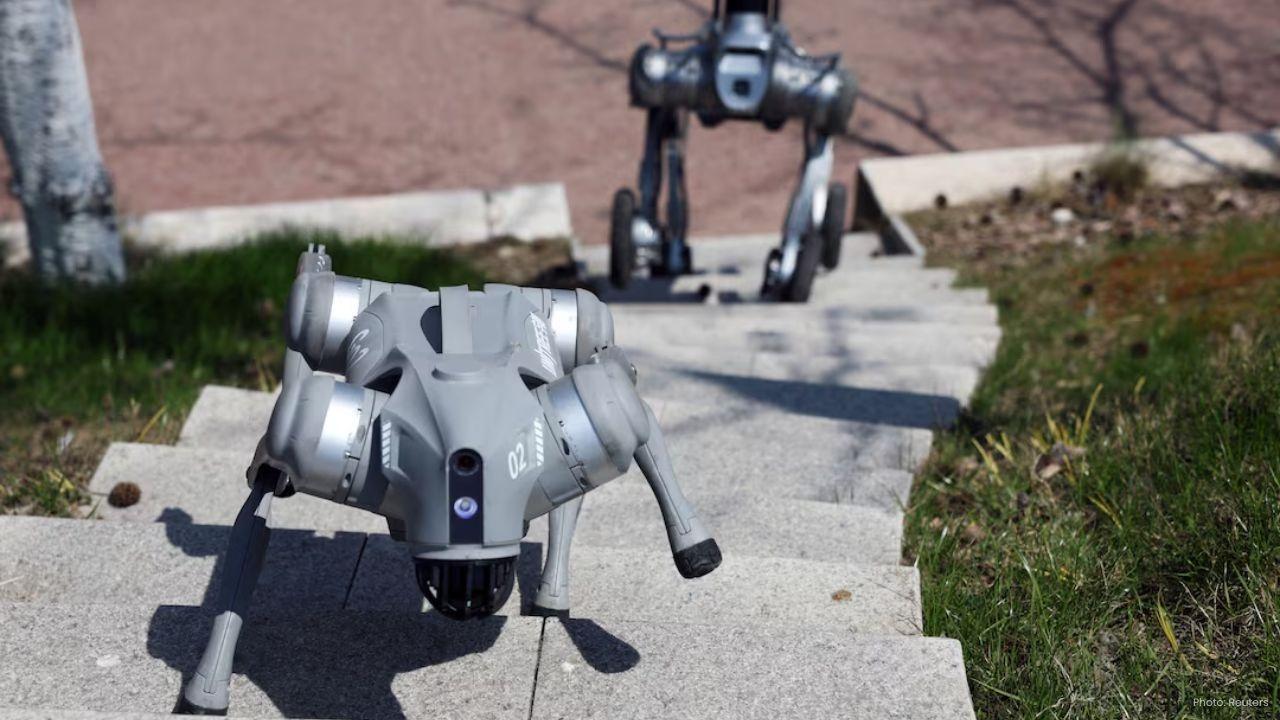
Recent reports reveal that enterprises like Norinco and the People's Liberation Army (PLA) are incorporating DeepSeek across various platforms—from minimal human-operated ground vehicles to sophisticated drone swarms and command structures.
A significant milestone arose earlier this year with Norinco's launch of the P60 military vehicle, designed for operational support at speeds reaching 50 km/h, powered by DeepSeek’s AI capabilities.
Numerous patents, research initiatives, and procurement documents suggest that China is honing several essential proficiencies:
-
Autonomous target identification and instant decision-making assistance for commanders.
-
Coordination of drone swarms, enabling multiple drones to operate together with minimal human intervention.
-
AI-facilitated imaging evaluation, integrating satellite and drone data to quickly analyze battlefield conditions.
-
Less dependence on Western technologies, as local chip manufacturers like Huawei increase production, notwithstanding some reliance on U.S. components like those from Nvidia.
Although advancements appear noteworthy, it remains uncertain how many systems are operational or ready for combat. Experts warn that patents and prototypes do not guarantee immediate implementation in the field.
By leveraging DeepSeek-derived weapons, China seeks to bridge the technological divide with other military giants and establish what officials refer to as “algorithmic sovereignty”—the capability to innovate and deploy strategic AI without foreign dependencies.
This transition signals a future combat arena defined by rapid machine responses and autonomous systems coordinating operations. Vehicles that scout ahead, self-organizing drones, and command systems capable of processing vast sensory data may revolutionize warfare methodologies.
Nonetheless, the path forward remains intricate. Building reliable autonomous systems that can perform under the pressures of real combat is a significant challenge, raising ongoing concerns about control, accountability, and human oversight.
The progression of China’s DeepSeek project signifies a strategic and bold transition—one that could transform its defense posture and potentially realign global dynamics in AI-led conflicts.


 English