Post by : Saif
Al-Najjar
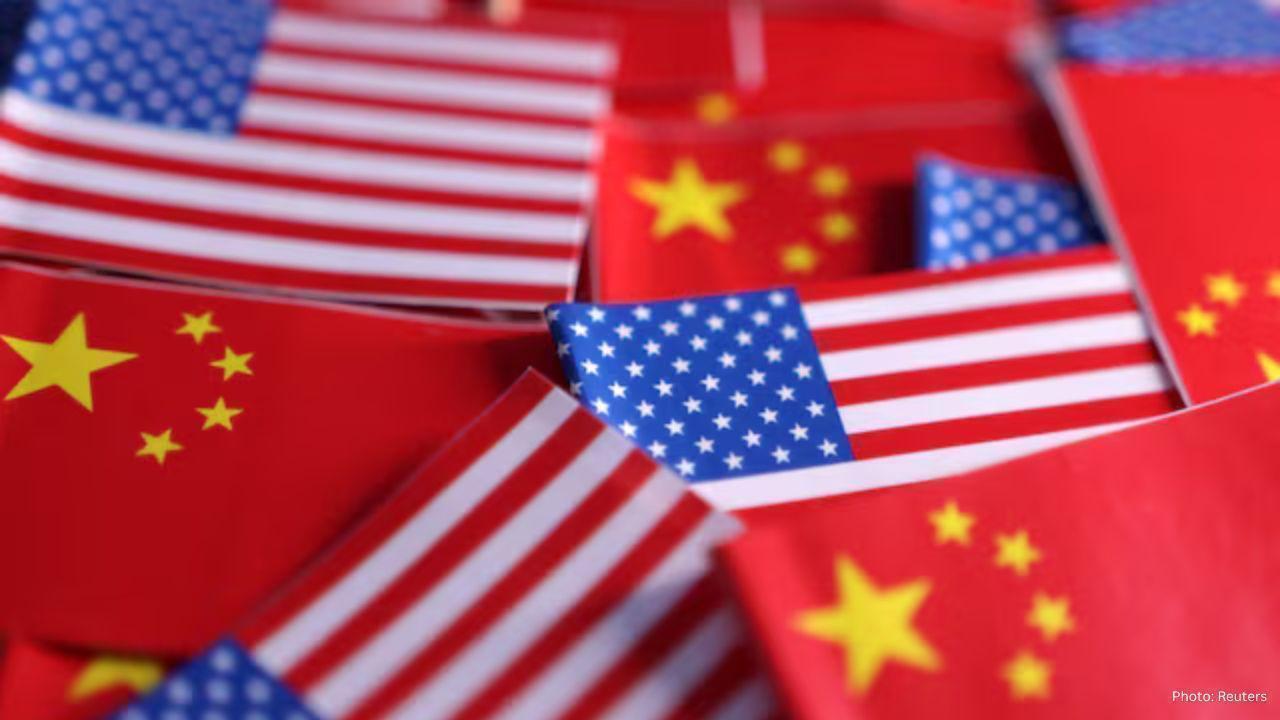
China has initiated a new wave of sanctions directed at the United States, focusing on prominent American defense manufacturers and high-ranking executives due to arms transactions with Taiwan. This action underscores the escalating tensions between the two leading global economies and highlights the sensitive nature of the Taiwan matter in China-U.S. affairs.
On Friday, the foreign ministry of China declared it would enforce sanctions on 20 U.S. defense companies alongside 10 individuals associated with these enterprises. Notable firms include Boeing’s St. Louis branch, Northrop Grumman Systems Corporation, and L3Harris Maritime Services. The individuals listed encompass senior executives from these firms and the founder of defense contractor Anduril Industries.
The ministry’s statement specifies that these sanctions will seize any assets possessed by these firms or individuals within China. Furthermore, Chinese entities and citizens are prohibited from engaging in business with them, and the individuals named will face entry bans to China. These measures are intended to send a strong message regarding Beijing’s disapproval of U.S. military assistance to Taiwan.
This action from China follows Washington's recent announcement of an $11.1 billion arms package designated for Taiwan—the largest arms sale the United States has ever sanctioned for the island. The agreement includes advanced military tools aimed at enhancing Taiwan's defensive capabilities. Beijing has vocally opposed this arrangement, deeming it a critical infringement upon China's sovereignty and security interests.
A spokesperson from China’s foreign ministry has emphasized that the Taiwan issue is fundamental to China’s national interests and represents an unbreachable red line. They cautioned that any actions perceived to undermine China’s stance on Taiwan would trigger resolute counteractions. Additionally, China has urged the U.S. to cease what it describes as “dangerous” actions that could further unsettle the region.
China regards Taiwan as part of its territory and has persistently pledged to assert control over the island, if necessary through force. Conversely, Taiwan operates as a self-governed democracy, featuring its own government, military, and election processes. The Taipei administration firmly refutes Beijing's claims, advocating that the future of the island should be determined by its populace.
While the U.S. does not officially recognize Taiwan as an independent nation, it is legally obliged to support Taiwan’s self-defense. U.S. legislation mandates that Washington supply defensive weaponry to Taiwan, a policy that has lasted for decades. These arms transactions consistently frustrate Beijing and stand as a major source of discord between the two countries.
Experts believe that the recent sanctions are not likely to yield a significant financial blow to the major U.S. defense enterprises, many of which have minimal business interactions in China. Nevertheless, the sanctions hold symbolic weight, adding to the escalating list of political and economic measures both sides are utilizing as competition heightens.
These sanctions emerge during a period when relations between China and the U.S. face considerable strain due to matters such as trade, technology, security, and global influence. The subject of Taiwan has become increasingly sensitive, particularly as military activity surrounding the island intensifies and the diplomatic rhetoric on both sides sharpens.
Although both Beijing and Washington assert a desire to avert direct hostilities, moves like sanctions and arms provisions persist in testing the fragile equilibrium between collaboration and confrontation. For the time being, the latest actions indicate that Taiwan remains a pivotal and unresolved concern, continually shaping the future dynamics between China and the United States.


 English