Post by : Saif
Al-Najjar
According to a recent report from the Stockholm International Peace Research Institute (SIPRI), China’s leading military enterprises saw a downturn in revenues last year, breaking away from the global trend of growth in the arms sector. While military firms worldwide benefited from conflicts in Ukraine and Gaza, those in China encountered significant challenges as a result of a broad-based corruption crackdown.
The report highlighted that allegations of corruption in the arms procurement process led to the postponement or cancellation of major contracts in 2024. Nan Tian, director of SIPRI's Military Expenditure and Arms Production Programme, remarked that this situation introduces uncertainty into China’s military modernization efforts, causing delays in the introduction of new technologies and capabilities.
State-owned military corporations like AVIC, Norinco, and CASC reported a decline in income, with Norinco experiencing the deepest drop of 31%, down to $14 billion. Personnel changes and governmental reviews prompted by corruption investigations have hindered project timelines, and the delivery of military aircraft from AVIC has also slowed. In contrast, military firms in other nations have prospered, with Japan seeing a 40% revenue increase, Germany a 36% rise, and U.S. firms up by 3.8%.
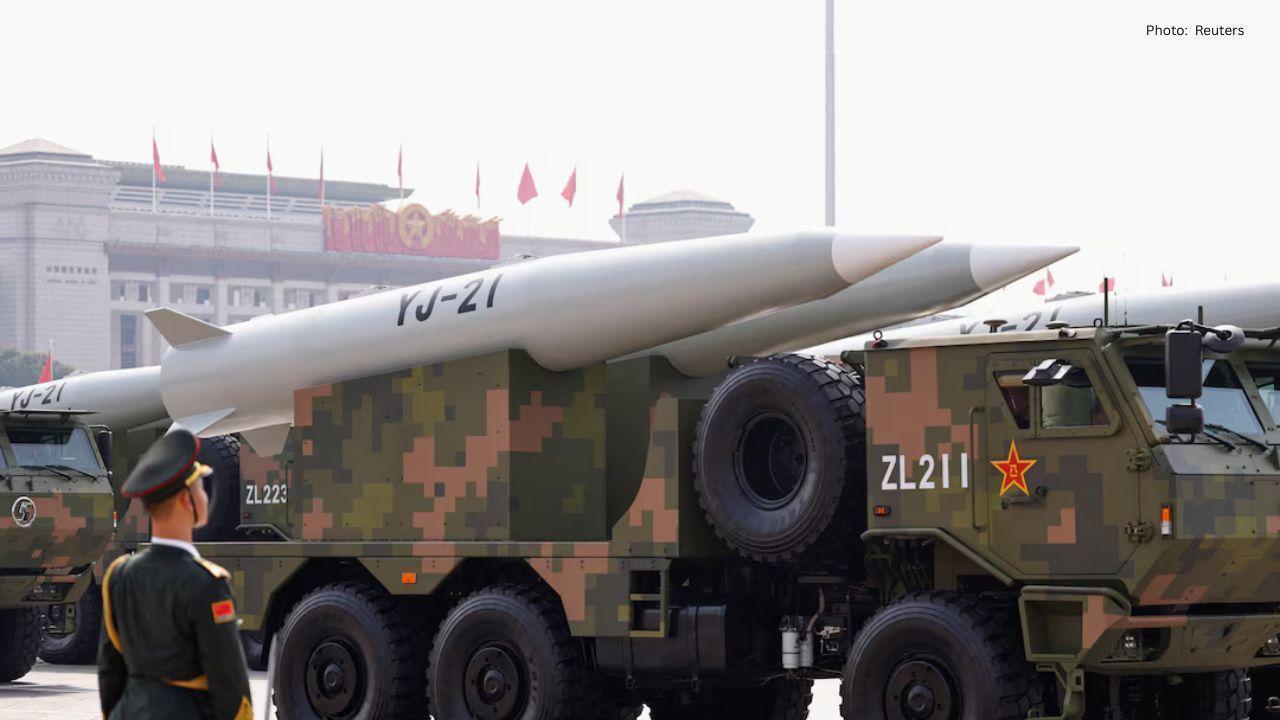
This crackdown, affecting high-ranking officials within the People’s Liberation Army, notably targeted the Rocket Force in 2023, resulting in the removal of eight senior generals from the Communist Party, including He Weidong, China’s second-ranking general. Diplomatic circles in Asia and the West continue to analyze the ramifications of these purges on China’s military ascendance and operational strategies.
Nevertheless, China remains committed to significant investments in national defense. It is expanding its navy to encompass the largest fleets globally while simultaneously developing advanced aircraft carriers, hypersonic missiles, nuclear armaments, and various air and sea drones. SIPRI analyst Xiao Liang cautioned that these advancements, particularly for the Rocket Force, could experience delays, potentially jeopardizing the People’s Liberation Army’s readiness objectives as it approaches its centenary in 2027.
Experts predict that, in the medium to long run, China's defense expenditure and dedication to modernization are likely to persist. However, the ongoing corruption purge may introduce delays, escalate costs, and enforce stricter procurement regulations.
In summary, while China's military objectives remain bold, recent setbacks illustrate how internal challenges, notably corruption investigations, can impact the speed of military progress.


 English