Post by : Bianca
Haleem
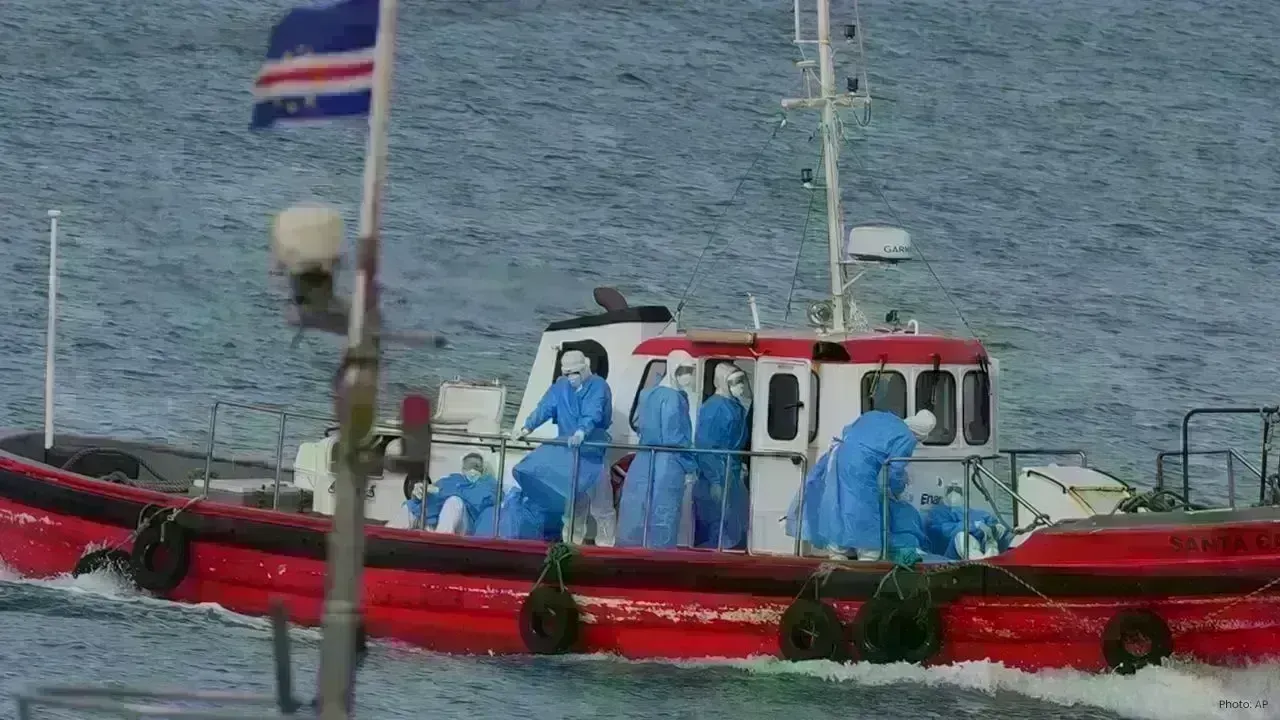
Medical teams in full hazmat gear facilitated the evacuation of suspected hantavirus patients from the MV Hondius, as global health organizations ramp up efforts to address an unusual outbreak associated with the Andes strain of hantavirus.
Footage circulating online depicted health personnel equipped with respirators and protective gowns transporting patients to specialized air ambulances in Amsterdam and Cape Verde.
The expedition cruise ship, under the Dutch flag and carrying approximately 150 passengers and crew members, has emerged as a focal point of an international health crisis after three passengers succumbed and at least eight cases have been confirmed or suspected.
According to the World Health Organization (WHO), the outbreak is thought to be linked to the Andes strain, which can occasionally spread among humans through close contact.
As the ship heads towards Spain’s Canary Islands under close supervision, health authorities in Europe, South Africa, and Argentina are engaged in contact tracing, quarantine preparations, and laboratory analyses to prevent further transmission.
Protective Measures for Health Workers
Hantavirus pulmonary syndrome is typically contracted through exposure to infected rodents’ urine, droppings, and saliva. Transmission happens primarily through inhalation of contaminated particles.
However, the Andes strain, prevalent in Argentina and Chile, has demonstrated limited human-to-human transmission among close contacts.
Given the uncertainty surrounding the transmission pathway aboard the MV Hondius, health teams adhered to stringent WHO infection-control protocols during patient evacuations. This involved using respirators, impermeable gowns, gloves, and eye protection.
The WHO advises complete protective gear during patient transport for severe respiratory infections when the risk of transmission remains unclear.
Experts emphasize that these precautions are precautionary, clarifying that the virus does not spread as readily as airborne illnesses like Covid-19 or influenza, while WHO maintains that the overall public health risk is low.
Medical Evacuations in Progress
Reports indicate that three individuals, including the ship's doctor and two crew members, have been evacuated due to severe symptoms. Two of these patients urgently required medical attention and were transferred to Europe in specially-equipped aircraft.
Meanwhile, passengers are reportedly confined to their cabins while medical professionals assess symptomatic individuals and monitor close contacts.
Spain has agreed to welcome the vessel following requests from WHO and European health authorities. Officials confirmed that the Canary Islands possess the necessary facilities to safely isolate, evaluate, and repatriate passengers.
Spanish authorities stated that transportation and disembarkation would utilize controlled medical facilities and secure transit to minimize public exposure risks.
Health agencies in South Africa, Switzerland, the Netherlands, and the U.S. are also tracking passengers who may have come into contact with infected individuals earlier in the journey.
Challenges of Cruise Ships During Outbreaks
Experts note that cruise ships can complicate disease outbreaks due to the close quarters shared by passengers in enclosed spaces, dining areas, and ventilation systems.
The MV Hondius set sail from Ushuaia, Argentina, in April, traversing remote South Atlantic regions before the outbreak was recognized.
WHO investigators suspect that a passenger may have boarded with the virus prior to sailing.
Officials in Argentina are now exploring potential sources of exposure, including rodent contact in regions where the Andes hantavirus strain is prevalent. They have initiated rodent surveillance, contact tracing, and genomic testing to trace the outbreak's origin and ascertain if there was human transmission on board.
Once the ship arrives in Spain, passengers will undergo medical assessments, lab testing, and supervised repatriation procedures.
Spanish nationals onboard may be quarantined in designated facilities, while international travelers could face monitoring by health authorities upon returning home.
The WHO noted that the investigation is ongoing, requiring genomic sequencing and epidemiological studies to clarify the virus's spread aboard.
The MV Hondius incident has emerged as one of the most closely scrutinized infectious disease scenarios of 2026, underscoring the difficulties in managing rare zoonotic diseases on cruise ships and the complexities of international medical evacuations during potential outbreaks.


 English